
Beef Stew Worth the Chopping
A classic beef stew made with chuck roast cubed by hand, seared properly and braised low until it falls apart, with vegetables added late so they keep their shape.
By Chef Umais Ahmed,
- Total time 3 hr 30 min
- Serves 6
- Easy difficulty
- Stovetop
Knife used for this recipe
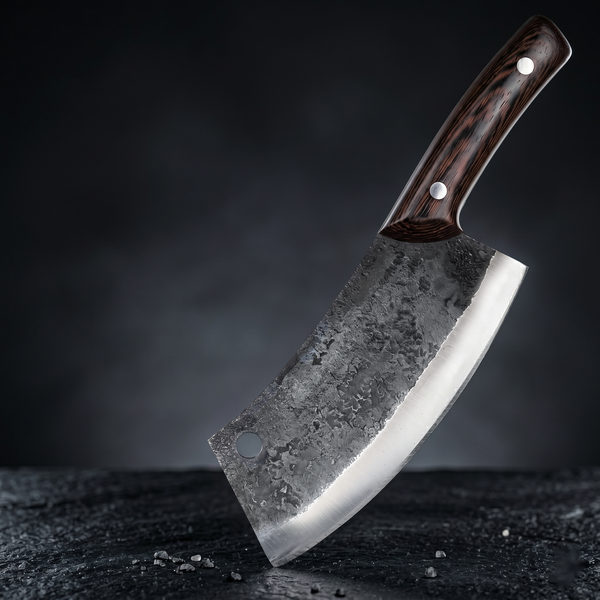
In this recipe Cubes the chuck roast along its seams and chops all the vegetables.
Free shipping in the USA and Australia
On this page
Most beef stew goes wrong at the shop, when someone grabs a tray of pre cut stew meat. Those cubes come from whatever was left over, so half go tender and half stay chewy. Buy a chuck roast, cube it yourself, and this easy beef stew comes out soft and even every time.
The knife for this job
One blade does everything here. The Kermode 7" Serbian Chef Knife is a chef cleaver, so it has the weight to push through a dense chuck roast and the broad, flat face to slice carrots and onions and carry them to the pot. It is a chopping knife with enough mass to handle meat, which is exactly the job a stew asks for. If you want a wider kit for this kind of cooking, the Wolfpack 4 piece chef knife and cleaver set includes it.
A flimsy knife on a chuck roast does a lot of sawing and very little cutting. You will feel it in your wrist by the third slice.
Why beef stew with chuck roast
Chuck comes from the shoulder. It is full of fat and connective tissue, which is bad news for a quick steak and perfect for a long braise. After a couple of hours of gentle heat that tissue turns to gelatin, the meat goes soft, and the liquid gets body without much help. Look for a roast of about 3 lb (1.4 kg) with plenty of white marbling running through it.
Cubing the chuck by hand
- Pat the roast dry. Look at it for the natural seams, the lines of fat and silverskin that divide the muscles.
- Use the Kermode to split the roast along those seams into a few smaller pieces. Cutting along the seams is easier than cutting across them and shows you where the gristle sits.
- Trim off any thick hard fat and the tough silverskin. Leave the soft fat inside the meat, that is flavour.
- Cut each piece into slabs about 1.5 inches (4 cm) thick, then into cubes. Use long, firm strokes rather than chopping down. Aim for even sizes so they finish together.
Do not go smaller than 1.5 inches. Little cubes dry out and turn to string long before the big ones are tender, which is how pre cut stew meat earns its reputation.
Prep the vegetables
Keep the board going with the same knife. The flat face of the cleaver is handy for crushing garlic and scooping everything into bowls.
- Dice two onions into rough 1/2 inch (1 cm) pieces. They melt into the sauce, so they do not need to be pretty.
- Peel the carrots and cut them on an angle into chunks about 1 inch (2.5 cm) long.
- Cut two celery sticks into similar chunks.
- Peel the potatoes and cut them into 1.5 inch (4 cm) pieces, about the same size as the beef. Keep them in a bowl of cold water until needed.
- Crush and roughly chop the garlic.
Sear the beef
This is the step people rush, and it shows. Season the cubes all over with salt and pepper and toss them in a little flour if you want a slightly thicker stew. Heat a splash of oil in a heavy Dutch oven over medium high heat until it shimmers.
Sear the beef in batches, with space between each cube. Crowd the pot and the meat steams grey in its own juice instead of browning. Give each side 2 to 3 minutes without poking it, until it has a deep brown crust, then move it to a plate. Add a little more oil between batches if the pot looks dry. The brown layer stuck to the bottom of the pot is not burnt. It is the best part of the sauce.
Build the braise
- Turn the heat to medium. Add the onions and a pinch of salt and cook for 5 minutes, scraping up the brown bits as they soften.
- Stir in the garlic and the tomato paste and cook for 2 minutes until the paste darkens.
- Pour in 1 cup (250 ml) of red wine and scrape the bottom clean. Let it bubble for a few minutes until reduced by about half.
- Add 4 cups (1 litre) of beef stock, a tablespoon of Worcestershire sauce, the thyme and the bay leaves. Return the beef and any juice from the plate.
- Bring it to a bare simmer, cover with the lid slightly ajar, and turn the heat down low. You want the odd lazy bubble, not a rolling boil. Boiling tightens the meat however long you cook it.
Add the vegetables later
Cook the beef alone for about 1 1/2 hours. Then add the carrots, celery and drained potatoes, stir, and cook for another 45 minutes to 1 hour until the vegetables are tender and the beef breaks apart with a spoon. Put the vegetables in at the start and you get beef stew with a side of carrot mush.
When is it done
The USDA minimum for whole cuts of beef is 145°F (63°C) with a 3 minute rest, and a stew passes that early. Tenderness is the real target. Chuck goes soft somewhere around 195 to 205°F (90 to 96°C), but you do not need a thermometer for this one. Press a cube against the side of the pot with a spoon. If it gives way, it is ready. If it fights back, give it 15 more minutes.
Fish out the bay leaves and thyme stems. Taste and adjust the salt. If the sauce is thin, simmer it uncovered for 10 minutes. Stir in a handful of chopped parsley just before serving. Like most braises it tastes even better the next day, once the flavours have had a night to sort themselves out.
Serving
Ladle it into deep bowls with crusty bread or over buttery mash. It keeps for 3 to 4 days in the fridge and freezes well for up to 3 months.
For more on handling a heavier blade on the board, read our guide on how to use a meat cleaver, and see the full range of chef knives.
Xcutlery Cooking Hub, www.xcutlery.com
Recipe card
Beef Stew Worth the Chopping
- Prep
- 30 min
- Cook
- 3 hr
- Total
- 3 hr 30 min
- Serves
- 6
- Cook on
- Stovetop
- Difficulty
- Easy
Ingredients
Amounts make 1 large pot, about 6 servings. Tap an ingredient to tick it off.
Beef
Vegetables
Braise
Knives
Method
Tap a step when it is done.


Done temperatures
| What | Temperature |
|---|---|
| USDA minimum, whole beef with 3 minute rest | 145°F (63°C) |
| Chuck fork tender | 195 to 205°F (90 to 96°C) |
Nutrition per serving
Estimate for 1 serving (of 6), worked out from USDA FoodData Central values for the ingredients above. Your numbers will move with the cut, the trim and how heavy your hand is with the salt.
- Calories
- 708
- Protein
- 45 g
- Fat
- 44 g
- Saturated fat
- 16 g
- Carbs
- 32 g
- Sugar
- 7 g
- Fiber
- 4 g
- Sodium
- 1300 mg
- Cholesterol
- 190 mg
Notes. Keeps 3 to 4 days in the fridge and up to 3 months in the freezer. Add a splash of stock when reheating.
Recipe by Chef Umais Ahmed for the Xcutlery Cooking Hub. https://www.xcutlery.com.au/blogs/recipes/beef-stew-recipe
Questions
What is the best cut of beef for stew?
Chuck roast. It has plenty of fat and connective tissue that break down during a long braise, leaving the meat soft and the sauce rich. Cubing it yourself gives even pieces that cook at the same rate.
Why is my beef stew meat tough?
Usually it has not cooked long enough, or it boiled instead of simmered. Chuck needs about 2 to 3 hours at a gentle simmer to go tender. Small or uneven cubes can also dry out before the rest are ready.
Should I brown beef before making stew?
Yes. Searing in batches builds a brown crust on the meat and leaves brown bits in the pot that flavour the whole stew. Skipping it gives a flatter, paler result.
When do you add potatoes and carrots to beef stew?
After the beef has had about 1 1/2 hours on its own. Added then, they need 45 minutes to 1 hour and will be tender without falling apart.
How big should beef stew cubes be?
About 1.5 inches (4 cm). That size stays juicy through a long braise. Smaller cubes tend to dry out and go stringy.
Shop the kit
Every knife this recipe needs, in one box
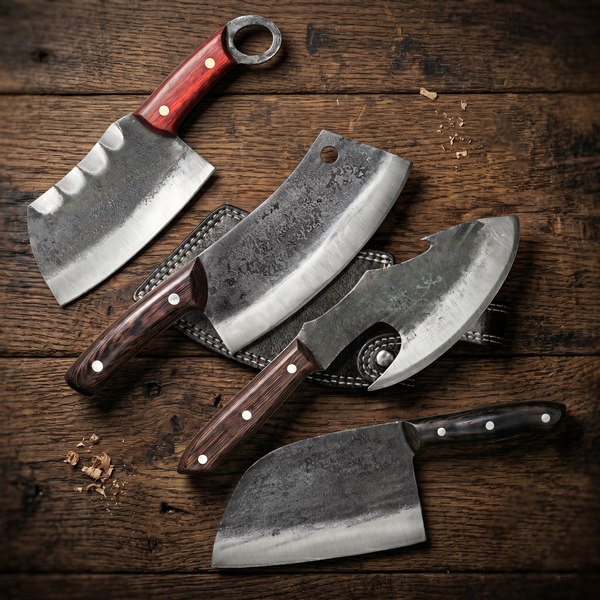
Wolfpack 4 Piece Hand Forged Chef Knife and Cleaver Set is the set we would pick for the cuts in this recipe.
Cook this next
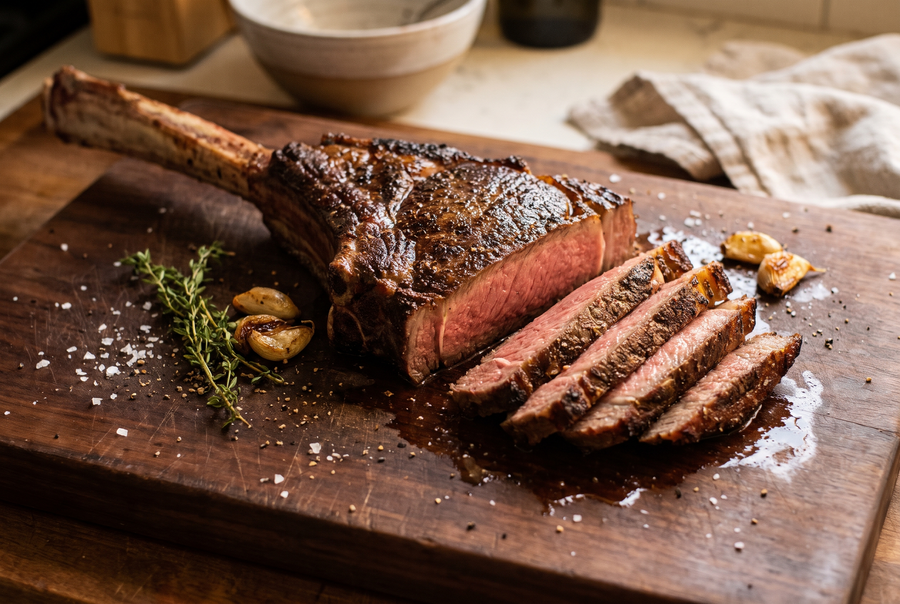
Reverse Sear Tomahawk Steak
A thick bone in tomahawk cooked low in the oven or on the grill, seared hard, then cut off the bone and sliced across the grain...
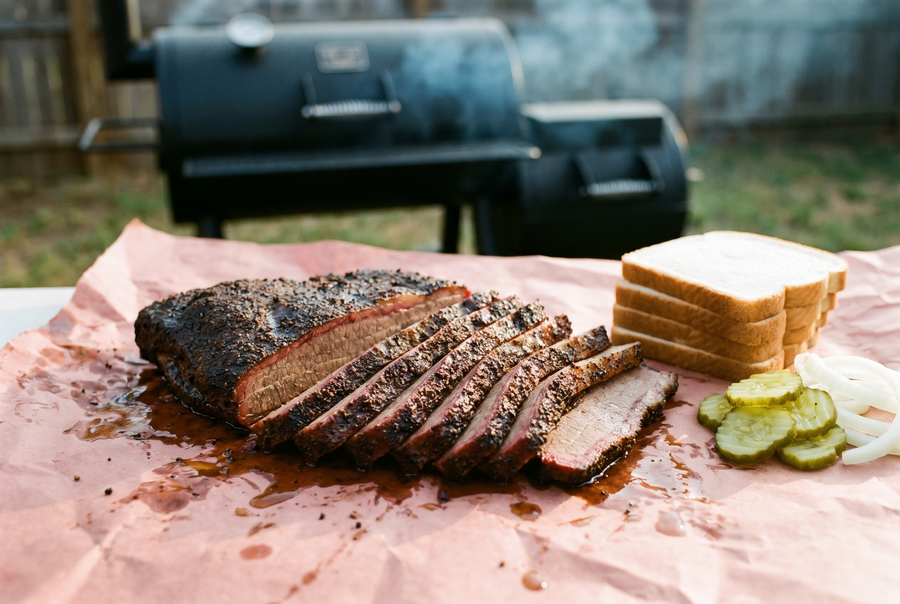
Texas Smoked Brisket, Trim to Slice
A whole packer brisket with salt and pepper, smoked low, wrapped, rested and sliced against the grain of each muscle. Covers how to trim a brisket...
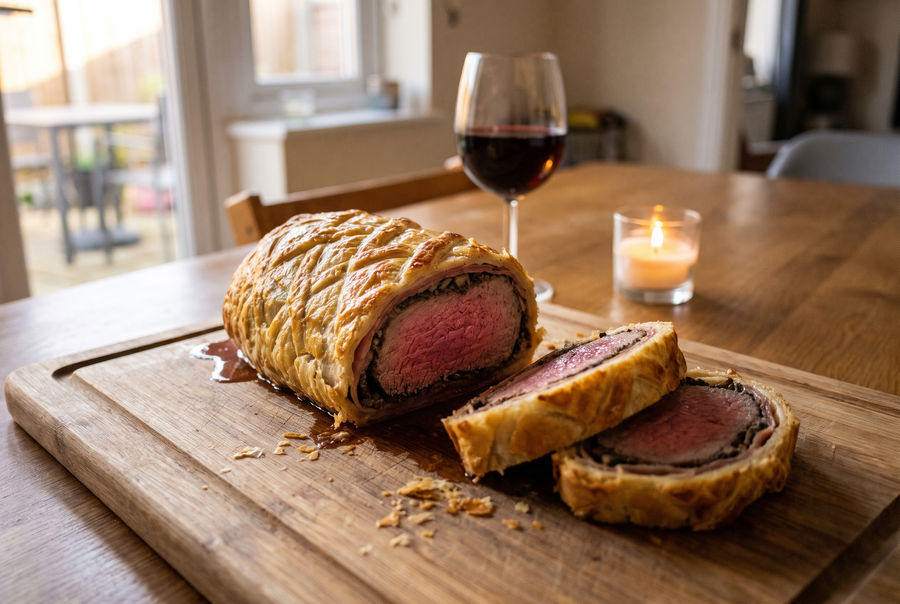
Beef Wellington Without the Panic
A calm, step by step beef Wellington recipe built on a properly trimmed center cut tenderloin, dry mushroom duxelles, prosciutto and puff pastry.
One recipe a week, straight to your inbox
One email a week with the new recipe and the knife that makes it easy. No spam, unsubscribe any time.