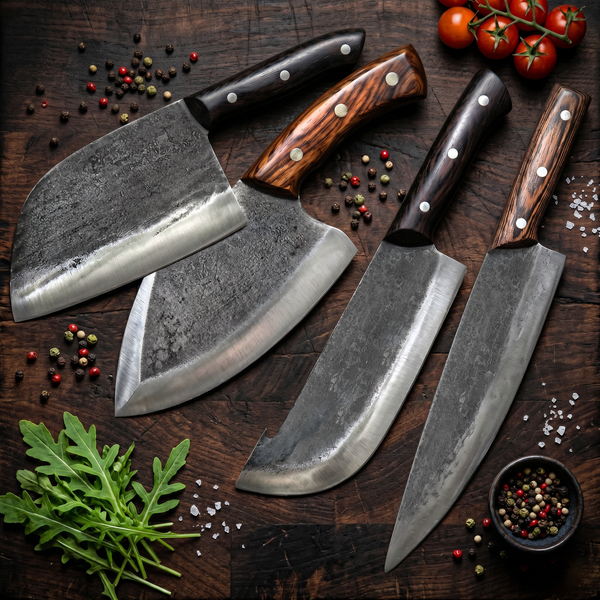
Hand Forged Meat Cleavers
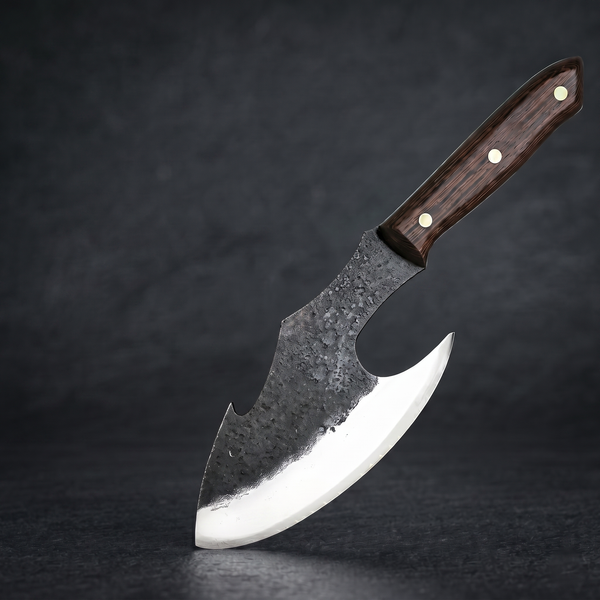
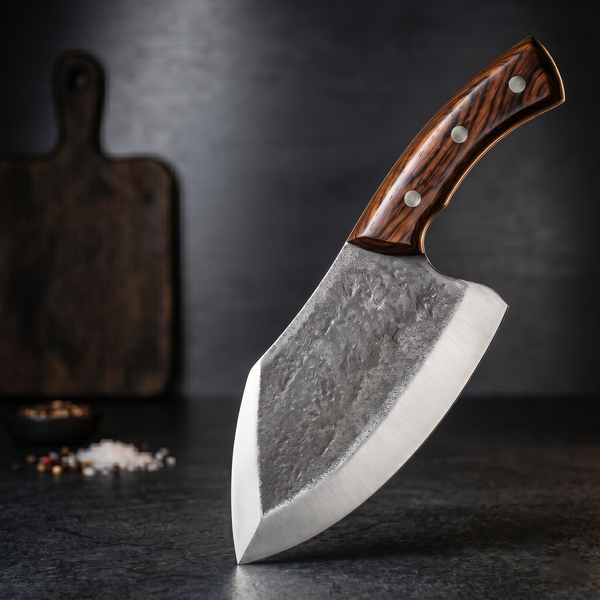
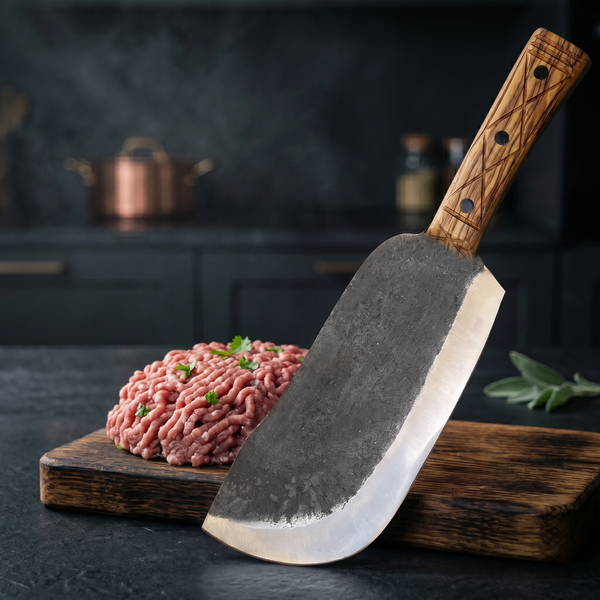
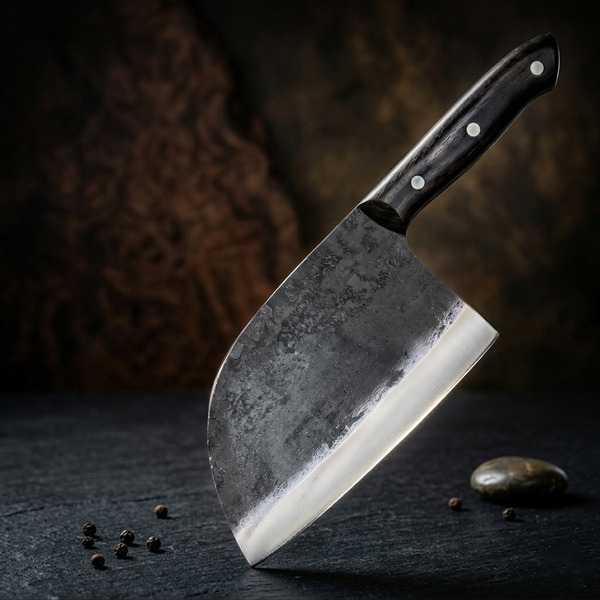
A meat cleaver is the tall, heavy blade you drop through ribs, joints and chicken backs instead of sawing at them, and every cleaver knife on this page is hand forged from high carbon steel in the Serbian style. The range starts with the light 5.5" clip point cleaver at 270 grams, finger hole included, and ends with the Mammoth 9.1", which weighs about 1500 grams and cracks bone for stock. In between you get 6" choppers sized for the grill and the camp box, 7.5" and 8" cleavers for home butchering and game, and the Kermode 7" chef cleaver for people who mostly cut vegetables. Every one is full tang with steel pins. Not sure how much weight you need? Read our guide to the best meat cleaver before you pick.
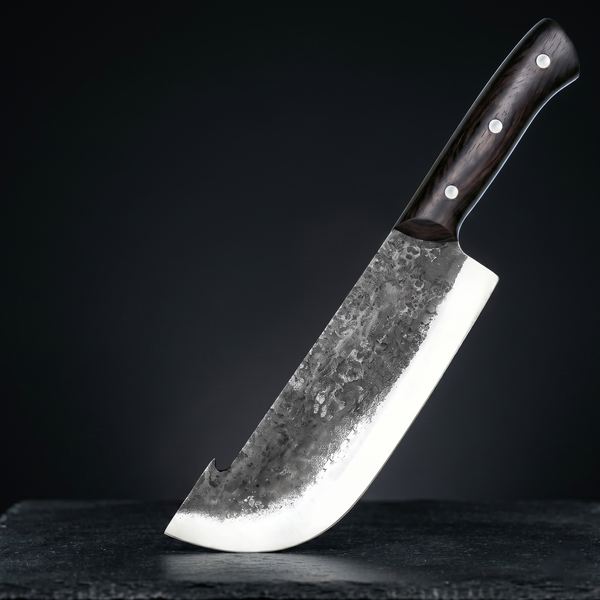
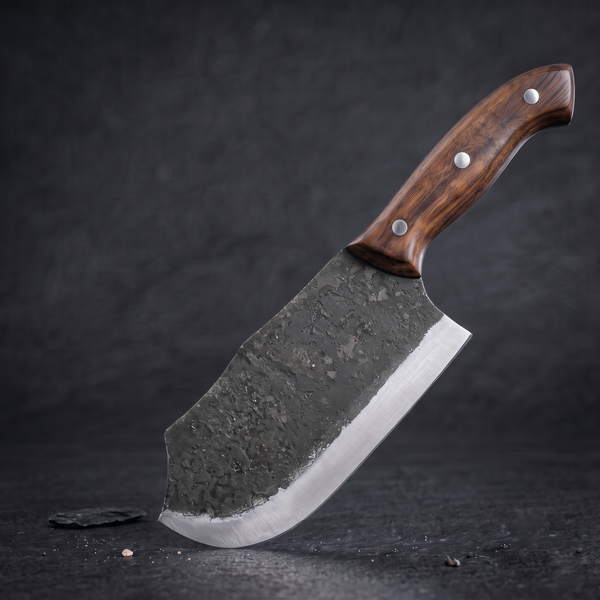
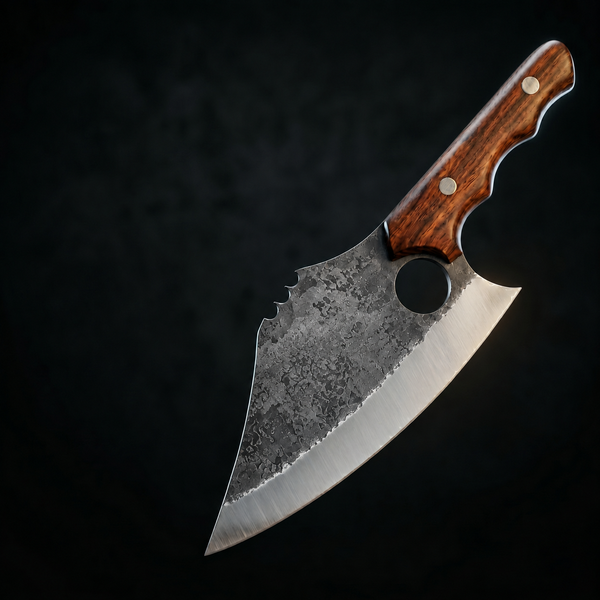
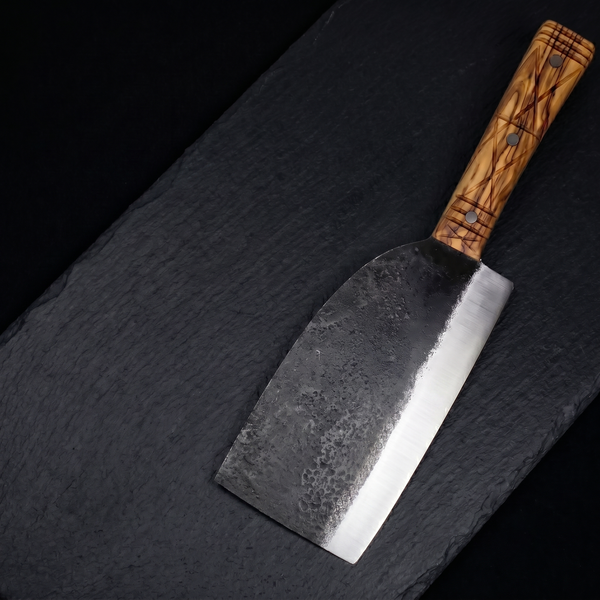
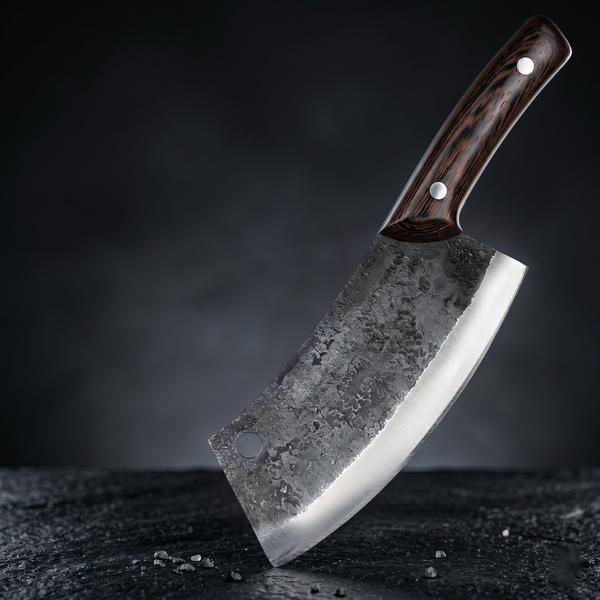
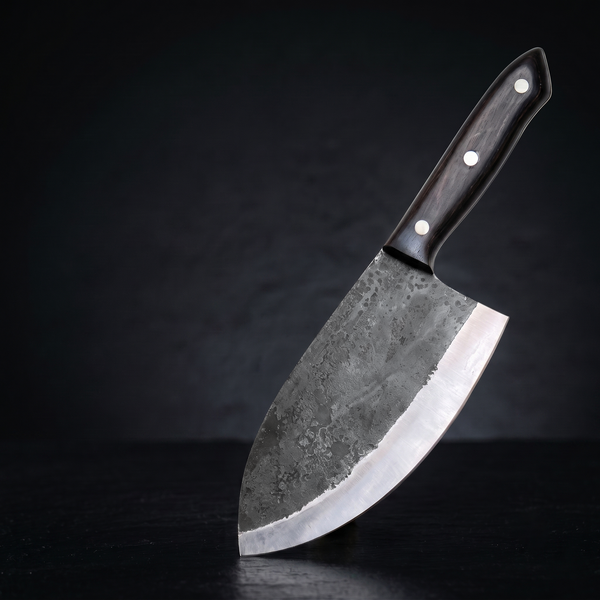
What is a meat cleaver used for?
A meat cleaver does the work that ruins a thin kitchen knife. Lift it a few inches, let it fall, and the weight carries it through a rack of ribs or the joint on a pork shoulder. The blade is tall, so your knuckles stay off the board, and the mass sits right over the edge, so the chop comes from the steel and not from your shoulder. Once the heavy work is done, most of these cleavers still pull their weight on the board: a deep belly rocks through garlic and herbs, and the wide face scoops the pile into the pan. The full list of jobs, and the few a cleaver should never be asked to do, is in our guide on what a meat cleaver is used for.
Can a heavy duty meat cleaver cut through bone?
Yes, within reason. Ribs, poultry, pork bones, cartilage and joints are normal work for the cleavers here. Dense beef bone belongs to the heavy end of the range. The Grizzly 8.7" was built for primal breakdown, and the Mammoth 9.1" cracks bone with a short, controlled drop rather than a big swing. The light 5.5" clip point cleaver is for boneless meat and vegetables and should be treated that way. Frozen meat and stone boards are off limits for every blade on this page. If you are weighing a cleaver against a long trimming blade, our guide on meat cleaver vs butcher knife lays out which does what, and the trimming knives sit in our butcher knives.
Which size cleaver knife should you buy?
Buy for the heaviest job you do every month, not the one you might do once. For the grill and camping, a 6" cleaver like the Warthog portions chicken and splits joints without taking over a small table. For home butchering and deer season, the 7.5" and 8" blades give you the reach to go through a loin in one pass. The Kraken 8" is built around game processing, and the Mastodon 7.5" adds a clip point so the same blade can trim around a joint. If you buy half animals, go to the Grizzly or the Mammoth and accept that neither is a tomato knife. If most of your chopping is vegetables, the Rhino 8" and the Kermode 7" sit closer to a chef knife. Pitmasters should also look at our BBQ knives, where the Kodiak 8" drop point cleaver carves as well as it chops.
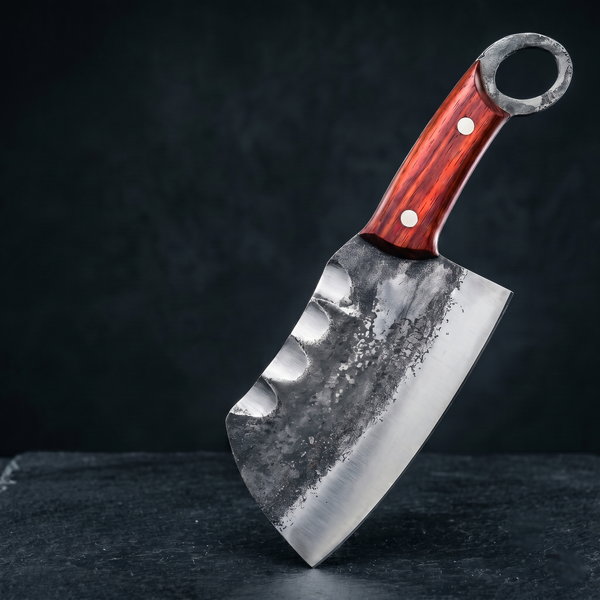
Why do some cleavers have a hole in the blade?
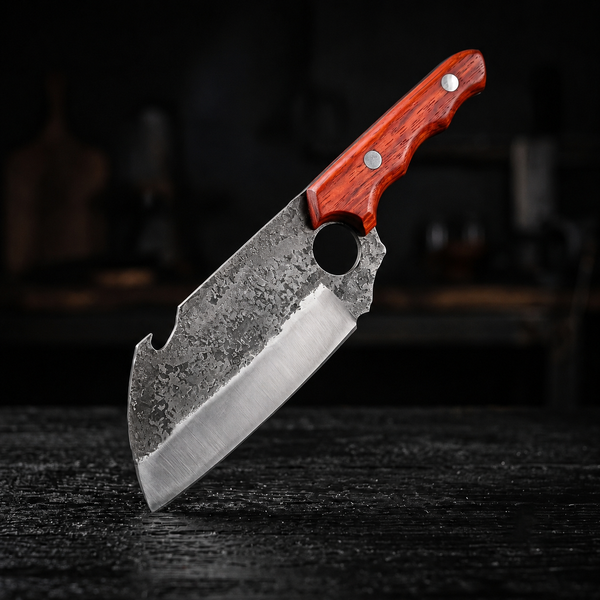
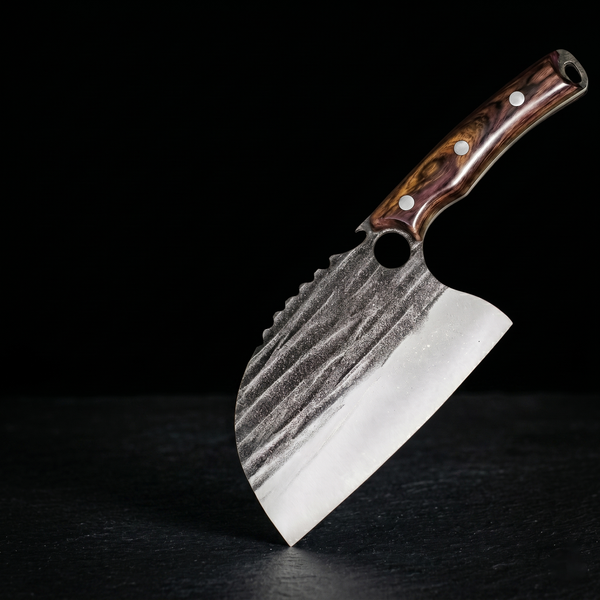
For control. The Megalodon 6.6", the Razorback 6" and the 5.5" clip point cleaver each have a finger hole near the spine. Put your index finger through it and you can choke up for skinning, trimming silver skin or portioning steaks, then slide your hand back to the handle when it is time to chop. The Razorback adds a saw tooth spine for tough connective tissue. The bigger cleavers skip the hole and let their weight do the talking.
How the cleavers on this page compare
| Cleaver | Blade | Best for |
|---|---|---|
| Clip Point Cleaver, Padauk | 5.5" | Vegetables, chicken, boneless meat |
| Warthog | 6" | Joints, BBQ prep, camp cooking |
| Razorback | 6" | Ribs, cartilage, trimming with the finger hole |
| Megalodon | 6.6" | Skinning, portioning, ribs |
| Hand Forged Butcher Cleaver | 7.5" | Heavy breakdown of whole cuts |
| Kraken | 8" | Game processing, quartering |
| Rhino | 8" | Daily chopping, dense vegetables |
| Grizzly | 8.7" | Primal breakdown, beef bone |
| Mammoth | 9.1" | Cracking bone, the biggest joints |
How do you look after a high carbon steel cleaver?
Hand wash it, dry it straight away and wipe on a light coat of food safe oil. No dishwasher, and no leaving it to soak in the sink. The forge scale and hammer marks on the flats stay on for good reason: they help meat release from the steel. Over time the bright edge darkens into a patina, which is normal and actually helps protect it. Our high carbon steel knife care guide goes through the routine in more detail. Every cleaver carries a lifetime warranty against defects in materials and craftsmanship, and unused knives can be returned within 30 days.
Read before you buy
If you are deciding between a cleaver and a chef knife for most of your cooking, cleaver or chef knife: which one first settles it. Once you own one, sharpening a cleaver on a whetstone keeps the edge working. If most of what you cut is vegetables and boneless meat, browse our chef knives for vegetable prep. Trimming and filleting go faster with our boning knives and fillet knives, and a cleaver in a box makes one of the better gifts for people who cook.
Questions
What is a cleaver knife used for?
Chopping through joints, ribs, poultry and cartilage, splitting heavy cuts and portioning meat. You drop the blade and let its weight cut instead of sawing. Cleavers with a deep belly, like the Rhino 8", also rock through vegetables and herbs, and the wide blade carries food from the board to the pan.
Can a meat cleaver cut through bone?
Yes. Every cleaver here handles ribs, poultry bones and joints, apart from the light 5.5" clip point, which is for boneless work. For dense beef bone, pick the Grizzly 8.7" or the Mammoth 9.1", which weighs about 1500 grams. Keep all of them away from frozen meat.
Why is there a hole in a meat cleaver?
On our cleavers it is a finger hole. Put your index finger through it on the Megalodon, the Razorback or the 5.5" clip point cleaver and you can choke up on the blade for close work like trimming and skinning, then hold the handle normally when you want to chop.
What does a meat cleaver look like?
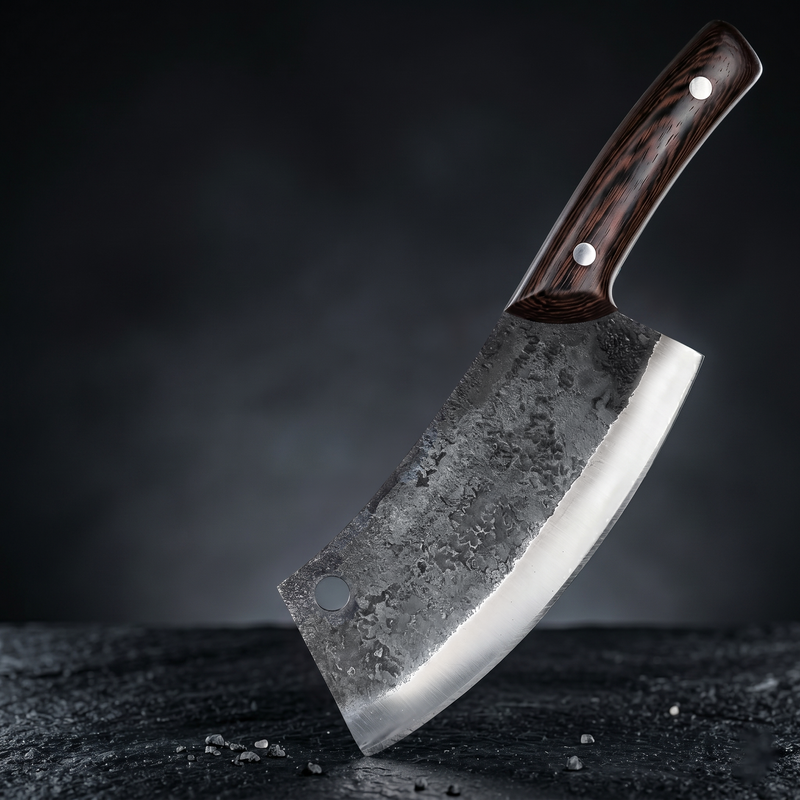
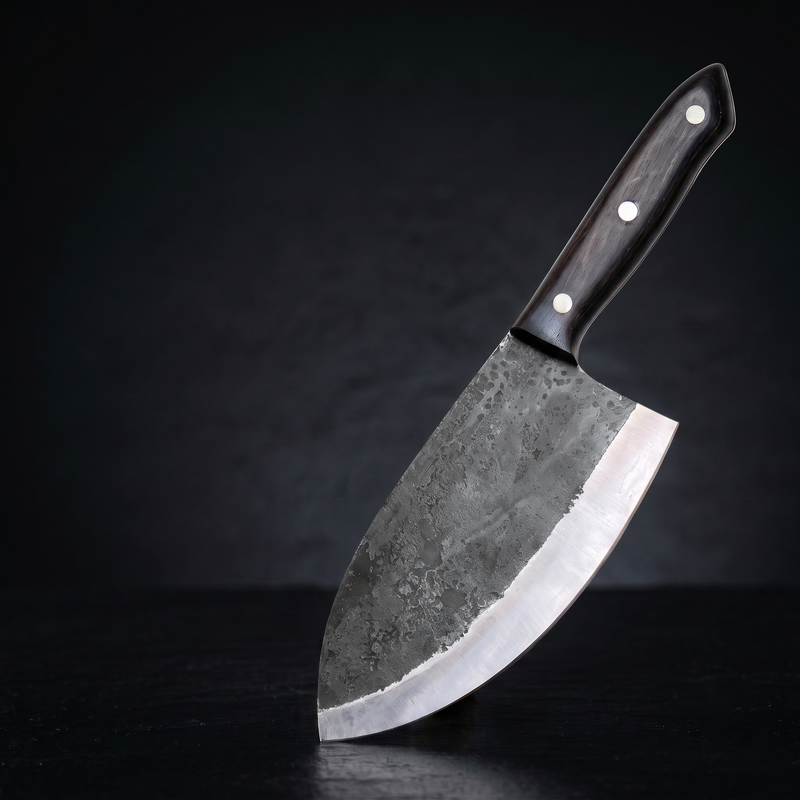
A tall, wide blade with a thick spine and a lot of weight in the hand. Ours are hand forged in the Serbian style, so the flats keep dark forge scale or hammer marks above a polished edge. Some add a finger hole, a clip point, a spear point or a saw tooth spine.
What is the best meat cleaver for home use?
The one that matches your heaviest regular job. For whole animals and beef bone, the Grizzly 8.7" or the Mammoth 9.1". For grilling and camping, a 6" like the Warthog. For everyday cooking with some meat, the Rhino 8". Our best meat cleaver guide compares them side by side.
Guides for Hand Forged Meat Cleavers
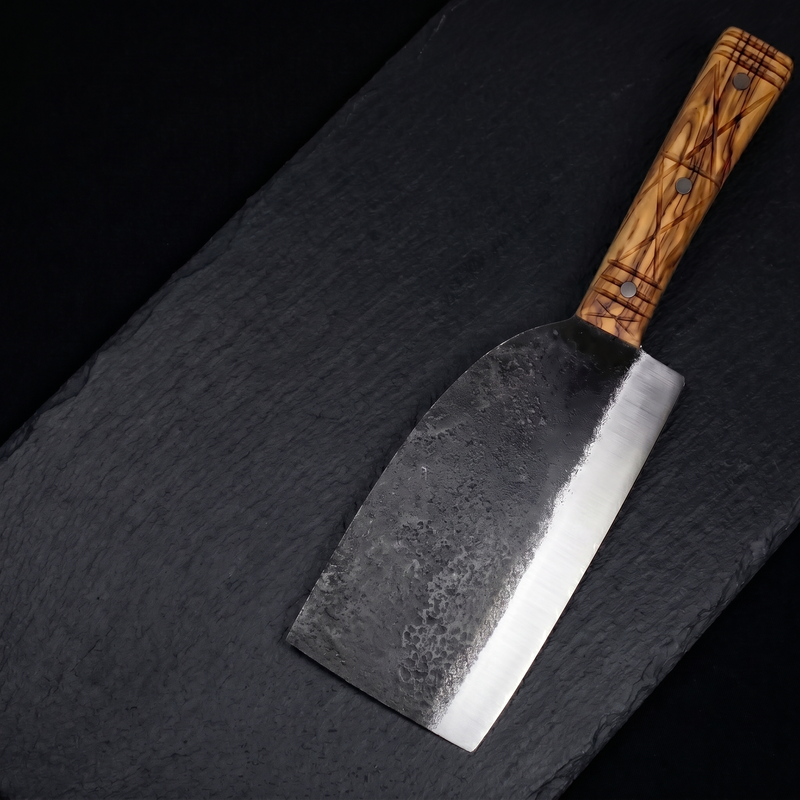
How to Pick the Best Meat Cleaver for Your Kitchen
A buyer's guide to the best meat cleaver for your kitchen. What weight, blade length, height, spine, handle, finger hole and steel actually change,...
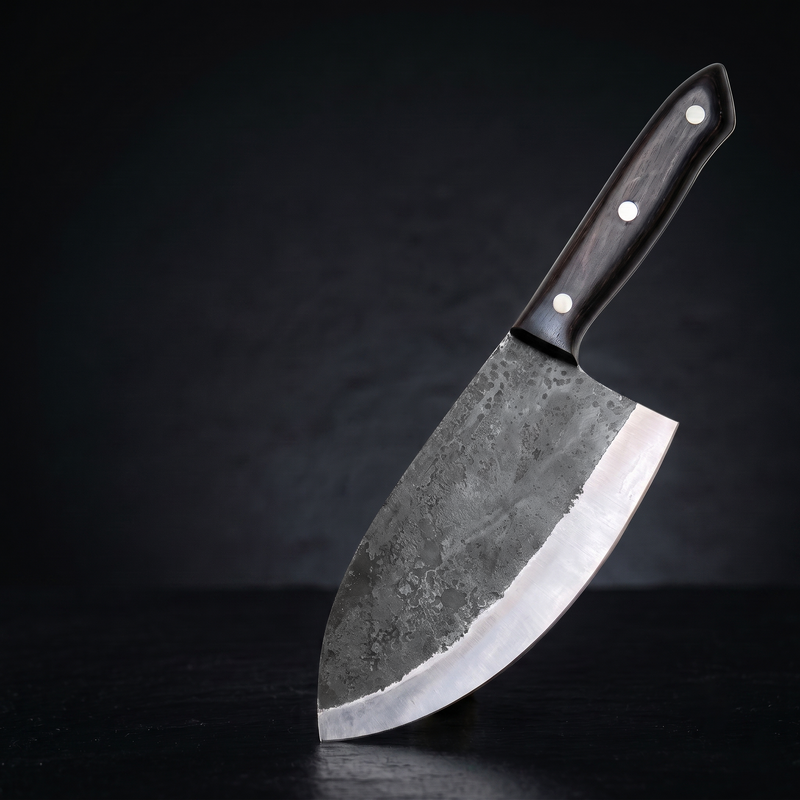
What Is a Meat Cleaver Used For? 9 Jobs It Does Better Than Your Chef Knife
What is a cleaver knife used for? Nine kitchen jobs a meat cleaver does better than your chef knife, from spatchcocking chicken and portioning...
Cleaver vs Chef Knife: Which One Do You Actually Need?
Cleaver or chef knife? What each knife is actually for, where the tall Serbian style chef cleaver sits between them, how weight and cutting...
How to Sharpen a Meat Cleaver: Angle, Stones and Step by Step
A plain guide to sharpening a meat cleaver at home. Why a cleaver edge is ground differently from a chef knife, how to find...