
Cleaver vs Chef Knife: Which One Do You Actually Need?
September 27, 2026 · By Matt
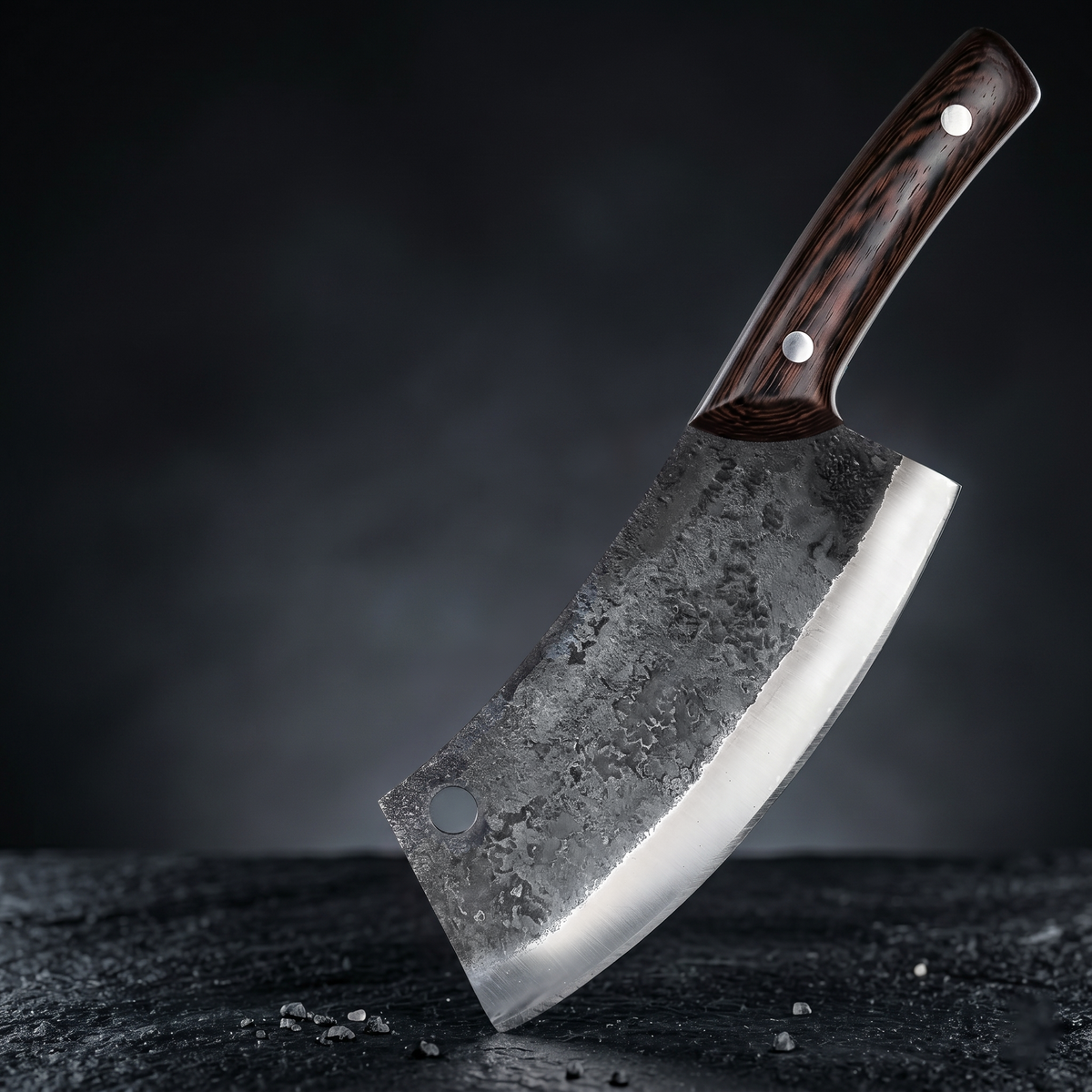
A chef knife is for prep: slicing, dicing, mincing and rocking through herbs and boneless meat. A meat cleaver is for impact: joints, ribs, cartilage and bone. If you cook most nights, buy the chef knife first. If you break down meat at home, you need a cleaver as well, because a chef knife should never hit bone.
The cleaver vs chef knife argument turns up on every cooking forum, usually with someone insisting they do everything with one tall blade and someone else insisting they are wrong. Both are half right. The two knives overlap less than people think, and there is a shape that sits between them which muddies things further. Here is how they differ, where that middle shape fits, and which one to buy first.
What a Chef Knife Is For
A chef knife is the general prep knife. It has a pointed tip, a curved belly and a blade that is thin enough behind the edge to glide through food instead of splitting it. That curve lets you rock the knife on the board, tip down, to mince garlic and herbs. The point handles small detail work like scoring or getting into a pepper. A chef knife is at home with vegetables, fruit, herbs and boneless meat. It is not a bone tool, and using it as one is the fastest way to chip an edge. Our guide to what a chef knife is used for goes through the jobs in more detail.
What a Meat Cleaver Is For
A meat cleaver is built around weight and a thick spine. The blade stays thick down toward the edge, the edge is usually ground at a wider angle, and the mass sits high above the cutting line so each chop lands hard. You lift it a few inches and let it drop. That is how it goes through ribs, splits a chicken down the back and separates joints. It is a poor slicer and a clumsy mincer, and it will turn a tomato into salsa whether you wanted salsa or not. If you are new to cleavers, read what a meat cleaver is used for before you buy one.
One note on names. The thin, rectangular Chinese vegetable cleaver is a different tool from a meat cleaver. It is light and fine edged for vegetables, and it has no business near bone. This guide is about heavy meat cleavers.
The Chef Cleaver: A Shape in Between
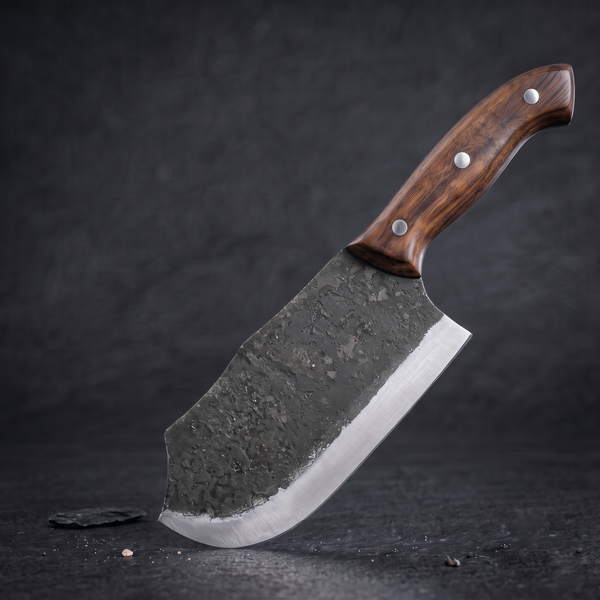
The Serbian style chef knife sits right between the two. It has the tall, wide blade of a cleaver and the curved edge of a chef knife. Our Kermode 7" chef cleaver and the Chef's Kiss 7" are both forged this way. The height gives your knuckles plenty of clearance, the wide face works as a scoop to carry food to the pan, and the curve lets it rock like a chef knife.
What it is not is a meat cleaver. It looks tough enough for bone, and people assume it is. Both the Kermode and the Chef's Kiss are prep knives, built for vegetables and boneless meat on the cutting board, not the chopping block. For most people who search for a chef cleaver knife, this is the shape they actually want: one blade for nearly all daily prep, with the cleaver look and none of the bone work.
| Chef knife | Chef cleaver | Meat cleaver | |
|---|---|---|---|
| Blade shape | Pointed tip, curved belly | Tall and wide, curved edge | Tall, thick spine, heavy |
| Main cutting motion | Rock chop and push cut | Rock chop, push cut, chop | Lift and drop |
| Best at | Vegetables, herbs, boneless meat | Vegetables, herbs, boneless meat, scooping | Joints, ribs, cartilage, bone |
| Bone | No | No | Yes |
| Fine tip work | Yes | Limited | No |
| Our examples | Orca 7", Ironclad 8.7" | Kermode 7", Chef's Kiss 7" | Kodiak 8", Mammoth 9.1" |
Weight, Agility and Fatigue
Weight is the biggest practical difference, and you feel it more on the fortieth cut than on the first. A chef knife is light enough to hold for an hour of prep without your wrist complaining. A heavy cleaver is the opposite. Our Mammoth 9.1" meat cleaver weighs about 1500 grams. That weight is exactly what makes it good at cracking bone, and exactly what makes it a bad idea for dicing three onions. Nobody wants a forearm workout with their mirepoix.
Agility follows weight. A chef knife changes direction easily, gets its tip into tight spots and lets you work quickly on small food. A cleaver likes to go straight down. The chef cleaver lands in the middle. The tall blade carries more steel than a slim chef knife, which helps it push through dense vegetables, and it still moves around the board well enough for everyday dicing.
Rock Chop Versus Push Cut Versus Drop
The motion you prefer matters as much as the food you cut.
Rock chop
The tip stays on the board and you rock the curved belly up and down through herbs, garlic and onions. This needs a curve. A chef knife does it naturally, and so do the Kermode and the Chef's Kiss. A flat edged meat cleaver does not rock. It just bangs on the board.
Push cut
You slide the blade forward and down through the food in one stroke. Chef knives and chef cleavers both do this well. A long chef knife like the Ironclad 8.7" is especially good at it on big produce and roasts.
Drop chop
You lift the blade a few inches and let the weight fall through the cut. This is the cleaver motion, and it is how bone and joints are dealt with. A chef knife should never be used this way on bone. A chef cleaver should not either, however much it looks the part.
Edges and Sharpening
The two knives are also sharpened differently, which is one more reason not to swap their jobs. A thin chef knife is usually sharpened at a finer angle so it glides through food. A heavy cleaver is usually given a wider, tougher angle so the edge survives the hit on a joint. Put a chef knife through bone and the fine edge chips. Ask a cleaver to mince parsley and the wide edge bruises it. Both come back on a whetstone, and the method is nearly the same. Our guide on how to sharpen a meat cleaver covers the cleaver side, including the marker trick for finding the angle already on the blade.
Which to Buy First
For a home cook
Buy a chef knife or a chef cleaver first. Most home cooking is vegetables and boneless meat, and either one covers it. If you like a slimmer, traditional profile, the Orca 7" chef knife is quick in the hand and easy to steer. If you like the tall blade for scooping and knuckle room, go with the Kermode. You can compare them all in our hand forged chef knives.
For a griller
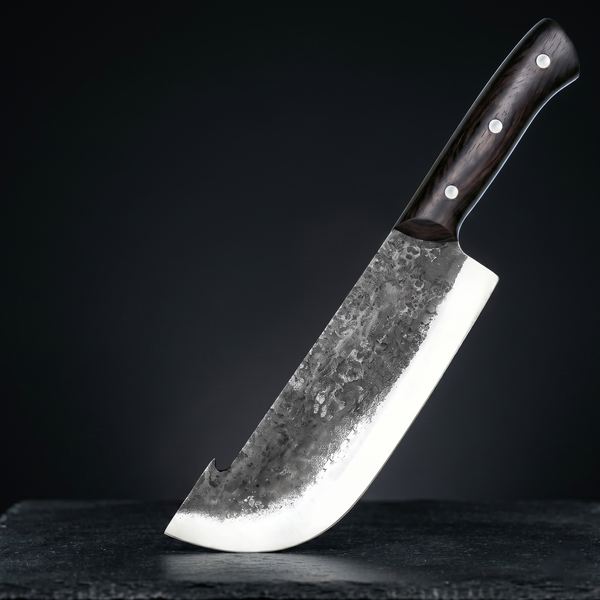
If most of your cooking happens on a smoker, the Kodiak 8" butcher cleaver is the one to look at. It has a drop point and a curved belly, so it trims a brisket before the cook and carves it after, with enough weight up front for joints. It is not a heavy bone splitter, but it bridges the gap between the two better than a straight edged cleaver does. You will still want a chef knife for the sides.
For a hunter
If you process your own deer or hogs, a cleaver moves up the list. Quartering, splitting ribs and separating joints are cleaver jobs. The Kodiak works through game, and there are heavier options in our hand forged meat cleavers. Keep a chef knife or a boning knife for the fine work around the bone.
Owning Both
Most people who cook a lot of meat end up with both, and for good reason. The chef knife handles the prep, the cleaver handles the bone, and neither gets asked to do the other's job. That is also how both of them stay sharp longer. If you only want two knives, a chef knife or chef cleaver plus one mid size meat cleaver covers nearly everything a home kitchen throws at it.
Whichever you pick, the care is the same. All of our blades are hand forged from high carbon steel, so hand wash them, dry them straight away and wipe on a light coat of food safe oil. No dishwasher and no soaking. The steel darkens into a patina over time, which is normal and actually helps protect it.
If the cleaver won, which meat cleaver to buy sorts our range by job. If you want a bit of both, read what a Serbian chef knife actually is. It is the closest thing to a compromise in this argument, and it still looks like it could settle a few.
Questions
Can a cleaver replace a chef knife?
A heavy meat cleaver cannot. It is too heavy and too thick for fine prep, and it does not rock through herbs. A chef cleaver, the tall Serbian style chef knife, can replace a chef knife for most daily prep. It still does not replace a paring knife for small work, or a meat cleaver for bone.
Can a chef knife cut through bone?
No. A chef knife is thin behind the edge and built to slice, so bone will chip or roll it. Work around bones with a chef knife or a boning knife, and use a meat cleaver when you need to go through ribs, joints or cartilage. Frozen food is off limits for both.
What is a chef cleaver knife?
It is a knife with the tall, wide blade of a cleaver and the curved edge of a chef knife. It rocks, slices and scoops like a chef knife and gives more knuckle clearance. Our Kermode 7" and Chef's Kiss 7" are forged this way. They are prep knives, not bone choppers.
Should I buy a cleaver or a chef knife first?
For most home cooks, the chef knife comes first because most cooking is vegetables and boneless meat. Add a meat cleaver when you start breaking down chickens, ribs or larger cuts at home. If you smoke a lot of meat or process game, you may want a cleaver sooner than most.
Shop the knives from this guide
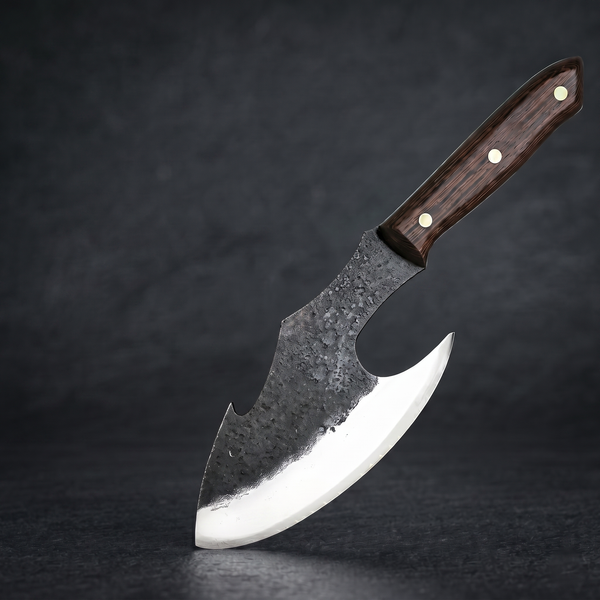
Keep reading
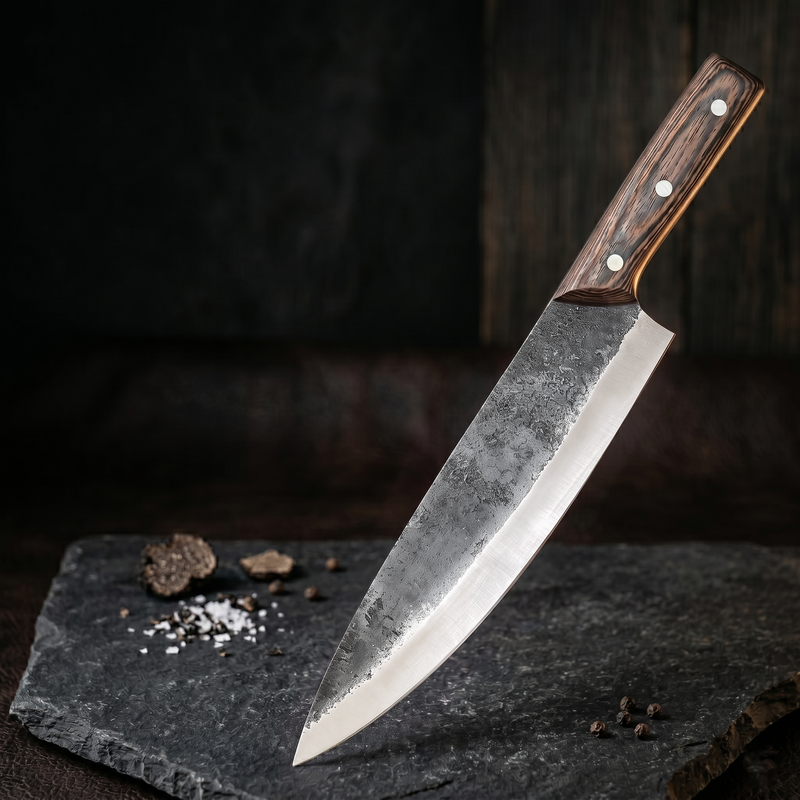
What Is a Chef Knife Used For? Jobs, Sizes and How to Hold One
What a chef knife is used for, and what it should never be asked to do. How to pick a blade length for your...
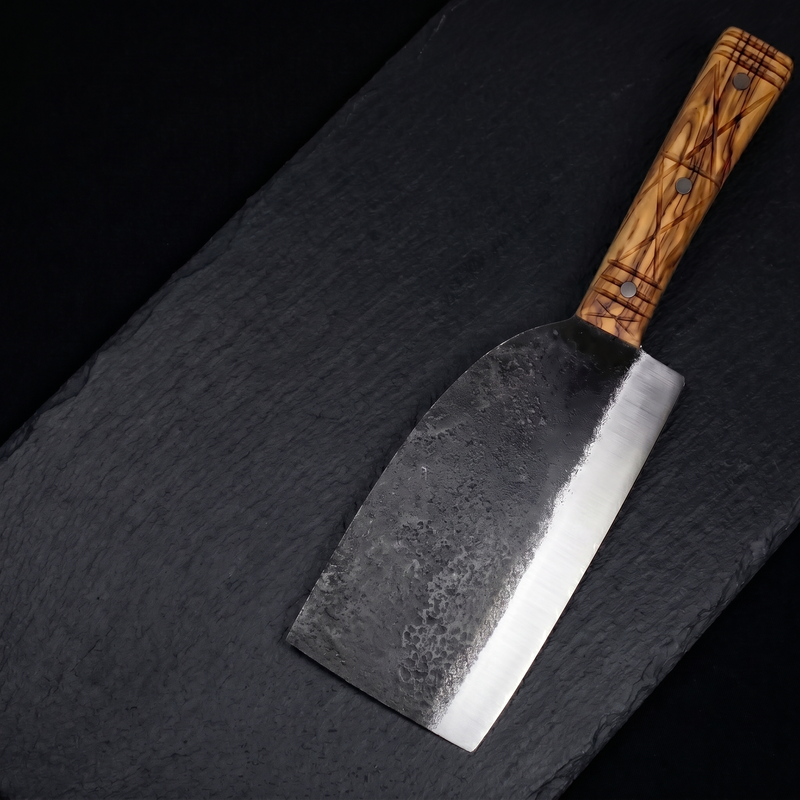
How to Pick the Best Meat Cleaver for Your Kitchen
A buyer's guide to the best meat cleaver for your kitchen. What weight, blade length, height, spine, handle, finger hole and steel actually change,...
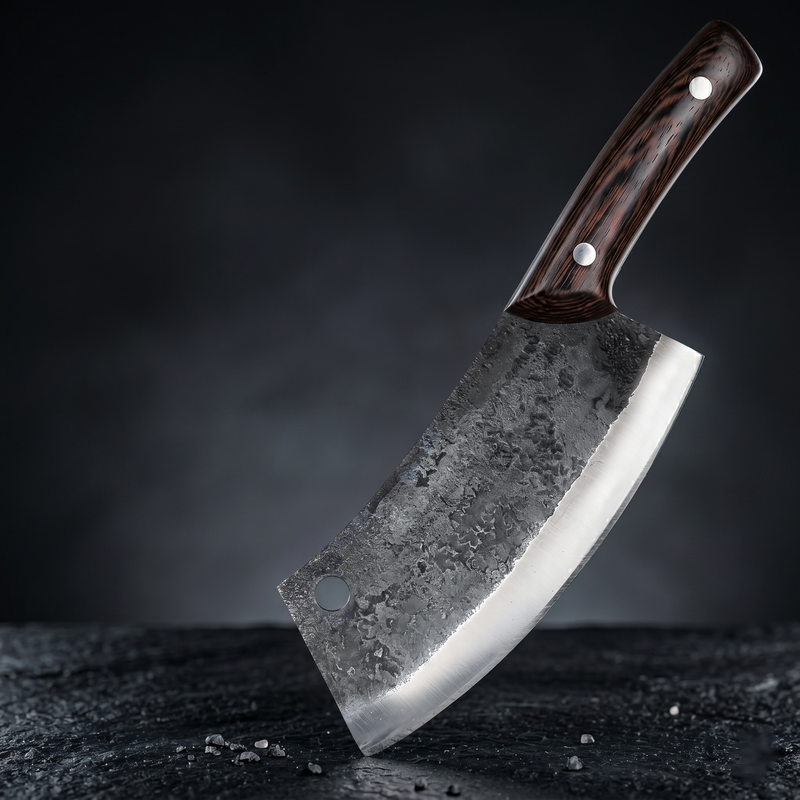
What Is a Serbian Chef Knife? The Cleaver Shaped Blade Explained
A Serbian chef knife is a thick, hand forged, cleaver shaped chef knife that chops, rocks and scoops. Here is what the style really...