
What Is a Chef Knife Used For? Jobs, Sizes and How to Hold One
September 27, 2026 · By Matt
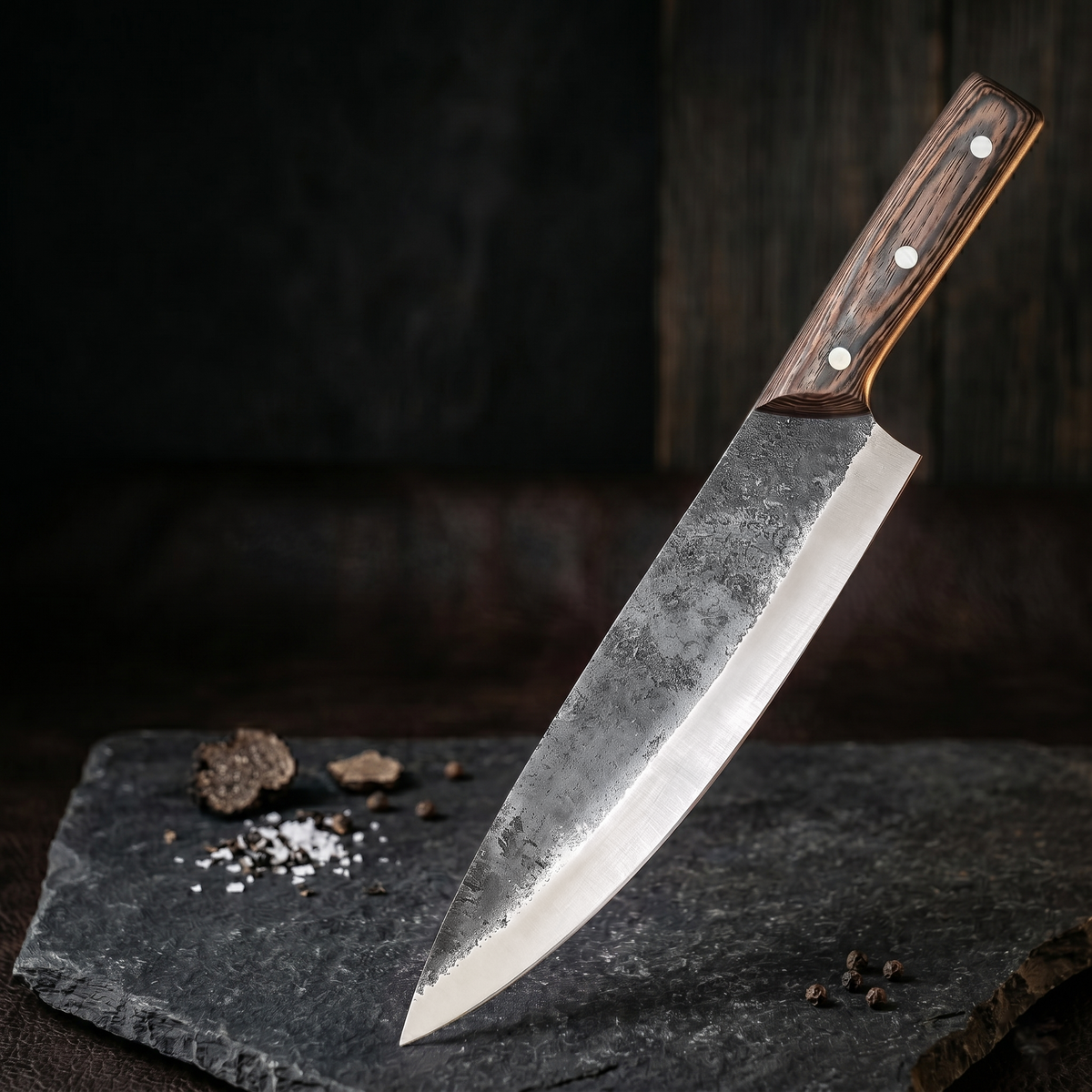
A chef knife is the general purpose knife of the kitchen. It is used for slicing, dicing and mincing vegetables, chopping herbs, crushing garlic under the flat of the blade, and cutting boneless meat and fish. The curved edge rocks on the board for fast chopping. It is not for bone, frozen food or prying lids open.
If you only own one good knife, it should be this one. It does most of the cutting in a normal week, and the rest of the knife block exists mainly to cover the jobs a chef knife does badly. Below is what a chef knife is, the jobs it handles, how to choose a size, and the point where you should put it down and pick up a cleaver.
What Is a Chef Knife?
A chef knife is a long, fairly wide blade with a pointed tip and an edge that curves up toward that tip. The curve is called the belly, and it is what lets the knife rock. The tip stays on the board, the heel goes up and down, and the blade walks through a pile of herbs. The back of the edge does the heavier chopping, the middle does most of the slicing, and the tip handles fine work like scoring and mincing shallots.
Chef knives come in a range of lengths, and 8 inches is the size most people picture. Ours are hand forged in the Serbian style from high carbon steel, which means a thicker, taller blade than most people expect, with the flats worked by hand and the hammer marks left on. The shape still does the same job.
What Is a Chef Knife Used For?
These are the chef knife uses that come up every week:
- Dicing and slicing vegetables. Onions, peppers, carrots, celery and potatoes. This is most of what it does.
- Mincing herbs and garlic. Rock the belly back and forth with your other hand resting flat on the spine near the tip.
- Crushing garlic. Lay the blade flat on a clove and press down with the heel of your hand.
- Cutting boneless meat. Chicken breasts, pork loin, or steak sliced thin for a stir fry.
- Portioning fish. Cutting fillets into portions. Filleting a whole fish is a job for a fillet knife.
- Scooping. A tall blade doubles as a shovel to carry chopped food to the pan.
- Breaking down big produce. Cabbage, melon and squash, as long as the blade is long enough.
And here is what it should not do. No bone, because a chef knife edge is thinner than a cleaver edge and it will chip. No frozen food. No prying, twisting or opening cans, unless you were hoping for a shorter chef knife. Keep it on a wood or plastic board and never on glass or stone.
Chef Knife Size: Picking a Blade Length
Blade length is the question people agonize over most. The honest answer depends on your hand and your board.
Hand size and comfort
A shorter blade is quicker and easier to steer, which suits smaller hands, smaller kitchens and anyone new to a good knife. A longer blade covers more food per stroke and gets through big produce in one pass, but it takes a steadier hand and more room. If you are unsure, a 7 inch blade is the safe middle. It is long enough for a head of cabbage and short enough to mince shallots without the tip wandering off.
Board size
The knife should fit across your cutting board with room to spare. A long blade on a small board means the tip hangs off the edge, or you end up chopping at an angle just to fit. If your counter is tight and your board is small, go shorter. If you have a big board and cook for a crowd, go longer.
The 8 inch chef knife question
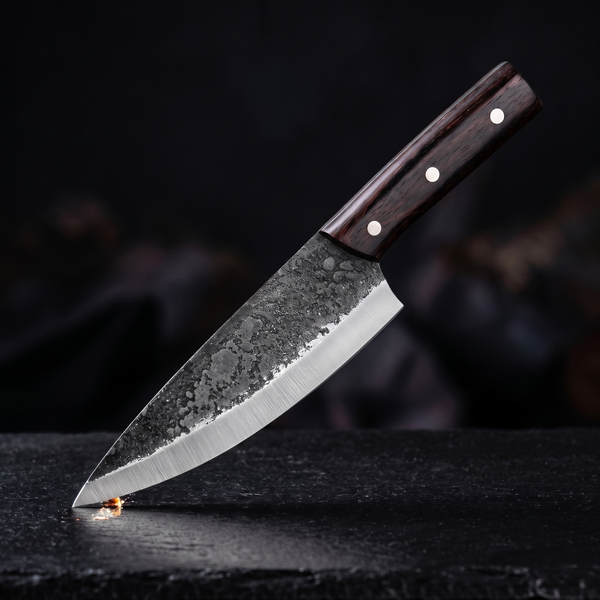
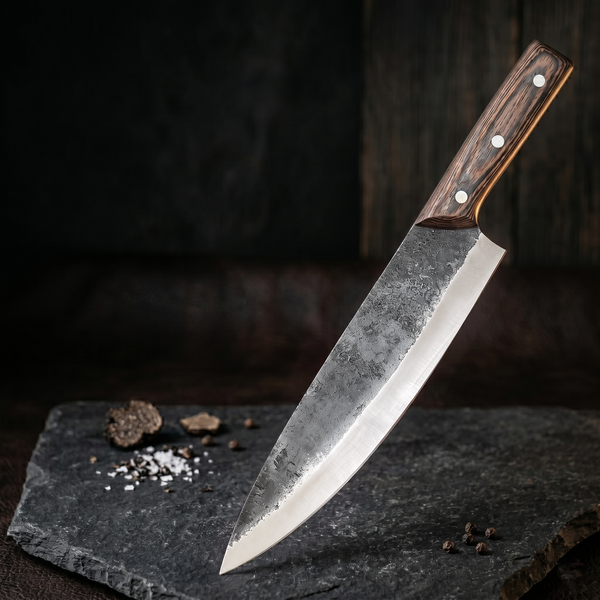
The 8 inch chef knife is the size most people ask about, so here it is plainly: we do not make one at exactly 8 inches. Our single chef knives come at 7 inches and at 8.7 inches. The Ironclad is the long one, an 8.7" blade on a 13.7" overall frame, for cooks who prep in volume and have a decent sized board. If you wanted an 8 inch knife, take the Ironclad and enjoy the extra reach, or drop to 7 inches for a quicker knife. The only longer chef knife we make is the 9" chef knife that comes in the Mastercraft 4 Piece set.
| Knife | Blade | Profile | Price | Best for |
|---|---|---|---|---|
| Orca | 7" (12" overall) | Slimmer, more traditional chef knife | $135 | Everyday prep in most home kitchens |
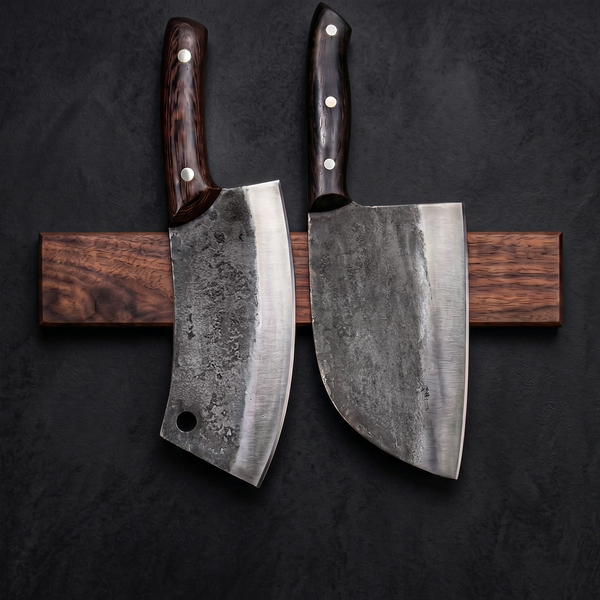
| Kermode | 7" | Tall chef cleaver with a curved edge | $119 | One knife for vegetables and boneless meat |
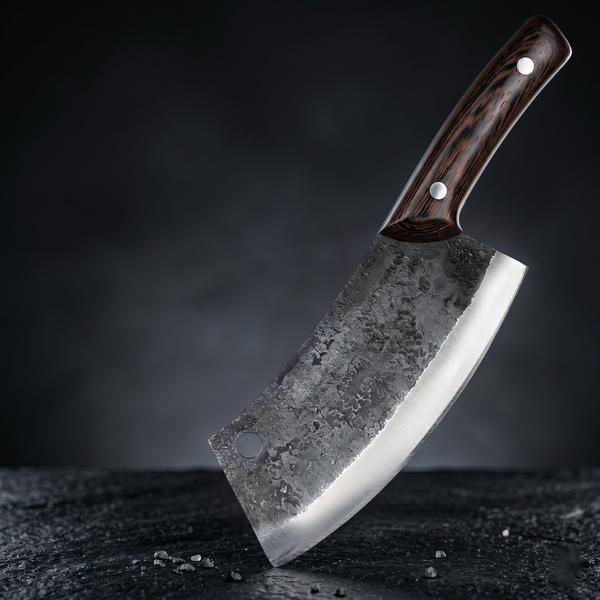
| Chef's Kiss | 7" | Tall blade, curved belly, hammer textured face | $224 | Rocking, chopping and scooping |
| Ironclad | 8.7" (13.7" overall) | Large chef knife with a hand hammered spine | $179 | Volume prep, big produce, roasts |
Tall Blades vs Low Blades
Blade height is the distance from the edge up to the spine at the heel, and it matters more than people expect. On a low blade your knuckles get close to the board when you chop, so you end up tilting the knife to keep them clear. A tall blade keeps your knuckles well above the board and gives you a wide flat to scoop food. It also puts more steel above the edge, so each chop lands with a bit more weight.
The trade is that a tall blade feels less nimble for fine tip work. The Chef's Kiss 7" has a taller blade than the Orca, with a curved belly for rocking and real knuckle clearance. The Kermode 7" goes further toward a cleaver shape, a chef knife and a cleaver in one blade, and it still rocks like a chef knife. The Orca 7" keeps the slimmer, more traditional profile if you want a quicker knife.
Weight and Balance
A heavier chef knife does more of the work on dense food. Sweet potatoes, squash and big onions give way under weight rather than wrist effort. A lighter knife is quicker and less tiring over a long prep session. Neither is wrong. It depends on whether your evenings involve a pile of root vegetables or a pile of herbs.
Balance is about where that weight sits. Hold the knife loosely where the blade meets the handle and see which way it tips. A knife that tips forward helps with chopping. One that settles back toward the handle feels lighter and easier to control. On a full tang knife, like all of ours, the steel runs the length of the handle and is held with steel pins, which keeps the balance close to your hand. On the Ironclad that means the weight sits where your hand is rather than out at the tip, even with an 8.7" blade.
How to Hold a Chef Knife: The Pinch Grip
Most people start by holding a chef knife like a hammer, with the whole fist on the handle and the index finger along the spine. It works, but it gives you less control than it should. The pinch grip is what most cooks use instead.
- Wrap your middle, ring and little fingers around the handle, just behind the blade.
- Pinch the blade itself between your thumb and the side of your bent index finger, right where it meets the handle.
- Keep your wrist fairly straight and let the movement come from your forearm rather than flicking the wrist.
Your other hand matters too. Curl your fingertips under into a claw and rest your knuckles against the side of the blade, so the knife slides along your knuckles and your fingertips stay out of the way. A tall blade makes this easier, because there is more flat for the knuckles to guide against. The pinch grip feels awkward for the first few sessions, and after that you will wonder how you ever cut any other way.
When to Reach for a Cleaver Instead
A chef knife is not a cleaver, however tall it is. The moment the job involves bone, joints or frozen food, put the chef knife down. Splitting a chicken, cutting through ribs and cracking bones for stock all belong to a cleaver with a thick spine and a tougher edge. A chef knife edge is thinner and ground for slicing, and it will chip on bone.
The Kermode sits between the two shapes, but it is still built for the cutting board rather than the chopping block, so it is not for bone either. For the full side by side, read our guide on cleaver vs chef knife, or go straight to our hand forged meat cleavers if you already know the answer.
Keeping a Chef Knife Sharp
A sharp chef knife is easier to control than a dull one, because it goes where you point it instead of skating off an onion skin. High carbon steel takes a keen edge and comes back easily with routine sharpening at home. The steps in our guide to sharpening a meat cleaver carry over to a chef knife, which simply wants a finer edge than a cleaver does. Between sharpenings, hand wash the knife, dry it right away, wipe on a light coat of food safe oil and keep it out of the dishwasher. The high carbon steel knife care guide covers rust and patina in more detail.
If the tall, heavy end of the range caught your eye, the Serbian style chef knife gets a guide of its own. And if you would rather buy your chef knife with a couple of partners, our chef knife set guide compares every set we make. Either way, one good chef knife beats a block of eight you never touch.
Questions
What is a chef knife mainly used for?
Everyday prep. That means slicing, dicing and mincing vegetables, chopping herbs, crushing garlic and cutting boneless meat and fish. The curved edge lets it rock through herbs, and a tall blade doubles as a scoop. It should not be used on bone, on frozen food or for prying.
What size chef knife should I get?
Match it to your hand and your board. A 7 inch blade is quick, easy to steer and fits a small board. A longer blade like the 8.7 inch Ironclad covers more food per stroke and suits big produce, but it needs a decent sized board and a steadier hand.
Is an 8 inch chef knife better than a 7 inch?
Not better, only longer. An 8 inch blade gives more reach on cabbages, melons and roasts, while a 7 inch blade is quicker and easier to control on a crowded board. We do not make an exact 8 inch chef knife. Our single chef knives are 7 inches and the 8.7 inch Ironclad.
Can a chef knife cut through bone?
No. A chef knife edge is thin and ground for slicing, and it will chip or roll on bone. Use it to work around bone, then switch to a cleaver for joints, ribs and anything you need to chop through. Frozen food is off limits too.
How do you hold a chef knife properly?
Use a pinch grip. Pinch the blade between your thumb and the side of your index finger right where it meets the handle, and wrap your other fingers around the handle. Curl the fingertips of your guiding hand into a claw so the blade slides along your knuckles.
Shop the knives from this guide
Keep reading
What Is a Serbian Chef Knife? The Cleaver Shaped Blade Explained
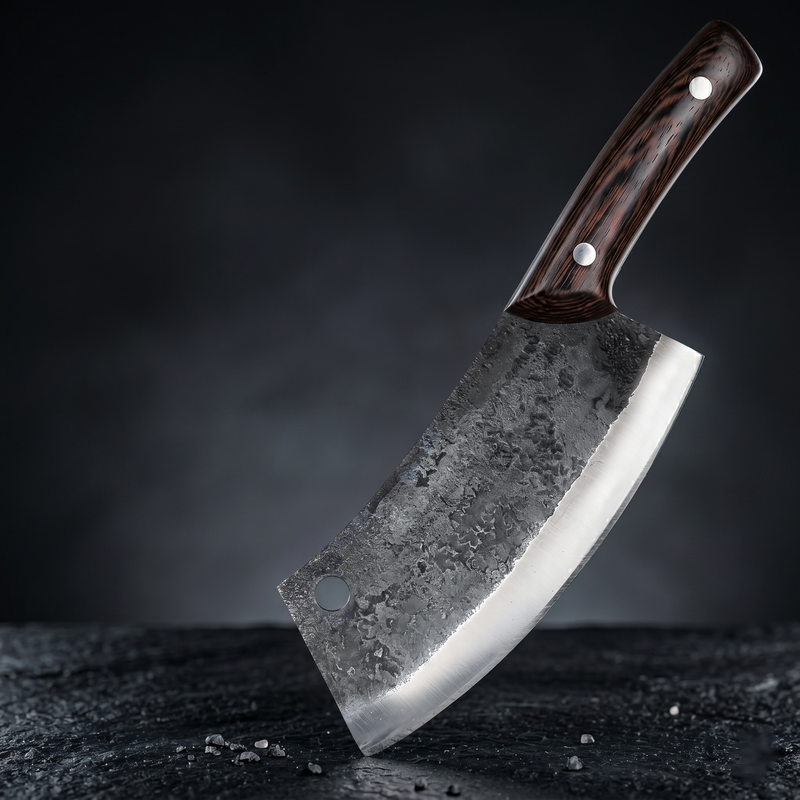
A Serbian chef knife is a thick, hand forged, cleaver shaped chef knife that chops, rocks and scoops. Here is what the style really...
Best Chef Knife Set: What a Home Cook Actually Needs
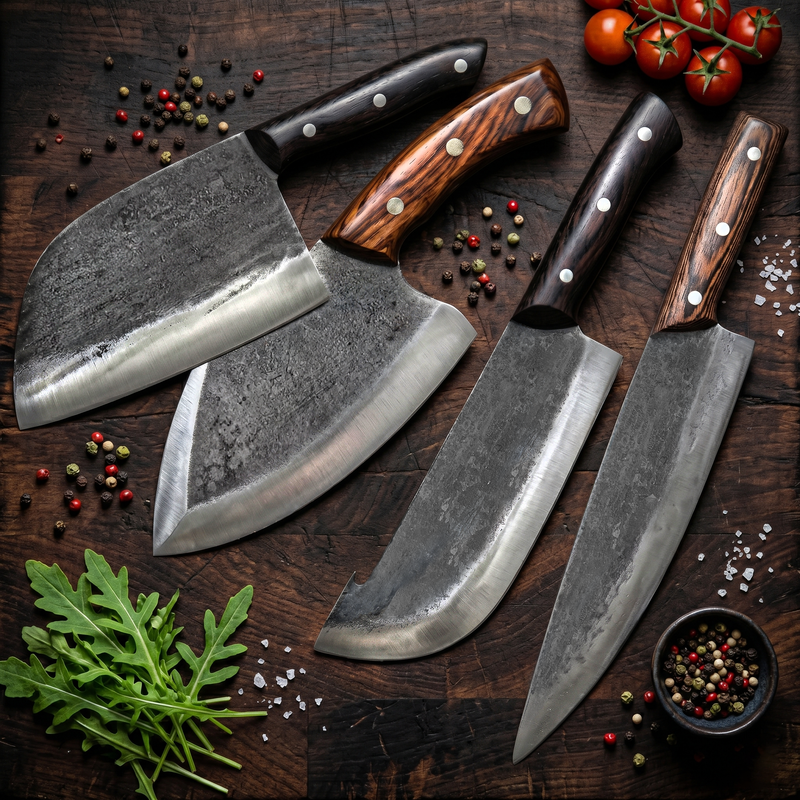
What makes the best chef knife set for a home cook. How many knives you actually use, the working trio of chef knife, cleaver...
Cleaver vs Chef Knife: Which One Do You Actually Need?
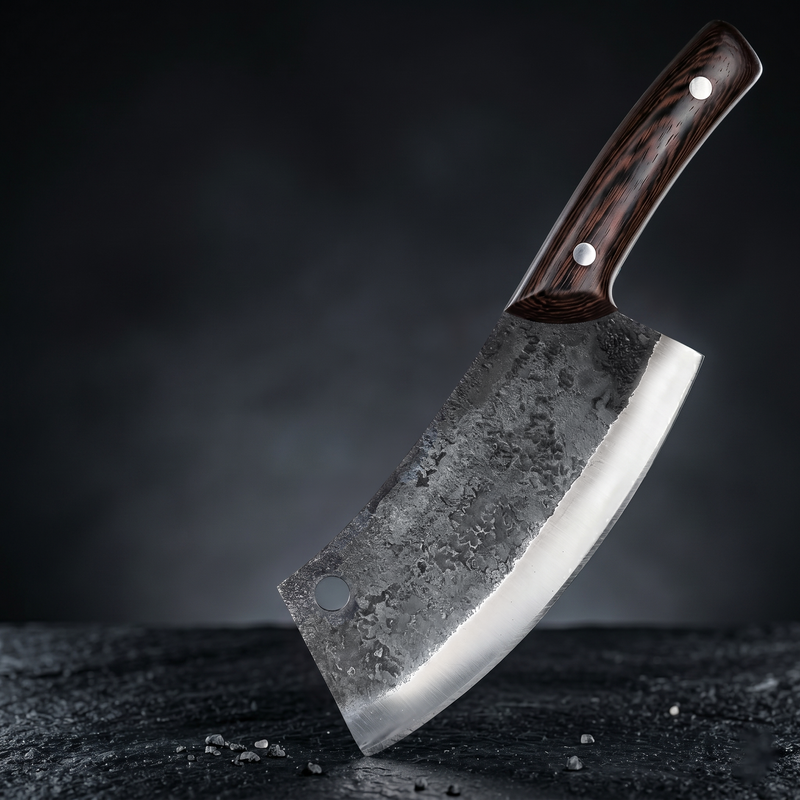
Cleaver or chef knife? What each knife is actually for, where the tall Serbian style chef cleaver sits between them, how weight and cutting...