
What Is a Serbian Chef Knife? The Cleaver Shaped Blade Explained
September 27, 2026 · By Matt
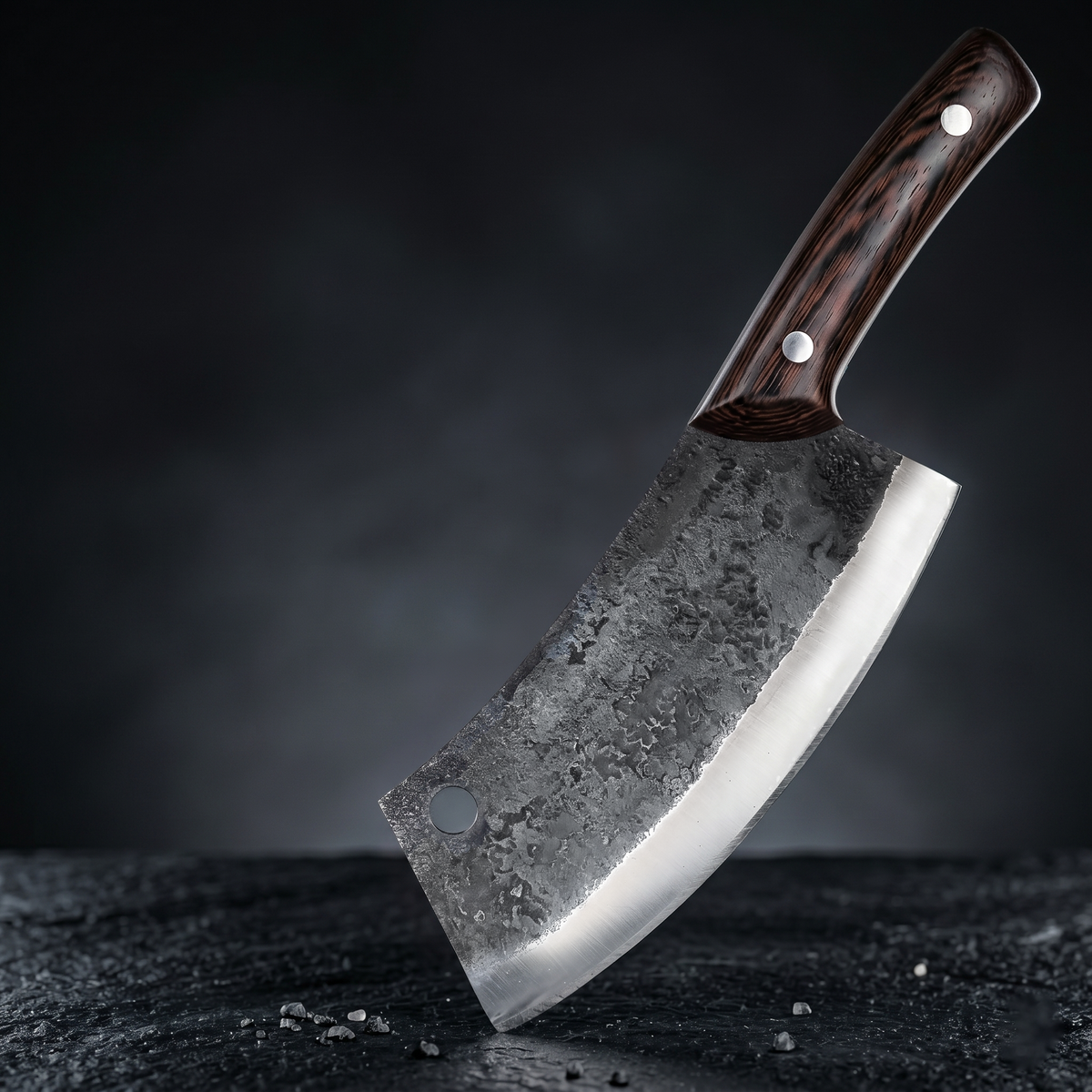
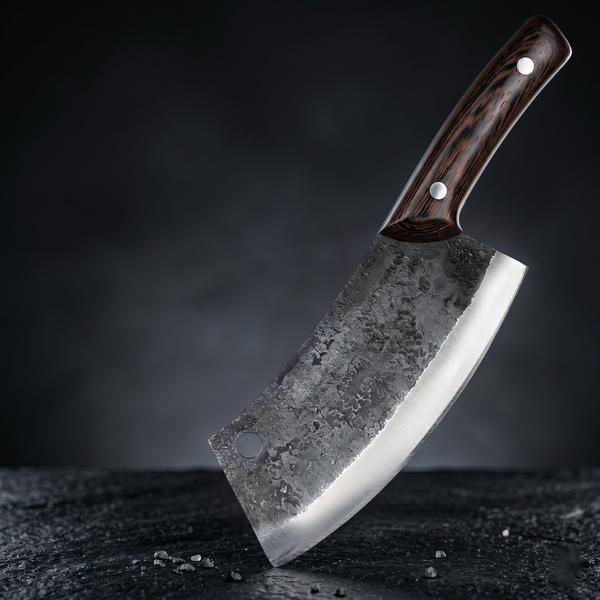
A Serbian chef knife is a thick, hand forged kitchen knife with a tall, cleaver shaped blade and a curved edge. It chops like a small cleaver and rocks like a chef knife, and the wide face doubles as a scoop. Most keep the hammer marks or forge scale on the flats, and some carry a finger hole.
If one of these turned up on your feed and you wondered whether it was a kitchen knife or a prop from a sword and sandals movie, fair question. It is a kitchen knife. It is also heavier and rougher looking than the chef knife in your block, which is most of the appeal. Below is what the style actually is, what it is good and bad at, and how to use and look after one.
What Makes a Knife a Serbian Chef Knife
There is no governing body for this, and nobody hands out certificates. The name describes a forging style and the look it leaves behind. You will see the same kind of blade sold as a Serbian knife, a Serbian cleaver, a Serbian cleaver knife or a Serbian butcher knife, because sellers use the names loosely. In practice they point at a blade with a few things in common.
A tall, thick, cleaver shaped blade
The blade is far taller than a standard chef knife, close to cleaver height, and the steel is left thick toward the spine. That height keeps your knuckles off the board and puts mass high above the edge, so each chop has some weight behind it. Unlike a true meat cleaver, the edge usually runs in a curve from heel to tip, which lets it rock.
Hand forged, with the hammer left on
These knives are hammered to shape from a bar of steel instead of being stamped out of a sheet. On ours that steel is always high carbon steel. The smith leaves the hammer marks or the dark forge scale on the upper flats and only grinds and polishes the edge, so what you see is simply what a blade looks like when nobody sands off the evidence. The rough flats also help dense food fall away instead of sticking to the steel.
The finger hole, on some
Some versions have a hole punched through the blade near the spine. Hook your index finger through it and you can choke up for close, controlled work like trimming a steak. Plenty of Serbian style chef knives skip the hole, and it turns up more often on the heavier Serbian cleavers. The hole is there for grip. Hanging the knife from a nail by it is an off label use.
What a Serbian Chef Knife Does Well
Most of the good news comes from the height and the weight.
- Chopping vegetables. Onions, peppers, cabbage and squash give way under a blade that carries its own weight. You guide it down instead of forcing it.
- Rocking through herbs and garlic. The curved belly rolls from heel to tip, so parsley and garlic get minced without the tip ever leaving the board.
- Carrying food to the pan. Tip the blade flat and the wide face works like a bench scraper. A whole diced onion goes from board to skillet in one trip.
- Boneless meat. Chicken breast, pork chops and trimmed steak slice cleanly, and the forge scale keeps raw meat from clinging to the flats.
- Knuckle clearance. Tall blade, knuckles nowhere near the board. People with big hands notice this first and never shut up about it.
What It Does Badly
Here is the part the product photos leave out.
- Bone. It looks like it could split a log. It should not be asked to. A Serbian chef knife is a prep knife, and chopping through joints or frozen food is how edges chip. For bone you want a real meat cleaver, and our guide on how to pick the best meat cleaver covers that job.
- Fine work in the hand. Peeling an apple with a blade this tall is possible in the same way that parallel parking a moving truck is possible. Keep a paring knife around.
- Paper thin slices. A thick blade pushes food apart instead of gliding through it. Ripe tomatoes and delicate fish are easier with something thinner.
- Long sessions. It weighs more than a slim chef knife. Over an hour of prep, some cooks love that weight and some feel it in the wrist.
- Neglect. High carbon steel rusts if it is left wet. It is not fussy, it just has no patience for a night in the sink.
Serbian Chef Knife vs Chef Knife vs Cleaver
The Serbian chef knife sits between the other two shapes. This table is the short version.
| Feature | Serbian chef knife | Standard chef knife | Meat cleaver |
|---|---|---|---|
| Blade height | Tall, close to cleaver height | Moderate | Tall |
| Spine | Thick | Thinner | Thick to very thick |
| Edge shape | Curved, rocks well | Curved, rocks well | Flatter, built to chop |
| Feel in the hand | Weighted forward | Light and quick | Heavy |
| Best at | Chopping, rocking and scooping | Slicing, dicing and tip work | Joints, cartilage and bone |
| Bone work | No | No | Yes, within reason |
If you mostly cook vegetables and boneless meat and like a heavier knife, a Serbian chef knife can be the only big blade on your counter. Split ribs and break down chickens every week? Then it will not replace a cleaver. And if you love precise tip work, keep your regular chef knife and put the Serbian style knife next to it. Nobody needs a drawer full of big knives, but these shapes really do different jobs.
How to Use a Serbian Chef Knife
Grip
Use a pinch grip. Thumb and the side of your index finger go on the blade just ahead of the handle, and the other three fingers wrap the handle. The weight sits forward, and pinching the blade puts your hand closer to it, which gives you far more control than holding the handle like a hammer. If your knife has a finger hole, slip your index finger through it for trimming and small cuts.
Rocking cuts
Keep the tip on the board and roll the belly down through the food, then lift the heel and roll again. Your guide hand stays in a claw with the fingertips tucked and the knuckles resting against the flat of the blade. The tall face gives those knuckles a big wall to ride against, which is one of the nicer things about this shape.
Chopping
For dense food like squash or a head of cabbage, lift the knife a few inches and let it come straight down. Do not swing it from the shoulder like you are splitting firewood. The blade has enough mass to do the work, and a short, controlled drop keeps the edge landing where you meant it to land.
Scooping
Turn the blade over and push food across the board with the spine, then slide the flat underneath and carry it. Dragging the edge sideways across the board to gather food is a quick way to dull it, and most people do it for years without noticing.
Choosing the Best Serbian Chef Knife for You
We forge two knives in this shape that people tend to compare side by side, plus a couple of heavier relatives.
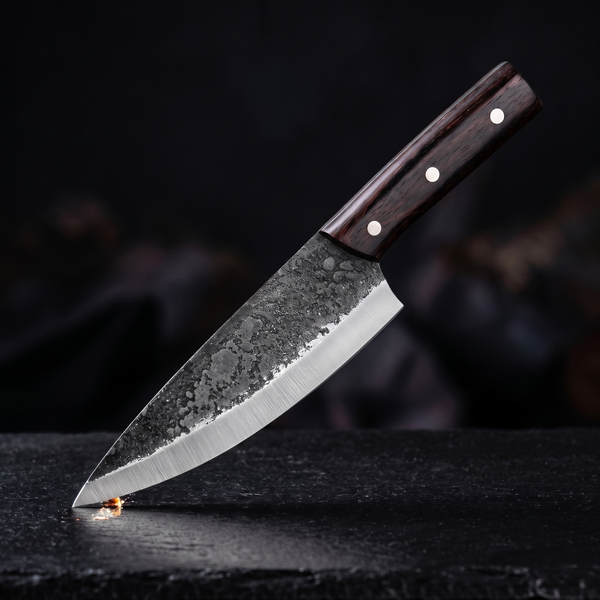
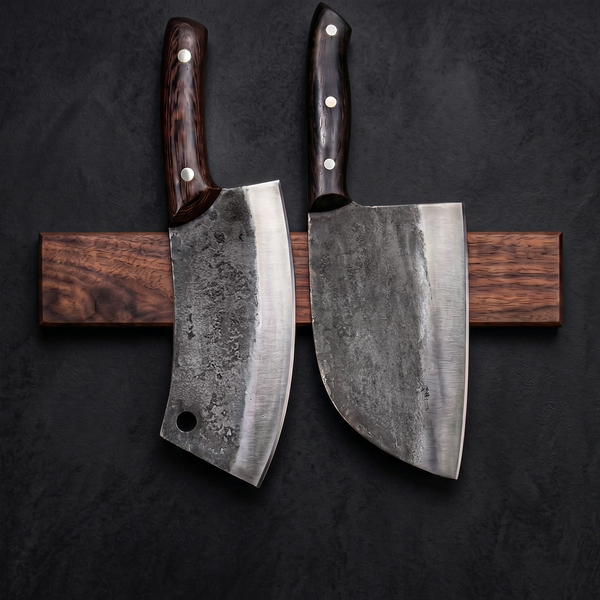
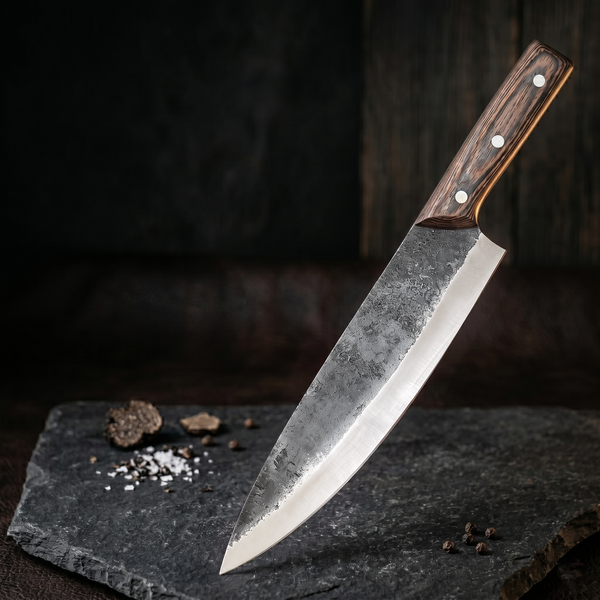
The Kermode 7" Serbian chef knife is sold as a chef cleaver. The blade is hammered out wide for knuckle clearance, the edge carries a steady curve so it rocks, and a hardwood handle is pinned to the full tang. It is the one we point to when a cook wants a single knife for vegetables and meat.
The Chef's Kiss 7" Serbian chef knife is the same length with a tall face, a curved belly and a hammer textured finish left on the flats. Its edge is finished by hand. Like the Kermode, it has a full tang with steel pins and a hardwood handle.
Honestly, these two are close. If you are stuck, pick the one whose finish you like looking at, because you will be looking at it every night.
Want more weight? The Rhino 8" Serbian cleaver is the heavy version of the idea, a modified cleaver with a deeper belly that still rocks through herbs and makes short work of sweet potatoes and winter squash. Want a proper Serbian cleaver for ribs and cartilage? The Megalodon 6.6" meat cleaver has a finger hole near the spine and raw forge scale on the flats. You can see the whole family in our chef knives and our hand forged meat cleavers. Not sure a cleaver belongs in your kitchen at all? Read what a meat cleaver is used for before you buy one.
Caring for a Hand Forged Serbian Knife
High carbon steel takes a keen edge and is easy to sharpen at home. The trade is that it wants a minute of attention after every use.
- Hand wash it and dry it right away. Not after dessert. Right away.
- Wipe on a light coat of food safe oil before it goes back in the drawer, flats and forge scale included.
- No dishwasher and no soaking. The dishwasher will not get it any cleaner, only rustier.
- Expect the steel to darken into a patina over time. That is normal for high carbon steel and it helps protect the blade.
- Cut on wood or plastic. Glass and stone boards are rough on any edge.
For sharpening, a whetstone or a honing rod works fine. Follow the angle that is already on the edge and keep your strokes even from heel to tip. Every knife we sell carries a lifetime warranty against defects in materials and craftsmanship. It covers the forging. It does not cover a weekend spent in a sink full of water, but you knew that.
If you are still deciding whether you want this shape at all, what an ordinary chef knife is used for covers the slimmer option, and cleaver against chef knife explains where each one wins. The Serbian chef knife sits between them, which makes it either the best of both or a very heavy compromise, depending on your wrists.
Questions
Is a Serbian chef knife the same as a cleaver?
No. It borrows the height and weight of a cleaver but keeps a curved edge for rocking cuts, so it behaves like a heavy chef knife. A meat cleaver is built to chop through joints and bone. Use the Serbian chef knife on the cutting board and keep a cleaver for bone work.
Can a Serbian chef knife cut through bone?
It should not be used on bone. The blade looks tough, but it is a prep knife, and chopping through joints, ribs or frozen food can chip the edge. For that kind of work, reach for a meat cleaver with a thick spine and let its weight do the job.
What is a Serbian cleaver?
A Serbian cleaver is the heavier, chopping focused version of the same forging style. It has a wide, thick, hand hammered blade with the forge scale left on, often with a hole near the spine. It is made for meat and cartilage, where a Serbian chef knife is made for general prep.
Is a Serbian chef knife good for beginners?
Yes, as long as they will dry it after washing. The tall blade makes the claw grip easier to learn and the weight helps with dense vegetables. The trade is a heavier knife for long prep sessions and the small amount of care that high carbon steel needs.
How do I sharpen a Serbian chef knife?
The same way you sharpen any high carbon steel kitchen knife. Use a whetstone or a honing rod, hold the angle already on the edge and work the full length from heel to tip with even strokes. Wipe the blade dry and give it a light coat of food safe oil when you finish.
Shop the knives from this guide
Keep reading
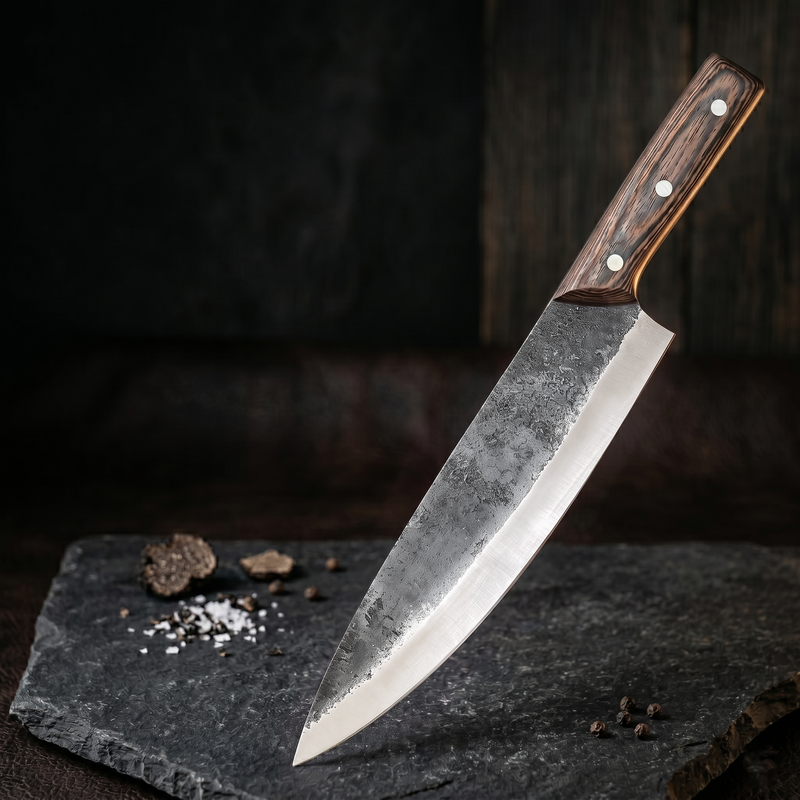
What Is a Chef Knife Used For? Jobs, Sizes and How to Hold One
What a chef knife is used for, and what it should never be asked to do. How to pick a blade length for your...
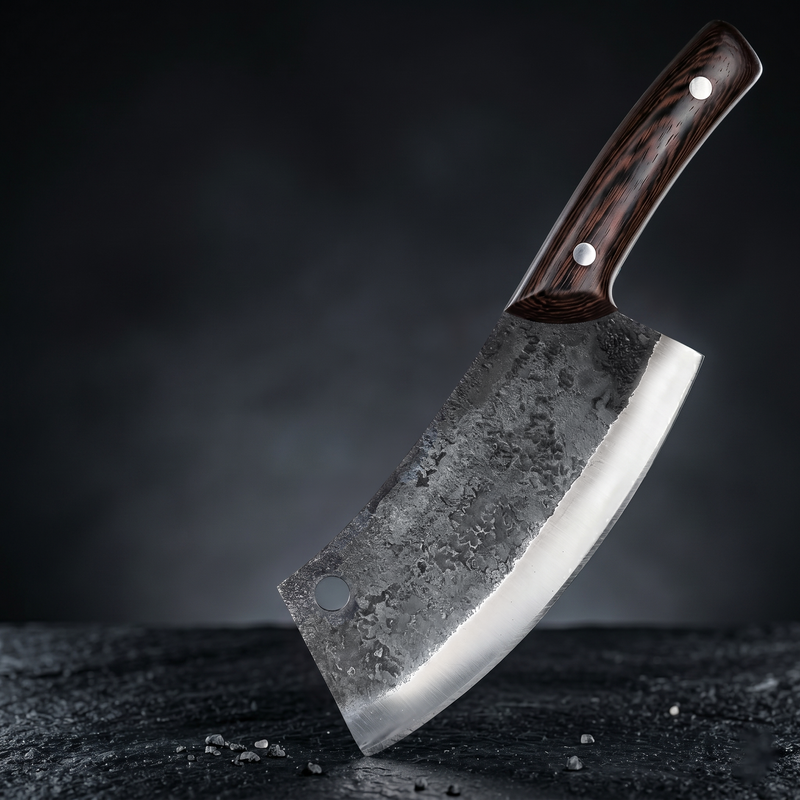
Cleaver vs Chef Knife: Which One Do You Actually Need?
Cleaver or chef knife? What each knife is actually for, where the tall Serbian style chef cleaver sits between them, how weight and cutting...
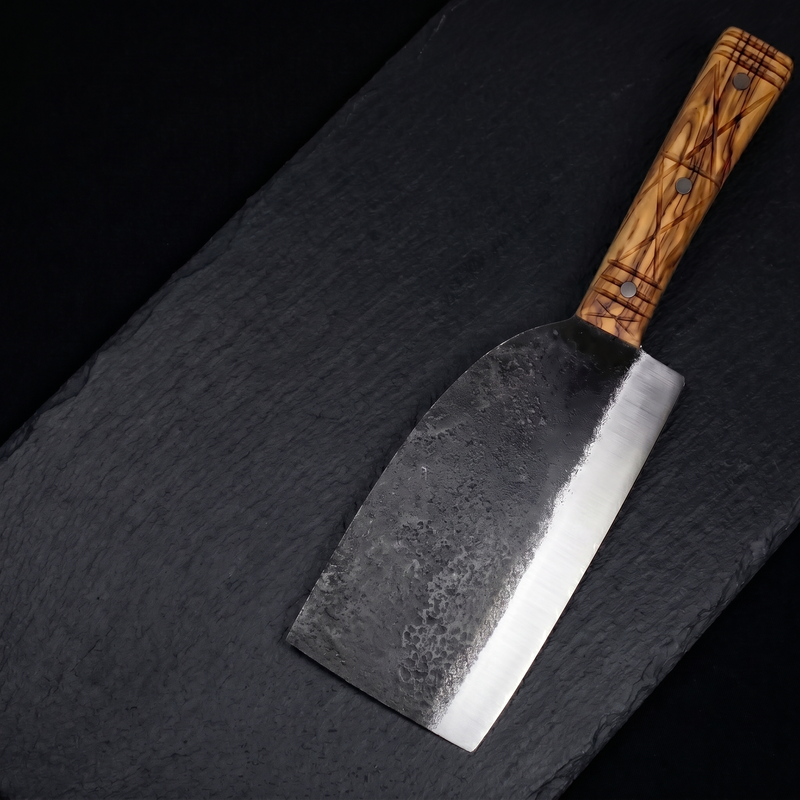
How to Pick the Best Meat Cleaver for Your Kitchen
A buyer's guide to the best meat cleaver for your kitchen. What weight, blade length, height, spine, handle, finger hole and steel actually change,...