
How to Pick the Best Meat Cleaver for Your Kitchen
September 27, 2026 · By Matt
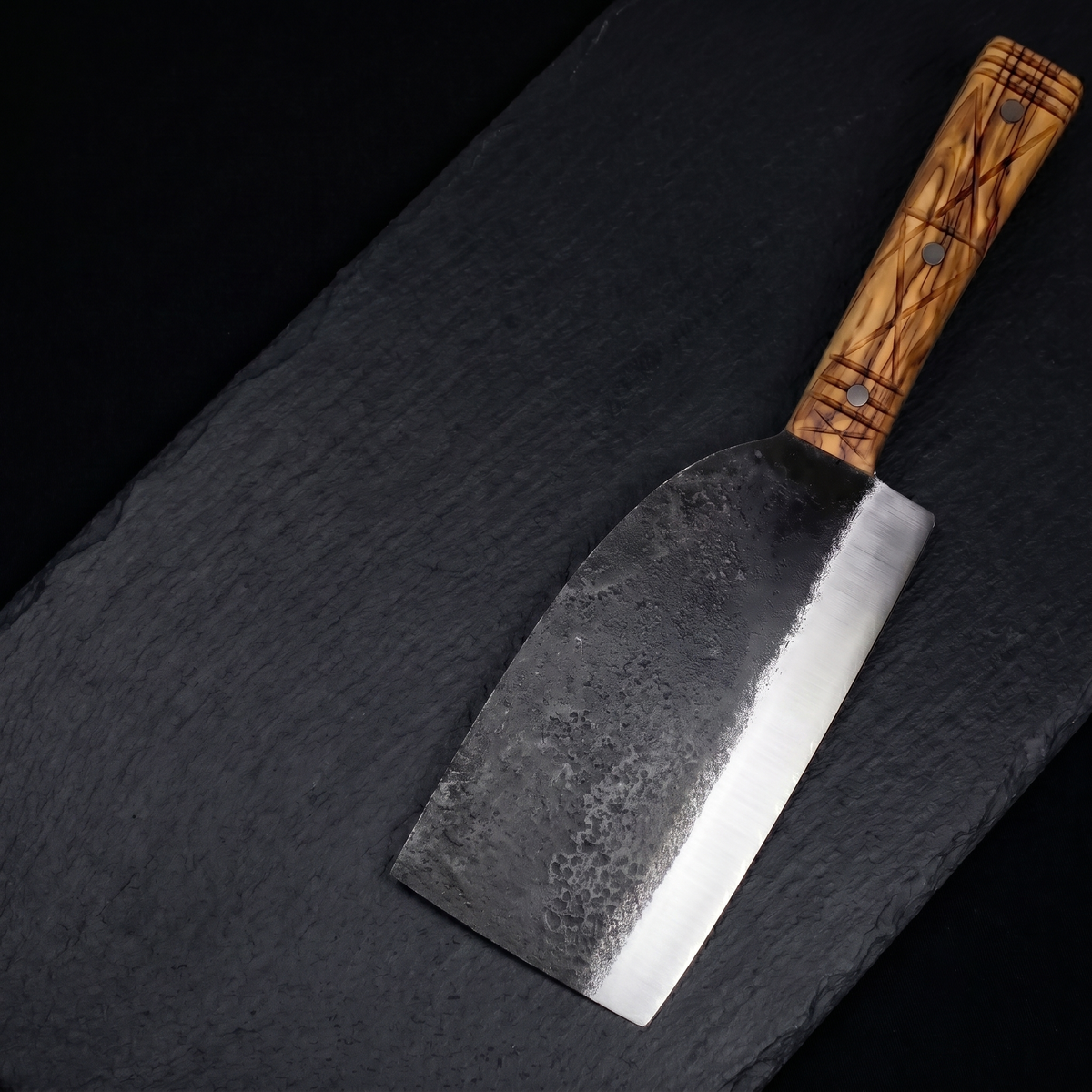
The best meat cleaver is the one sized for the work you actually do. For bone and big joints, pick a heavy duty meat cleaver with a thick spine and a full tang. For BBQ prep, go mid size so you can steer it. For light prep, go small so it will not wear out your wrist.
Buying a cleaver on looks is how people end up with a monster for dicing shallots. It happens more than you would think. We forge one of those monsters, and we still would not hand it to you for shallots. This guide walks through what matters on a meat cleaver knife, what to steer clear of, and then which of our cleavers suits which job, including the ones we would tell you to skip.
What to Look For in a Meat Cleaver
Weight
Weight is the whole engine of a cleaver. A heavier blade hits harder for the same effort, so you lift it a few inches and let it drop instead of swinging. A lighter blade is easier to control and much kinder over a long prep session. Our own range shows the spread. The small 5.5" clip point cleaver weighs 270 grams. The 7.5" classic butcher cleaver in the Butcher's Trio set comes in at 370 grams, and the 7" sheep foot cleaver in the same set at 400 grams. The Mammoth sits at about 1500 grams. Those are very different tools, and none of them is wrong. They are wrong for somebody.
A rough rule: if you will reach for it every night for vegetables and boneless meat, go lighter. If it only comes out for ribs, joints and bones, go heavier and accept that it will live on a hook between jobs.
Blade length
A 6 inch cleaver fits a small board and a camp box, and it handles chicken, ribs and joints with short chopping strokes. Somewhere around 7.5 to 8 inches is the all rounder, long enough to get through a pork loin in one pass and still easy to handle. At 8.7 inches and up you are in primal breakdown territory, which is great if you buy a quarter of a cow and slightly silly if you do not.
Blade height
A tall blade earns its height. It keeps your knuckles well clear of the board, it puts mass high above the edge so each chop lands with weight, and it gives you a wide face to scoop food with. A cleaver that is short from spine to edge feels more like a heavy chef knife.
Spine
Look at the spine before anything else. A thick spine sitting directly over the edge sends the force of the chop straight down into the cut instead of letting the blade wobble off to one side. Some cleavers add extras up there. A saw tooth spine helps with tough connective tissue, and a notch gives your thumb or finger a place to sit. Nice to have, not required.
Handle
The tang should run the full length of the handle and be held with steel pins. A cleaver takes impact, and impact finds any weak joint between blade and handle fast. The handle should be long enough for your whole hand with the blade clearing the board. Wood choice is partly looks and partly practical. Pakka wood copes with moisture well, which matters next to a wet grill station, and dense woods like wenge also shrug off water.
Finger hole
A hole near the spine lets you hook your index finger through and choke up on the blade. That turns a chopper into something you can steer for trimming, skinning and portioning steaks. For pure bone work you do not need one. For a cleaver that does a bit of everything, it earns its place on the blade.
Steel
All of our cleavers are high carbon steel. It takes a keen edge, it is easy to sharpen at home, and it darkens into a patina over time that helps protect it. The catch is that it rusts if you leave it wet, so it needs drying and a light coat of food safe oil after each use. On a hand forged cleaver the raw forge scale or hammer texture on the flats also helps dense meat fall away instead of sticking.
What to Avoid
- Thin, light cleavers sold as heavy duty. If the blade flexes when you press on it, it is a vegetable chopper wearing a costume. Keep it away from bone.
- Handles that move. Any gap, rattle or wobble where the blade meets the handle will get worse with every chop.
- Buying the heaviest one because it photographs well. A big cleaver you are too tired to use is a very expensive wall ornament.
- Expecting one cleaver to do everything. Bone cleavers are poor slicers and slicing cleavers are poor bone splitters. Pick the main job first.
- Frozen meat. No cleaver should be used to hack through a frozen block. Thaw it or use a saw.
Matching Xcutlery Cleavers to the Job
Every cleaver below is hand forged in the Serbian style from high carbon steel, full tang with steel pins. The differences are size, shape and weight, and those decide the job. You can see them all in our hand forged meat cleavers collection.
Light prep and everyday cooking
The 5.5" clip point cleaver is the lightest in the line at 270 grams, with a finger hole, a notch in the spine and a red Padauk handle. Hook a finger through and it handles steak trimming, a whole chicken and a pile of peppers. Skip it for heavy bone. It does not carry the mass for big joints.
The Rhino 8" is the other light prep pick, a modified cleaver with a deeper belly that rocks through vegetables and handles boneless meat. It is not a bone crusher. If you want an even more prep focused shape, read our guide to the Serbian chef knife.
BBQ prep
The Kodiak 8" butcher cleaver has a drop point and a curved belly, so it trims a brisket before the cook and carves it after. It is the one pitmasters keep asking about. Skip it for splitting heavy bone.
The Razorback 6" meat cleaver adds a finger hole and a saw tooth spine. It is at its best on ribs, chicken and pork shoulder, and it chokes up nicely for trim work. Skip it for long brisket slices, and keep it away from frozen meat and big beef marrow bones.
The Warthog 6" meat cleaver is the shortest blade we make, with a pakka wood handle and a lot of weight pushed forward for its size. Chicken halves and rib portions are its everyday work. Skip it for beef shanks and thick bone.
The Aurochs 6" Serbian cleaver swaps the square nose for a spear point, so it scores a brisket fat cap and splits a rack of ribs with the same blade. Skip it for long slicing.
Bone work and home butchering
The Mammoth 9.1" meat cleaver weighs about 1500 grams and has a thick spine built for cracking bone and separating big joints. It is the most heavy duty meat cleaver we sell. Skip it for everyday prep, because that weight gets tiring and it is far too much blade for a tomato.
The Grizzly 8.7" heavy duty meat cleaver has a wide, tall profile for primal breakdown and dense bone. Skip it for fine slicing and garlic. The 7.5" Hand Forged Butcher Cleaver handles joints, ribs, poultry and pork bones, and its deep belly will still rock through herbs once the heavy work is done. Skip it for heavy beef leg bones, which call for a saw. For game, the Kraken 8" and the Mastodon 7.5" with its clip point are built around processing deer and hogs.
| Cleaver | Blade | What stands out | Best job | Skip it for |
|---|---|---|---|---|
| Clip Point Cleaver | 5.5" | 270 g, finger hole, clip point | Light prep, chicken, trimming | Heavy bone |
| Warthog | 6" | Compact, pakka wood handle | Chicken halves, rib portions, camp | Beef shanks, thick bone |
| Razorback | 6" | Saw tooth spine, finger hole | Ribs, joints, trim work | Brisket slicing, frozen meat |
| Megalodon | 6.6" | Finger hole near the spine | Trimming, skinning, ribs | Big beef bones |
| Butcher Cleaver | 7.5" | Deep belly, raw forge scale | Joints, poultry and pork bones | Beef leg bones, frozen blocks |
| Mastodon | 7.5" | Clip point on a heavy blade | Game processing, camp | Dicing onions |
| Kodiak | 8" | Drop point, curved belly | Brisket trim and carve | Splitting heavy bone |
| Kraken | 8" | Forward weight, hammer texture | Game, quartering, joints | Weeknight prep |
| Rhino | 8" | Deeper belly, rocks well | Daily vegetables, boneless meat | Crushing bone |
| Grizzly | 8.7" | Wide, tall, heavy profile | Primal breakdown, dense bone | Fine slicing, garlic |
| Mammoth | 9.1" | About 1500 g, thick spine | Big joints, cracking bone | Everyday prep |
If You Only Buy One
For most home kitchens that break down a chicken on Sunday and cook ribs on Saturday, the 7.5" Hand Forged Butcher Cleaver is the safest single pick. It goes through joints and poultry bones and still earns a spot on the counter for herbs and garlic. If most of your cooking happens on a smoker, the Kodiak makes more sense. If you buy whole or half animals, get the Grizzly or the Mammoth and a smaller knife for trimming. And if you are still not sure what a cleaver even does in a kitchen, read what a meat cleaver is used for first. It is cheaper than guessing.
Looking After Your Cleaver
Hand wash it and dry it right away. Wipe on a light coat of food safe oil before it goes back on the rack. No dishwasher and no soaking. Use a wood or plastic board, never glass or stone. Expect a patina to build on the steel, which is normal and a good sign that the knife is being used. Every cleaver carries a lifetime warranty against defects in materials and craftsmanship, and unused knives can be returned within 30 days if you picked the wrong size after all this.
One last thing. If half your prep is trimming rather than chopping, read when a butcher knife beats a cleaver before you buy, because you may want one of each. And whichever cleaver you end up with, it will go dull eventually, which is where how to put an edge back on a cleaver comes in. Better to read it before the first tomato bounces off.
Questions
What is the best meat cleaver for cutting bone?
A heavy cleaver with a thick spine sitting over the edge and a full tang. On our range that means the Mammoth 9.1" or the Grizzly 8.7". Line the edge up, lift a few inches and let the weight drop. Very thick beef leg bones and anything frozen still call for a saw.
How heavy should a meat cleaver be?
Heavy enough for your hardest job and light enough that you will still use it. Our cleavers run from 270 grams on the small clip point cleaver to about 1500 grams on the Mammoth. Go lighter for daily vegetables and boneless meat, and heavier if bone work is the main reason you are buying.
What size cleaver should I buy?
A 6 inch cleaver suits small boards, camp cooking, chicken and ribs. A 7.5 to 8 inch blade is the best all rounder for most home kitchens. Go to 8.7 inches or more only if you regularly break down large cuts or whole animals and have the board space for it.
Is high carbon steel good for a meat cleaver?
Yes. High carbon steel takes a keen edge and is easy to sharpen at home, which matters on a blade that hits bone. The trade is care. Dry it straight after washing and keep a light coat of food safe oil on it. It will darken into a patina over time, which is normal.
Do I need a cleaver with a finger hole?
Not for bone work. A finger hole lets you choke up on the blade for trimming, skinning and portioning, so it helps most on a cleaver that does a bit of everything. The Razorback, the Megalodon and the 5.5" clip point cleaver all have one if you want that extra control.
Shop the knives from this guide
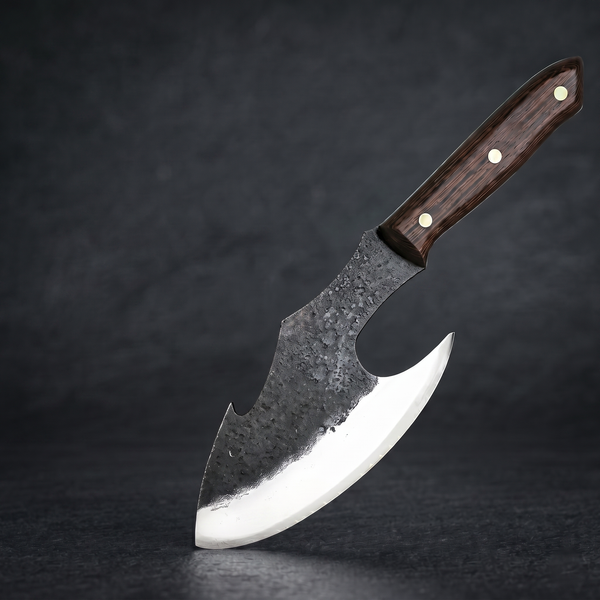
Keep reading
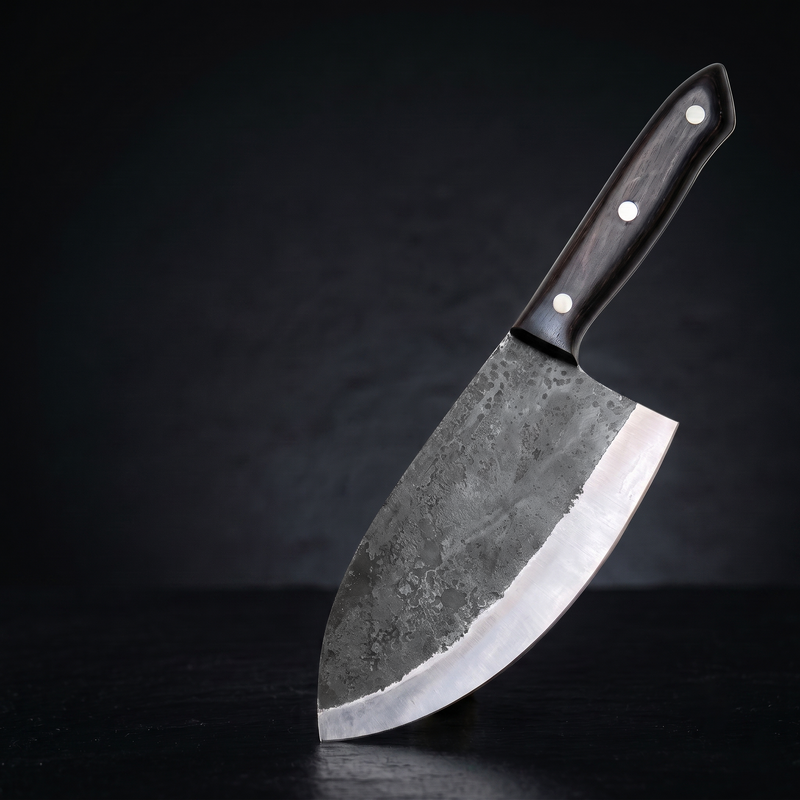
What Is a Meat Cleaver Used For? 9 Jobs It Does Better Than Your Chef Knife
What is a cleaver knife used for? Nine kitchen jobs a meat cleaver does better than your chef knife, from spatchcocking chicken and portioning...
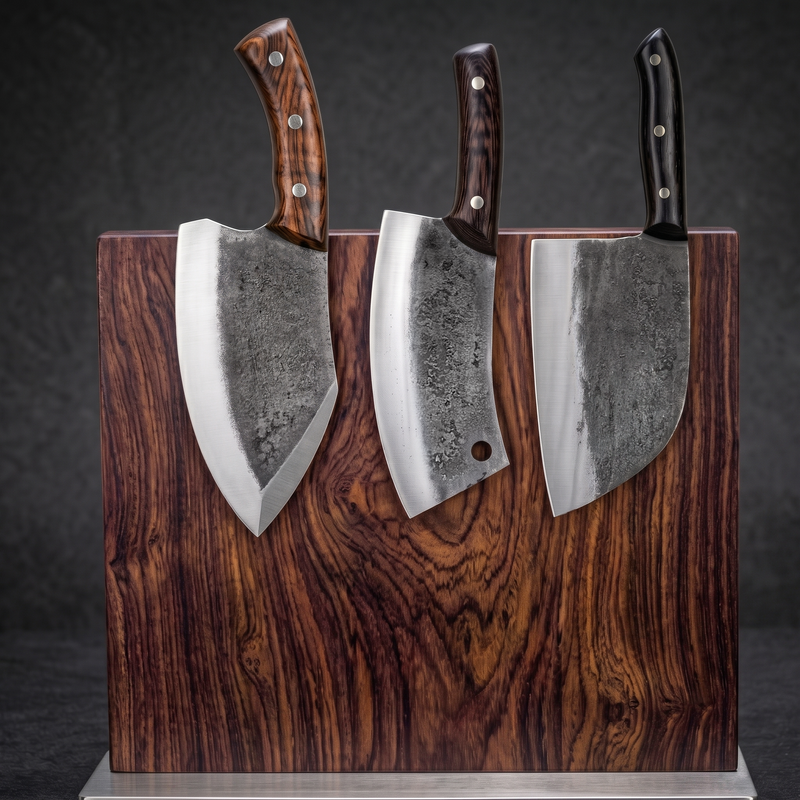
Meat Cleaver vs Butcher Knife: Which One Your Kitchen Needs
A meat cleaver chops through joints and bone with weight and a tough edge. A butcher knife slices, trims and portions with a long,...
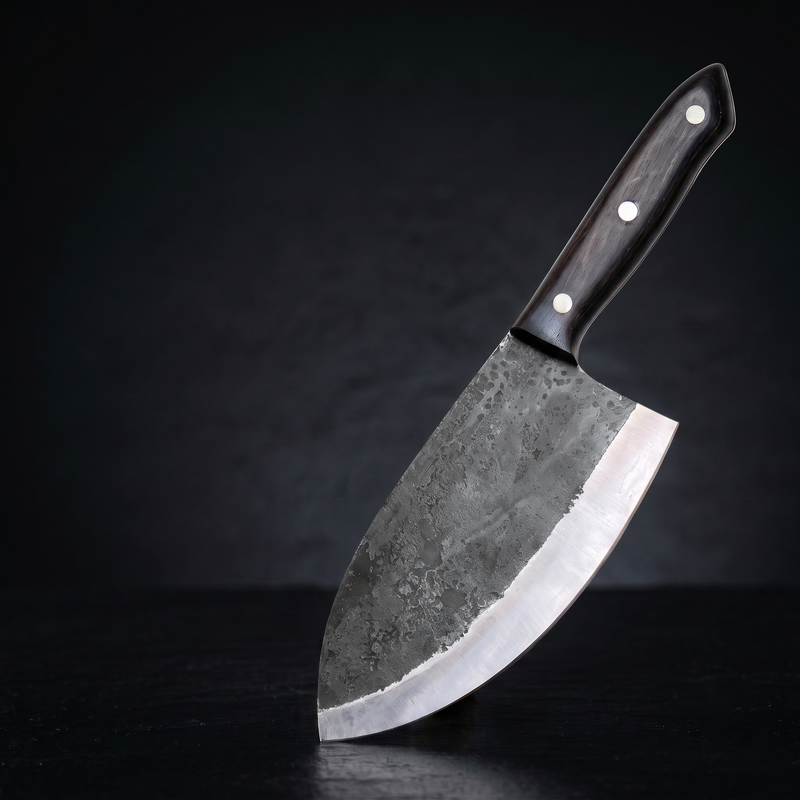
How to Sharpen a Meat Cleaver: Angle, Stones and Step by Step
A plain guide to sharpening a meat cleaver at home. Why a cleaver edge is ground differently from a chef knife, how to find...