
Serbian Cleaver vs Chinese Cleaver: Which One Does Your Kitchen Need?
October 13, 2026 · By Matt
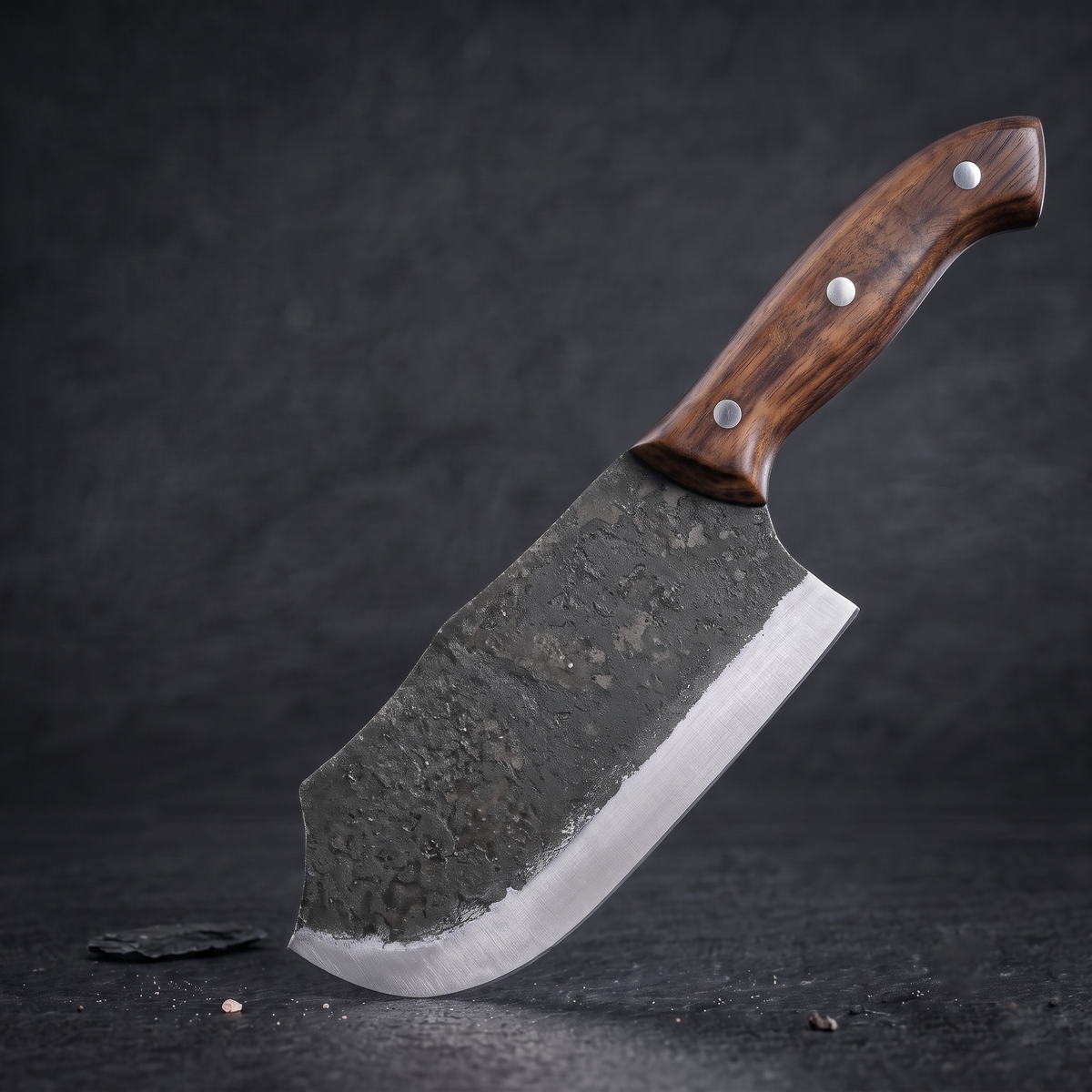
A Serbian cleaver is a thick, heavy, hand forged blade with a curved belly that rocks through vegetables and lands hard on meat and joints. A Chinese cleaver, the cai dao, is a thin, wide, light rectangular slicer built for vegetables and boneless meat, and it was never meant to touch bone. Buy the Serbian style if you want one knife that chops hard, and the Chinese style if you mostly slice.
The two get lumped together because they are both big and both called cleavers, which is a bit like filing a sledgehammer and a putty knife under "tools with handles". One is a slicer that happens to be tall. The other is a chopper that happens to slice. This guide covers shape, weight, edge, the bone question, care, and which one suits the way you actually cook.
What Is a Serbian Cleaver?
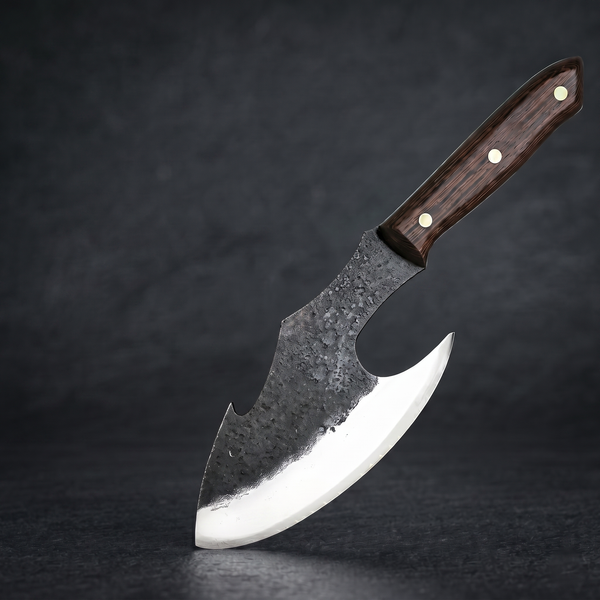
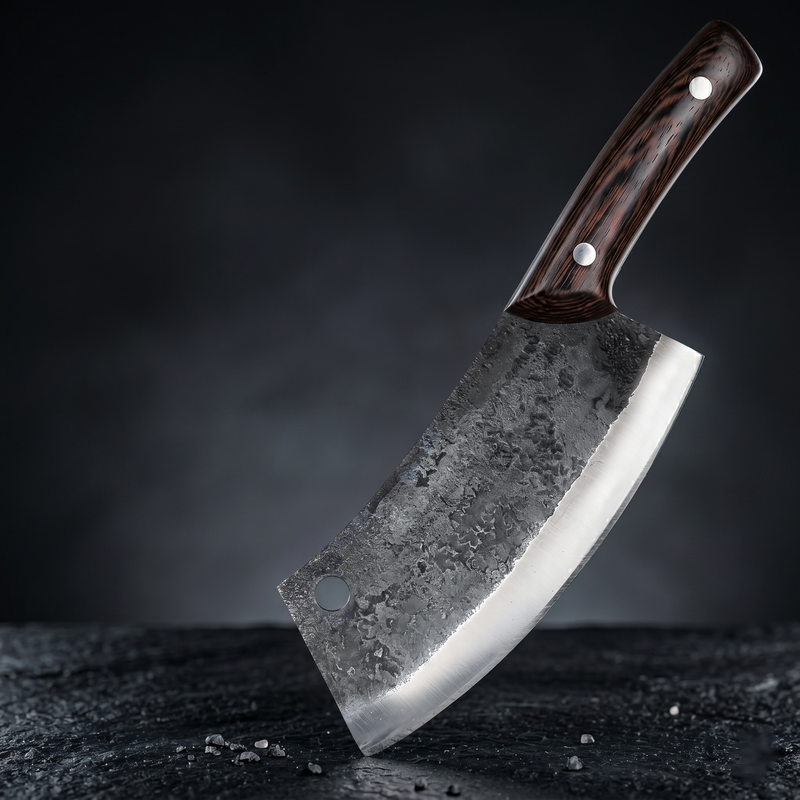
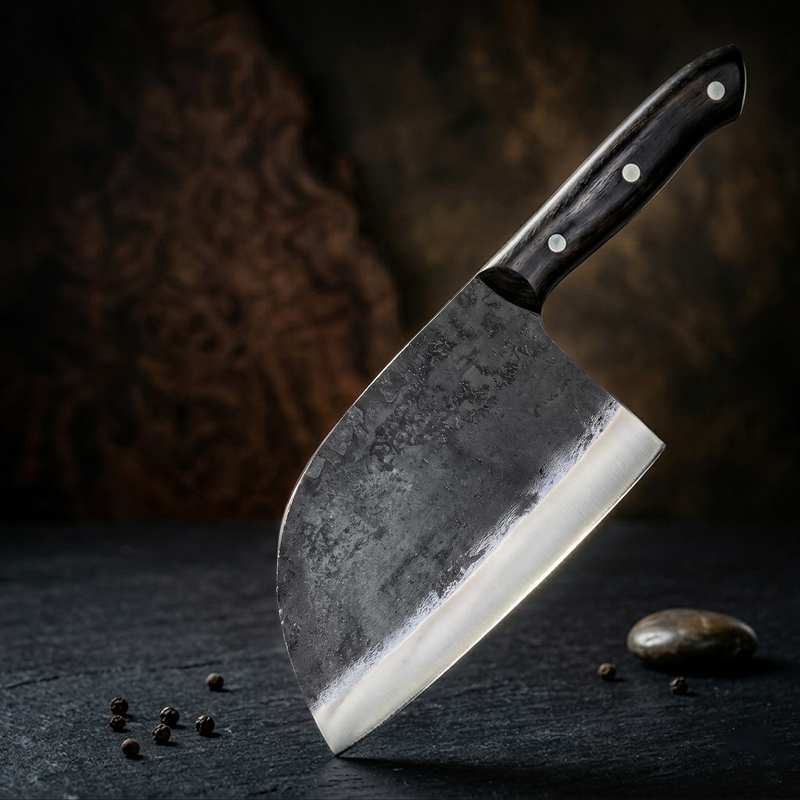
The Serbian cleaver is a hand forged, full tang blade with a belly. Instead of the flat edge and square nose of a classic butcher cleaver, the edge curves to a drop point, clip point or spear point tip, so the knife rocks like a chef knife and still carries cleaver weight into a cut. The spine is thick, the steel is high carbon, and the flats are usually left with forge scale or hammer texture rather than polished. It looks unfinished to people who have only owned stamped knives. It is not. The scale helps food release from the blade.
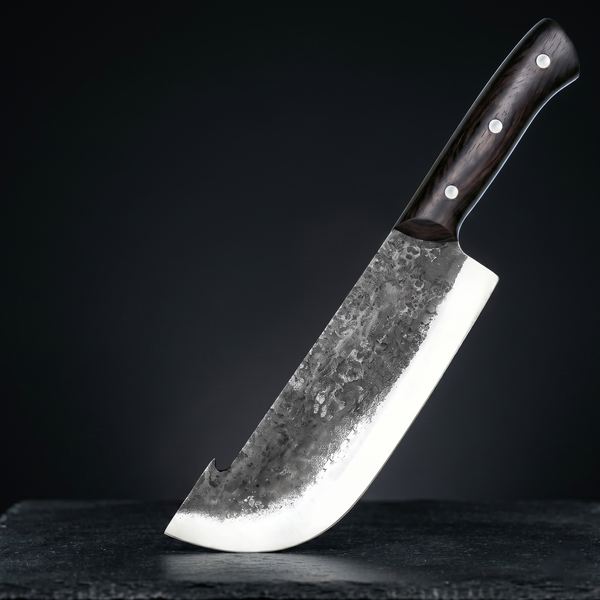
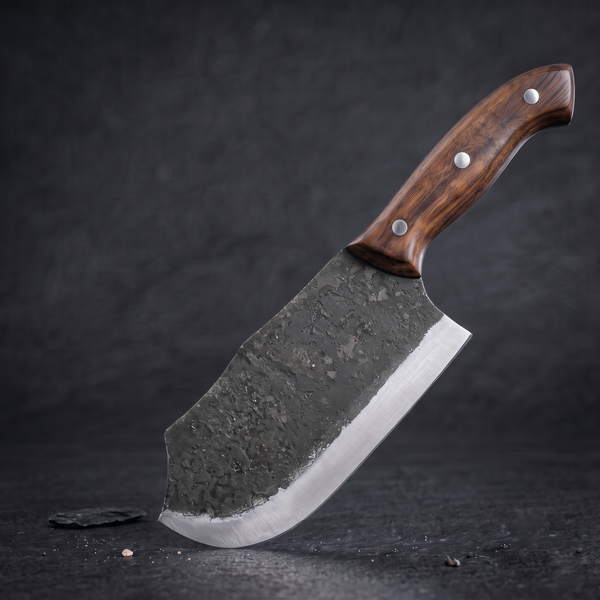
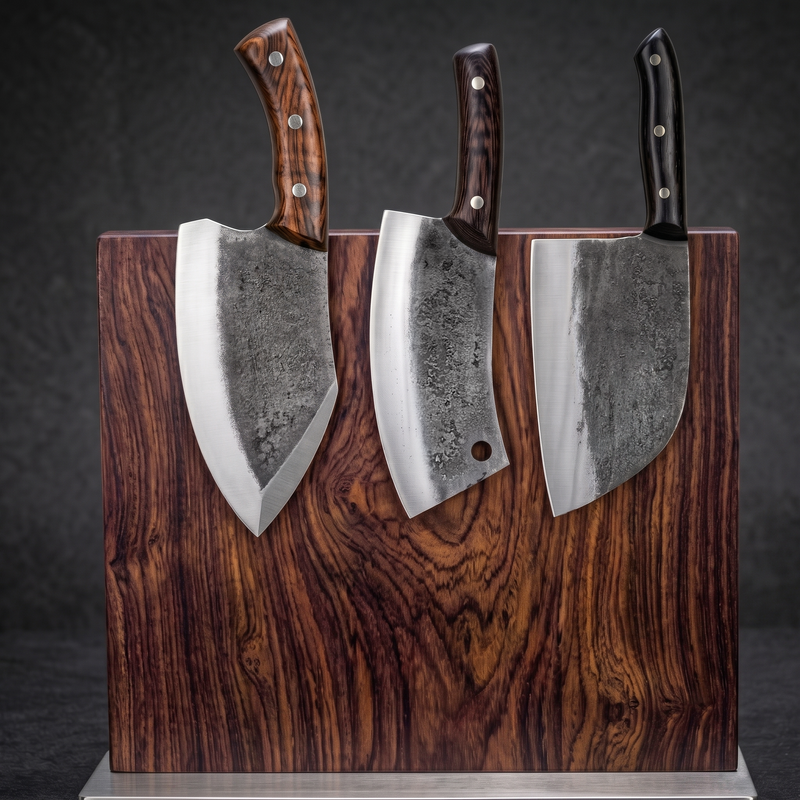
Our range runs the whole width of the idea. The Rhino 8" Serbian cleaver is the heavy end, a 0.3" (7.6 mm) spine and 1250 g on a walnut handle, made to order in 2 to 3 weeks. The Kodiak 8" butcher cleaver is the drop point version at 581 g with a 5.9" rosewood handle. The Kraken 8" cleaver sits in the middle at 380 g with a hammer textured flat and a black wenge handle, for anyone who wants the style without the gym membership. Our guide to the Serbian chef knife explains the shape in more depth.
What Is a Chinese Cleaver?
The Chinese cleaver most people mean is the cai dao, the vegetable knife. It is a wide rectangular blade, thin from spine to edge, with a flat or very gently curved cutting line and a light feel for its size. Cooks hold it in a pinch grip and use a straight push cut rather than a rock. The broad flat is part of the tool. It scoops sliced onion off the board and rides against the knuckles as a guide so every slice comes off the same thickness.
The word cleaver is doing it no favours. The thin cai dao is a slicer, and the heavy bone chopper used in the same cooking is a separate knife with a thick spine. A home cook who buys a cai dao expecting to split pork ribs with it is about to learn the difference the expensive way. More on that in the bone section.
Shape, Thickness and Weight Side by Side
The short version is in the table. The Serbian numbers are from our own knives. The Chinese cleaver column stays general, because there are hundreds of makers and no single spec, and we are not in the business of inventing one.
| Point of comparison | Serbian style cleaver | Chinese vegetable cleaver (cai dao) |
|---|---|---|
| Blade shape | Tall blade with a curved belly to a drop, clip or spear point tip, rocks on the board | Wide rectangle, flat or very gently curved edge, square nose, push cuts |
| Thickness | From 0.1" (2.5 mm) on the Kermode to 0.3" (7.6 mm) on the Rhino | Thin from spine to edge, built to slide through food |
| Weight class | Medium to very heavy, 349 g on the Kermode up to 1250 g on the Rhino | Light for its size, moved by the wrist all day |
| Edge | Hand sharpened bevel on a thick blade, more steel behind the edge | Fine bevel on a thin blade, keen but delicate |
| Best at | Chopping meat, splitting joints on the heavy models, hard vegetables, one knife prep | Thin slicing of vegetables and boneless meat, mincing, scooping |
| Weak at | Paper thin slicing, fine work with soft herbs, anything that wants a light blade | Bone, frozen food, hard squash, any job that needs weight |
| Care | Hand wash, dry at once, light oil, patina is normal | Hand wash and dry, oil if the steel is high carbon |
The thickness row deserves a second look, because the Serbian style is a family rather than one knife. The Kermode 7" chef cleaver is 0.1" (2.5 mm) at the spine and 349 g, closer to a tall chef knife than a butcher's block tool. The Rhino is three times that thickness and more than three times the weight. Only one of them belongs anywhere near a pork shoulder joint.
Edge and Grind: Why They Cut Differently
Thickness decides the edge, and the edge decides the job. A thin cai dao carries a fine bevel because there is little steel behind it, which is why a good one slices a tomato with no pressure at all. The price is fragility. Twist a thin edge in something hard and it rolls or chips.
A Serbian cleaver keeps steel close to the edge, and the bevel is wider to suit. It will not fall through a tomato the way a slicer does, but it bites into skin and meat and keeps biting after a session that would fold a thin edge. Our blades have the edge sharpened and the flats left textured, so you sharpen the bevel and leave the rest alone. The hammer marks on the Kraken are not a grind line to chase on the stone. Our cleaver vs chef knife guide covers the belly versus flat edge argument from the chef knife side.
What Each Does Well, and Badly
Where the Chinese cleaver wins
Volume slicing. A head of cabbage for a stir fry, a bag of onions, boneless chicken thigh cut into strips, ginger into matchsticks. The wide thin blade keeps slices even, the flat face lifts everything to the pan in one motion, and the light weight means your wrist still works at the end of a long prep.
Where it loses is anything with resistance. A hard squash can bind the thin blade and a chicken carcass will damage the edge. Frozen anything is off the table. It also does not rock, so cooks raised on a Western chef knife find the push cut awkward for a few weeks.
Where the Serbian cleaver wins
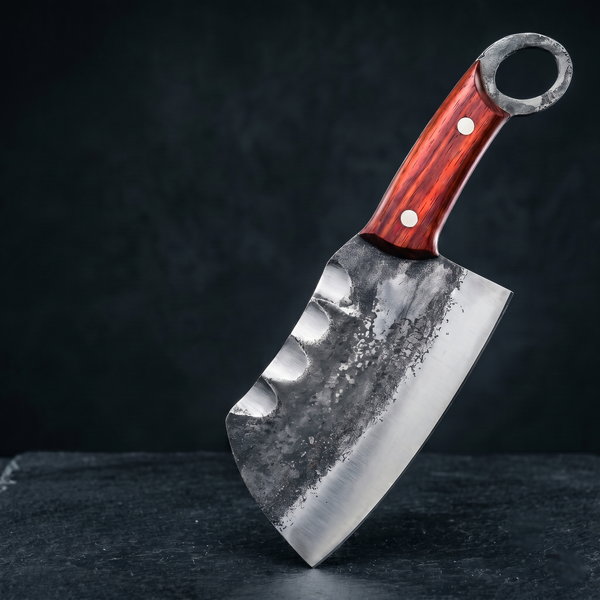
Meat, first and most. Breaking a chicken into eight pieces, portioning a pork loin, taking ribs apart between the bones, splitting a hard squash in two strokes rather than a sawing match. The belly rocks through herbs and onions as well, so a mid weight model like the Megalodon 6.6" meat cleaver, 0.2" (5 mm) and 430 g with a finger hole, can honestly run a whole dinner from one knife. The compact Warthog 6" does the same at 308 g for a smaller board and hand.
Where it loses is finesse. Nobody is cutting translucent cucumber rounds with a 1250 g Rhino, or at least not twice. Soft herbs bruise under a heavy blade, and for paper thin slices of raw beef the slicer wins by a mile.
Can a Chinese Cleaver Cut Through Bone?
The vegetable cleaver cannot, and should not be asked to. This is the part of the comparison that saves people money. The cai dao has the thin blade and gradual bevel of a slicer, and splitting bone with it chips or rolls the edge. The knife that handles bone in Chinese cooking is the bone chopper, a much thicker and heavier blade with the same rectangular outline. Two tools, one silhouette, which is the whole source of the confusion. Even the encyclopedia puts it plainly, noting that the thin blade makes slicers unsuitable for chopping any bones: Wikipedia on the Chinese cleaver.
On the Serbian side, bone work depends on which one you bought. The heavy models, the Rhino and the Kodiak, are built to take a hit on poultry joints and smaller bones and come back for more. The thin Kermode is a chef knife in a cleaver suit and should be treated like one. The rule for every cleaver we make: joints and small bones yes, thick beef bones go to a saw. The lifetime warranty covers defects in materials and craftsmanship, not a frozen roast attacked at an angle.
Caring for Each One
The Chinese cleaver comes in every steel under the sun. If yours is high carbon, treat it like ours. If it is stainless, it forgives more neglect, though a thin edge still wants a wooden or plastic board and a dry towel after use.
Our cleavers are high carbon steel, and the routine is short and not negotiable. Hand wash, dry at once, wipe on a light coat of food safe oil, no sink soaking and no dishwasher. The blade takes on a grey patina over the first weeks of use. That is the steel settling in, not rust, and the patina protects it. Orange spots are rust and come off with a scrub and oil. The heavy Serbian style also needs a board that can take it. A glass board under a Rhino will lose, and so will the edge.
Which Should You Buy?
If you cook a lot of vegetables and stir fries
Buy the Chinese cleaver, or at least buy it first. The thin slicer suits that cooking better than anything we make, and we would rather say so than sell you a knife you resent. If you still want a belly for the occasional roast, the Aurochs 6" Serbian cleaver at 404 g with a spear point and a 0.1" spine is the lightest step into the style.
If you cook a lot of meat
Buy the Serbian cleaver. For breaking down chickens and portioning roasts, a thin slicer will fail you and a heavy curved blade will not. The Kodiak 8" is the pick for long sessions because the 5.9" handle gives a full grip. The Rhino 8" is for the cook who wants the weight to do the work and can wait 2 to 3 weeks for a made to order knife. The Kodiak is $189 and the Rhino is $138, and both come with the lifetime warranty.
If you want one knife for everything
A mid weight Serbian cleaver is the better single knife for most Western home kitchens. It rocks on the board and it can take a joint apart, and the only thing it genuinely cannot do is paper thin slicing. The Kraken 8" at 380 g and $160, or the Kermode 7" at 349 g and $119, are the two we would hand to someone who wants one blade on the magnet. The full lineup is in our hand forged cleavers collection, and in stock knives reach the USA and Australia in 5 to 6 business days.
Do You Need Both?
Need is a strong word. Plenty of good cooks run a kitchen on one knife and sneer at the rest of us. But the two styles overlap less than their shared name suggests. The slicer does the fine vegetable work and lifts it to the wok. The Serbian cleaver does the meat and the hard produce, so the thin blade is never asked to do something it will regret. If you can only buy one, be honest about what is on your board most nights.
If the heavy side is yours, our guide to what a meat cleaver is used for covers the jobs to give it and the jobs to leave alone, and the cleavers collection runs from the compact Warthog up to the Rhino, all hand forged high carbon steel with a lifetime warranty.
Questions
What is a Serbian cleaver?
A Serbian cleaver is a thick, heavy, hand forged blade with a curved belly that ends in a drop point, clip point or spear point tip. It rocks on the board like a chef knife but carries cleaver weight into the cut, and the flats are usually left with forge scale or hammer texture. Ours are hand forged high carbon steel with a full tang and a lifetime warranty.
Is a Chinese cleaver the same as a meat cleaver?
No. The common Chinese cleaver, the cai dao, is a thin, wide vegetable slicer for push cuts through produce and boneless meat. A meat cleaver is thick and heavy and built to land on joints. Chinese cooking does have a heavy bone chopper, but it is a different knife that only shares the rectangular outline with the slicer.
Can a Chinese cleaver cut through bone?
The thin vegetable cleaver should not be used on bone. Its fine bevel and thin blade chip or roll when they meet something hard, and most makers warn against it. For poultry joints and smaller bones you want a thick blade with real weight, such as our Rhino at 1250 g or the Kodiak at 581 g, and a saw for thick beef bones.
Which is better for a home cook, a Serbian cleaver or a Chinese cleaver?
It depends on what is on your board most nights. A cook who slices a lot of vegetables and boneless meat for stir fries is better served by the thin Chinese slicer. A cook who breaks down chickens, portions roasts and chops hard squash is better served by a Serbian style cleaver. Many cooks keep one of each.
How do I look after a high carbon steel Serbian cleaver?
Hand wash it, dry it at once and wipe on a light coat of food safe oil. Never put it in a dishwasher and never leave it soaking. The blade will take on a grey patina over the first weeks of use, which is normal and protects the steel. Orange spots are rust and should be scrubbed off and oiled before they spread.
Shop the knives from this guide
Keep reading
What Is a Serbian Chef Knife? The Cleaver Shaped Blade Explained
A Serbian chef knife is a thick, hand forged, cleaver shaped chef knife that chops, rocks and scoops. Here is what the style really...
Meat Cleaver Sizes Explained: Which Blade Length to Buy
Blade length is the number everyone shops by and the one that matters least. This guide explains what length, height, spine thickness and weight...
Knife Blade Shapes Explained: Drop Point, Clip Point and More
Blade shape is the outline of the blade: where the tip sits, what the spine does and how the edge is drawn. This guide...