
Best Knife for Slicing Brisket: Length, Edge and Timing
September 27, 2026 · By Matt
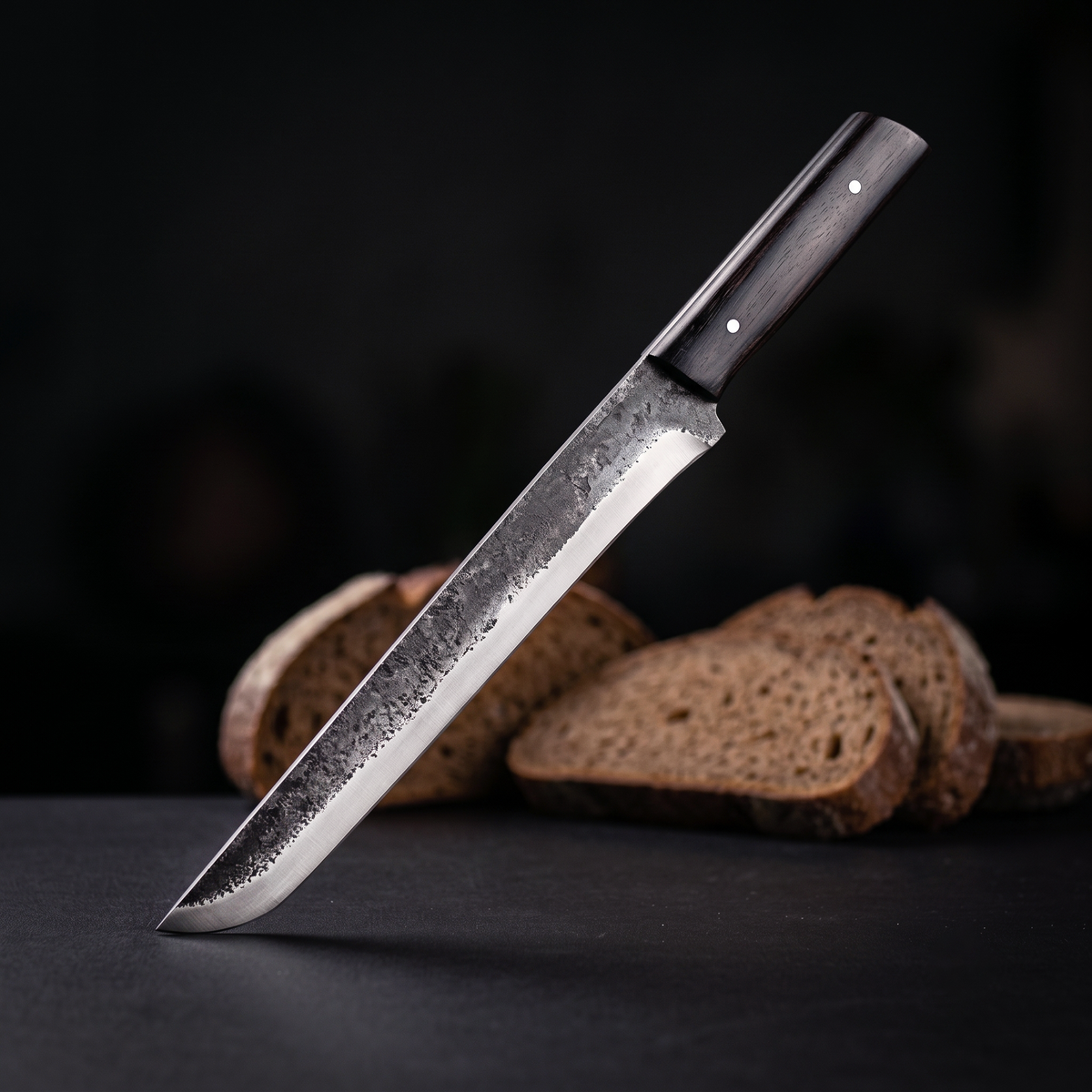
The best knife for slicing brisket is a long slicer with a straight edge, long enough to cross the whole flat in one pull so you never saw back and forth. Length and sharpness matter more than anything else. Our pick is the Mamba 11". If you want one blade for trimming and carving, look at the Kodiak 8".
You tended the fire all night, wrapped at the right moment and rested it properly. Then somebody grabs the bread knife and turns the flat into pulled beef. Nobody means to do it. The wrong knife just makes it very easy. This guide covers what a good brisket slicing knife looks like, why the timing matters even more than the steel, and which of our hand forged knives we would hand you on cook day.
Why a Long Straight Edge Wins
Brisket slices want one long stroke. Every time the blade changes direction it tears the meat a little and knocks bark off the top. A long straight edge lets you start at the heel, draw the knife toward you and finish the slice before you run out of steel. A short knife forces you to saw, and sawing is how a tender flat ends up shredded.
The straight part matters too. A chef knife has a curved belly built for rocking, so only part of that curve touches the meat at any moment and you end up pressing harder to get through. A straight edge stays in contact the whole way along, and a sharp one needs very little downward pressure. Pressure is the enemy here. Push down on a properly rested brisket and it compresses, squeezes juice onto the board and falls apart before the slice is finished.
Sharpness does the rest. A dull slicer tears the bark however long it is, so hone it before you carve, not after the guests have started staring at you.
What Length You Need for a Packer Flat
A whole packer brisket is two muscles, the flat and the point, and the flat is the wide, lean one you slice across. The easy rule is that the blade should be longer than the flat is wide, so the heel starts on one side and the edge is still in the meat when it clears the other. Measure your usual flat across the grain before you buy. A tape measure costs a lot less than a slicer that comes up short.
Our Mamba has an 11" blade, which is long enough to cross a full flat in a single pull. That length also takes care of prime rib, turkey breast, pork loin, ham and smoked salmon, so it earns its drawer space between brisket cooks.
Can a standard 8 inch knife slice brisket? Yes, with more strokes and more care. On a small flat or a half brisket you can get away with it. On a full packer you will be sawing by the middle of the flat, and the bark will show it.
Granton Edge or Plain Edge?
A granton edge has shallow scallops ground into the sides of the blade just above the edge. The idea is that the scallops leave small pockets of air, so a moist slice lets go of the steel instead of clinging to it. It helps a little. It will not make a dull knife sharp or a short knife long, and a plain straight edge that is properly sharp slices brisket beautifully. Choose on length and sharpness first, and treat the scallops as a tiebreaker between two knives that are otherwise equal.
The Mamba has a long straight edge with an angular tip. The dark forge scale left on its upper flats helps the blade slide through meat instead of dragging, and below the scale the edge is polished clean.
Cleaver or Slicer for the Point and the Flat
The flat is lean and even and wants thin, clean slices, so it belongs to a long slicer. The point is fattier, thicker and far more forgiving. Plenty of cooks slice it thicker or cube it for burnt ends, and for that work a heavier blade with a curved belly does fine.
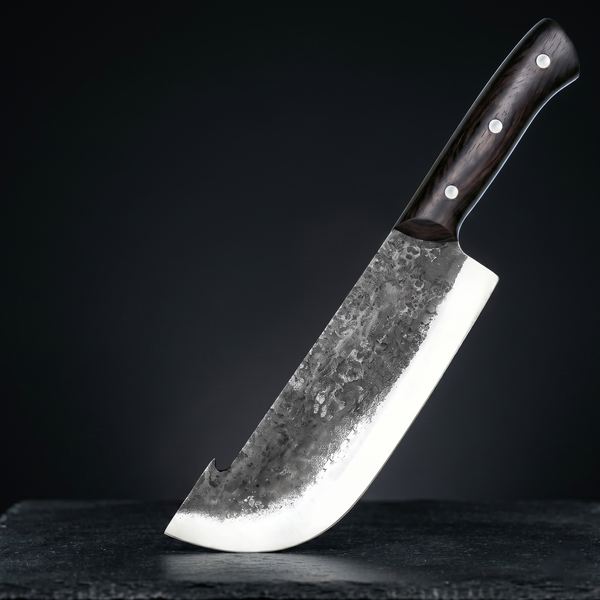
That is where the Kodiak 8" butcher cleaver comes in. It has a drop point for scoring the fat cap and working around the brisket before the cook, and a curved belly you can actually carve with afterwards. It carries the weight of a meat cleaver up front, so it goes through the point and the bark without fuss. It will slice the flat as well, just not in the single long pull the Mamba manages. If you want one blade from trimming to carving, the Kodiak is the one. If you want the best looking slices of flat on the platter, get the slicer.
What we would not use on cooked brisket is a heavy bone cleaver. Chopping straight down through a tender flat squashes it. Save those for ribs and joints.
Resting and Slicing Against the Grain
Here is an awkward thing for a knife company to admit. The knife matters less than the timing. Slice a brisket straight off the smoker and the juice runs all over the board whatever blade you used. Let it rest, wrapped, until it has settled, and even an average knife gets decent slices. A great knife on an unrested brisket just makes a very sharp mess.
Find the grain before you cook
The grain in the flat runs one way and the grain in the point runs at an angle to it. Once the bark forms, it is hard to see either. Many pitmasters trim a small corner off the flat, across the grain, before the brisket goes on, so there is a marker to follow later. Cheap trick, and it saves a lot of squinting.
Separate the point from the flat
Because the two muscles run in different directions, one set of cuts cannot cross the grain on both. Slice the flat first, working from the thin end, then separate the point along the fat seam that divides the two. Turn the point and slice it across its own grain.
Slice thickness
Aim for slices about the thickness of a pencil on the flat. Thinner slices fall apart and thicker ones get chewy. If a slice drapes over your finger without breaking, you are there. The point can go thicker.
Let the knife do the work
Start the cut at the heel and draw the blade toward you in one long stroke with light pressure. Hold the brisket steady with a fork or a gloved hand, well away from the edge. Do not saw.
Mamba, Kodiak and Ironclad Compared
Three of our knives get asked about for brisket more than the rest. All three are hand forged from high carbon steel, full tang with steel pins. Here is how they split the work.
| Knife | Blade | Profile and finish | Best brisket job | Price |
|---|---|---|---|---|
| Mamba slicing knife | 11" | Long straight edge, angular tip, forge scale flats, polished edge | Slicing the flat and the point after the rest | $112 |
| Kodiak butcher cleaver | 8" | Drop point, curved belly, forge scale flats, rosewood handle | Trimming before the cook and carving after it | $189 |
| Ironclad chef knife | 8.7" (13.7" overall) | Hand hammered spine, polished edge | Portioning cooked meat and heavy prep | $179 |
The Mamba 11" brisket slicing knife is the specialist. It is made for cooked meat and large cuts, and it is not a trimming knife or a bone knife. If brisket is the reason you are shopping, this is the one to get, and it also happens to be the least expensive of the three.
The Kodiak is the answer for people who refuse to own more knives than strictly necessary. It trims and it carves, and in return you give up a little slice quality on the flat.
The Ironclad 8.7" chef knife is a big chef knife first. It portions cooked meat well and earns its place on cook day for onions, peppers and pork shoulder steaks. For long, clean brisket slices, though, we would still point you to the Mamba.
Trimming Needs a Different Knife
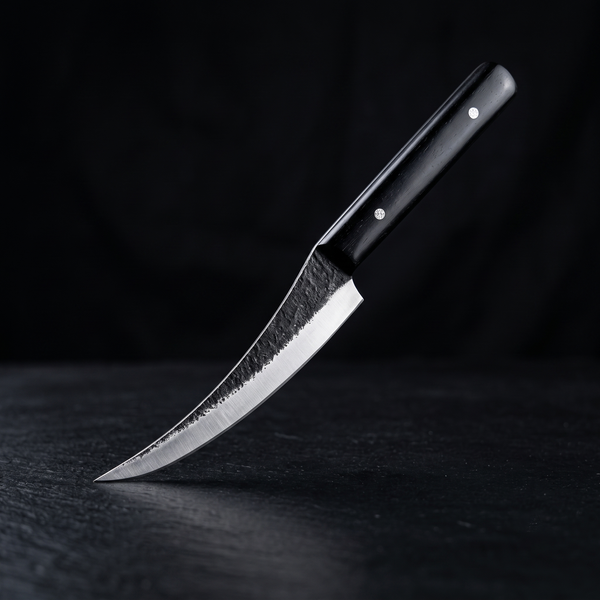
A slicer makes a poor trimmer. Eleven inches of steel is clumsy when you are working a tip under the fat cap on raw meat. For the prep before the cook, use the Mako 7.5" boning knife. Its trailing point blade gets under the fat cap, squares up the flat and pulls silver skin off in long strips. The Mako and the Mamba together cover cook day from raw to sliced. Our boning knife vs fillet knife guide goes deeper on the trimming side.
If you would rather buy it all in one box, The Meat Lover's Set is a three piece hand forged BBQ knife set that covers the job from trimming a raw brisket to slicing it once it has rested. The rest of our pit tools live in the BBQ knives collection.
Keeping a Brisket Knife in Shape
Brisket juice left on high carbon steel will spot it, so hand wash the slicer as soon as you finish carving and dry it right away. Wipe on a light coat of food safe oil before it goes back in the drawer. No dishwasher and no soaking. Over time the steel darkens into a patina, which is normal and helps protect it. Our high carbon steel knife care guide covers the full routine. Every knife we sell carries a lifetime warranty against defects in materials and craftsmanship. It does not cover a slicer left overnight in a sink of greasy water, but you had probably guessed that.
Before the slicer comes out there is prep, and choosing between a cleaver and a butcher knife covers the heavy end of it. When your slicer starts dragging through the bark instead of gliding, the whetstone guide for cleavers and chef knives walks through the routine. And if you are buying any of this as a present, the knife gift guide for grillers has a section on exactly that. Expect to hear that the old knife was fine.
Questions
What size knife is best for slicing brisket?
Long enough to cross the whole flat in one pull, which on a full packer brisket means a dedicated slicer rather than a chef knife. Our Mamba has an 11" blade, long enough to cross a full flat in a single stroke. An 8 inch knife works on a small flat, but you will be sawing on a big one.
Is a granton edge better for slicing brisket?
It helps a little with release, but it is not the deciding factor. Length and sharpness matter far more, and a sharp plain straight edge slices brisket cleanly. Treat the scallops as a tiebreaker between two knives that are otherwise equal, never as a reason to buy a short one.
Can I slice brisket with a chef knife?
You can, especially on a small flat or the point. The curved belly and shorter blade mean more strokes and more pressure, which tears slices and knocks off bark. If you smoke brisket more than now and then, a proper slicer is worth having in the drawer.
Should I use the same knife to trim and slice brisket?
Most cooks use two. A shorter boning knife like the Mako 7.5" handles the fat cap and silver skin on raw meat, and a long slicer handles the cooked brisket. If you want one blade for both jobs, the Kodiak 8" drop point cleaver trims before the cook and carves after it.
How thick should brisket slices be?
About the thickness of a pencil on the flat. Thinner slices tend to fall apart and thicker ones get chewy. The point is fattier and more forgiving, so it can be sliced thicker or cubed for burnt ends. Always cut across the grain, and turn the point to follow its own grain.
Shop the knives from this guide
Keep reading
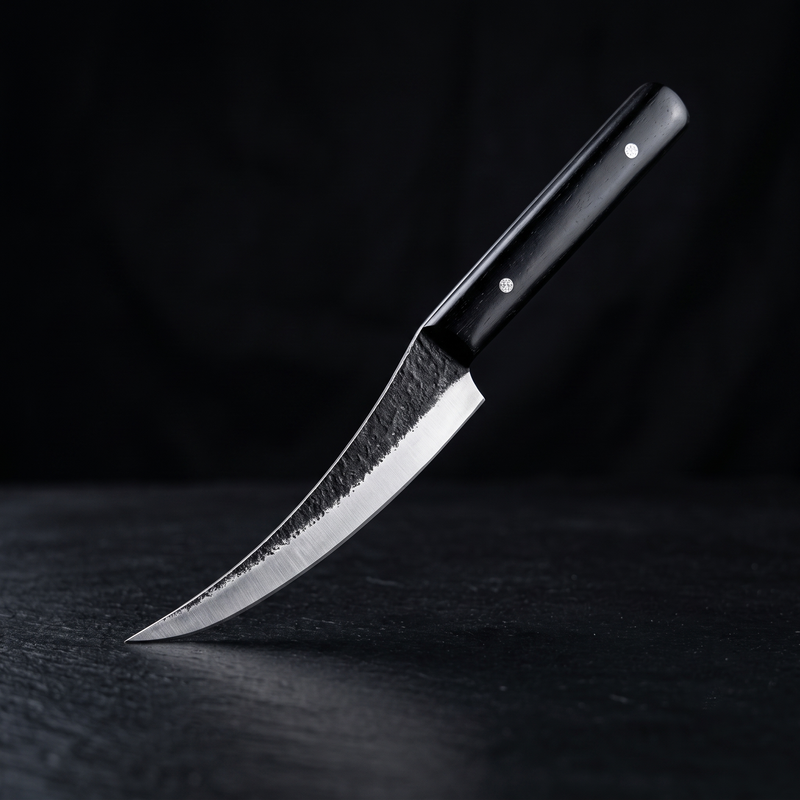
Boning Knife vs Fillet Knife: What Is the Difference?
Boning knife or fillet knife? The real difference is stiffness. Here is how the two shapes compare, which one to use for fish, poultry,...
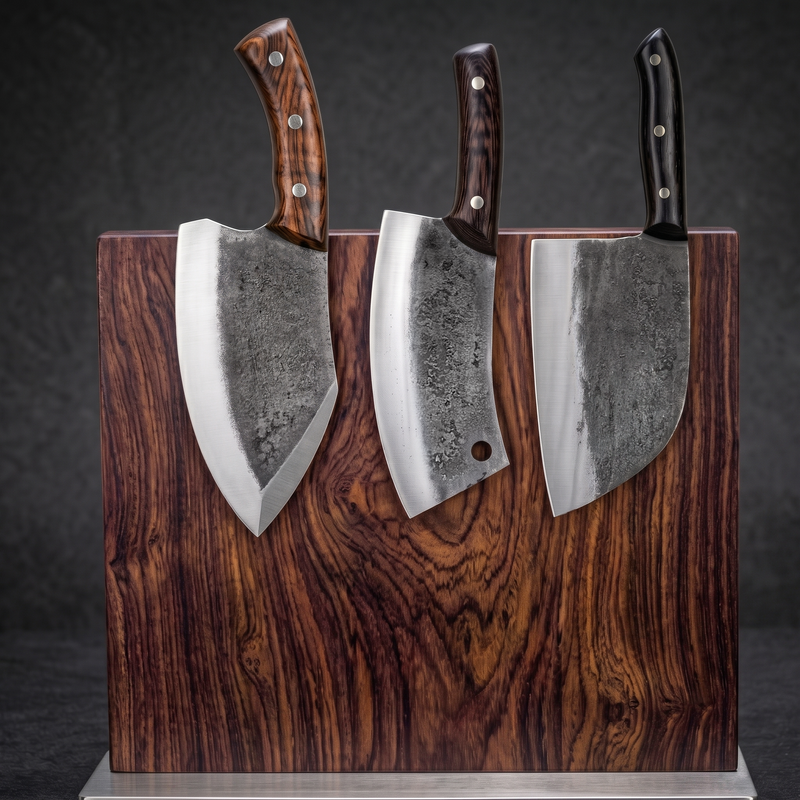
Meat Cleaver vs Butcher Knife: Which One Your Kitchen Needs
A meat cleaver chops through joints and bone with weight and a tough edge. A butcher knife slices, trims and portions with a long,...
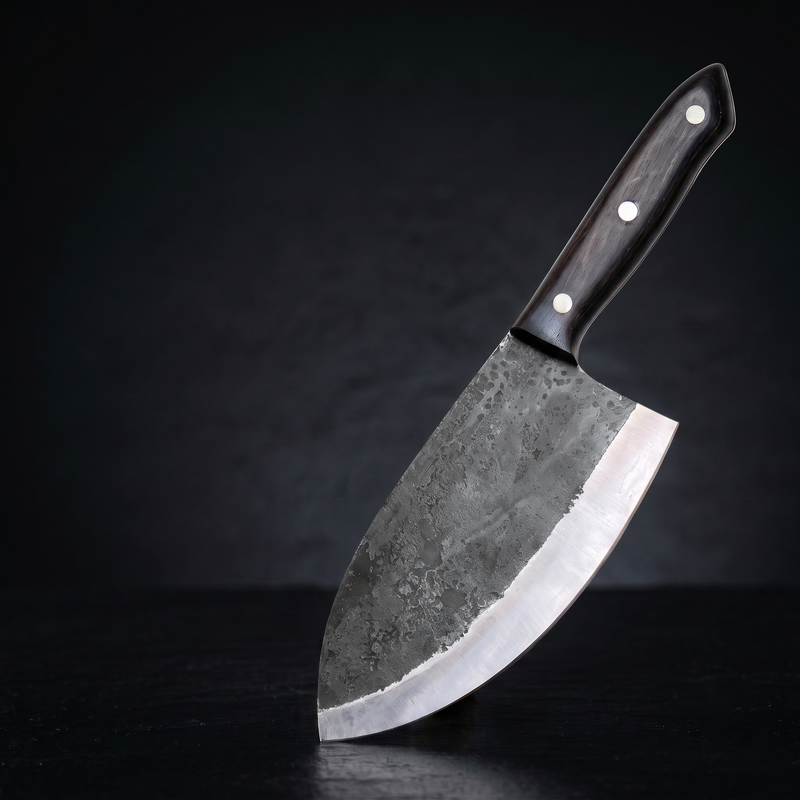
How to Sharpen a Meat Cleaver: Angle, Stones and Step by Step
A plain guide to sharpening a meat cleaver at home. Why a cleaver edge is ground differently from a chef knife, how to find...