
Chef Knife Sizes: 6, 7, 8 and 10 Inch, and Which One to Buy
October 13, 2026 · By Matt
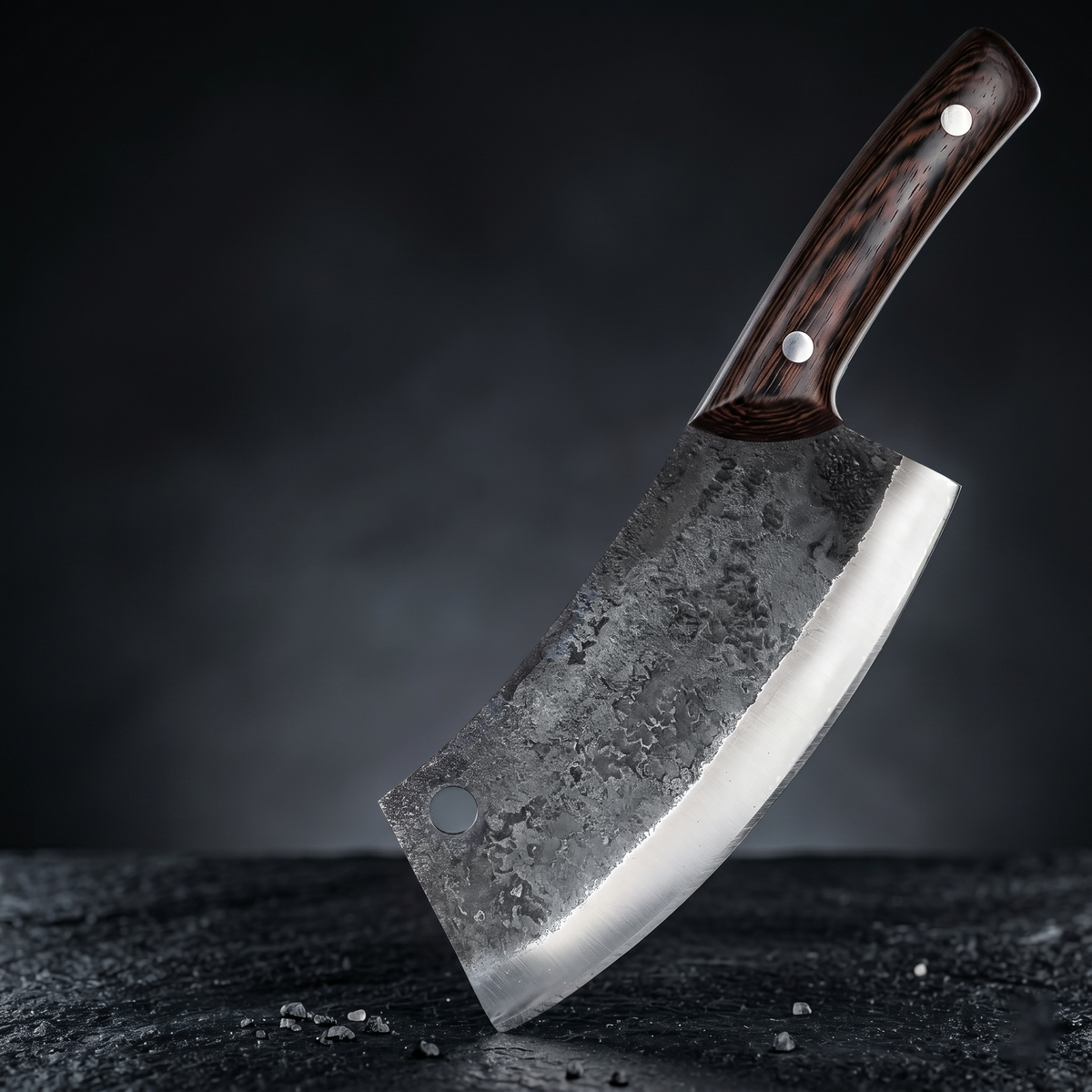
For most home cooks the right chef knife size is 8 inches. It is long enough to slice a big onion or a roast in one or two strokes and short enough to stay under control on an ordinary board. Go to 7 inches if you have smaller hands or a smaller board, 6 inches if you want something compact for light prep, and 10 inches only if you have a big board and like long slicing strokes.
Chef knife sizing gets treated like shoe sizing, as if there is a correct number and you are wrong until you find it. There is a sensible default, and then a few things that move you off it, including the shape of the blade, which can make a 7 inch knife feel like a 9. This guide goes through each common size, what it does well and badly, which of our chef knives sits where, and the honest gaps in our range.
What Size Chef Knife Should You Buy?
Start at 8 inches and only move if something pushes you. It covers a pineapple or a pork loin without fuss and does not ask for a board the size of a door. If you do not know what you like yet, 8 inches is the safe bet. The Wikipedia entry on the chef's knife gives 8 inches as the general length of a European chef's knife and puts the whole range at 6 to 14 inches.
Move down if your board is small or the knife you own now already feels like it is steering you. Move up only if you have the space and already know you like a long blade. Plenty of 10 inch knives live in drawers because they were too much knife for the kitchen they were bought into.
One note on how blade length is measured. The number on a chef knife is the blade alone, from the tip back to where the blade meets the handle. The overall length adds the handle on top, so a 7 inch knife can easily be a foot long in total. That overall number is the one that matters for boards and drawers.
Chef Knife Sizes Compared
| Size | Good for | Not great for | Xcutlery option |
|---|---|---|---|
| 6 inch | Small boards, light prep, garlic, shallots, a few vegetables at a time | Big squash, cabbage, slicing roasts, long rocking cuts | None right now |
| 7 inch | Smaller hands, average boards, everyday vegetables and boneless meat | Very large produce and long slices of a roast in one stroke | Orca 7", Kermode 7" Serbian, Chef's Kiss 7" Serbian |
| 8 inch class | The all rounder: onions, herbs, melons, roasts, most daily cooking | Cramped counters and tiny boards | Ironclad 8.7" |
| 9 inch | Long strokes on a big board, large batches | Small boards and people who like fine control | Chef knife in the Mastercraft 4 piece set |
| 10 inch | Big boards, big batches, long slices of large roasts | Most home counters, small hands, fine work | None right now |
The gaps are on purpose in the table and not on purpose in life. We do not make a 6 inch or a 10 inch chef knife at the moment. If one of those is what you really need, buy it from someone who makes one rather than talking yourself into the nearest thing we sell.
What Each Size Does Well, and Badly
6 inch chef knife
A 6 inch chef knife is a nimble thing. It suits a small board, a studio kitchen, or a cook who mostly handles garlic, shallots, peppers and the odd chicken breast. It is easy to control and easy to store. The trouble starts with anything big: a large onion takes two passes and a cabbage becomes a wrestling match. It is a good second knife and a slightly frustrating only knife.
7 inch chef knife
The 7 inch size is the quiet favorite of people with smaller hands and smaller boards. It still has enough length for most vegetables and boneless meat, and it feels a little quicker in the hand than an 8. You give up a bit of reach on very large produce and long slices. For a lot of cooks that is a trade they never notice.
8 inch chef knife
The 8 inch knife does almost everything adequately and most things well. Long enough to slice a roast, short enough to mince parsley without feeling like you are rowing. If a recipe says "chef knife" without saying which, it means this one.
10 inch chef knife
A 10 inch knife is lovely on a big board with a big pile of food. Each stroke covers more ground and long slices of a roast come off in one pull. On a normal home board the tip runs off the end and fine work feels like threading a needle with a broom. Buy one if you already know you want one.
Our Chef Knives by Size
Our chef knives are all hand forged from high carbon steel, full tang with steel pins, and all four have a blade about 0.1 inch thick. The differences are length, height and weight. You can see them side by side in the chef knives collection.
Orca 7" chef knife
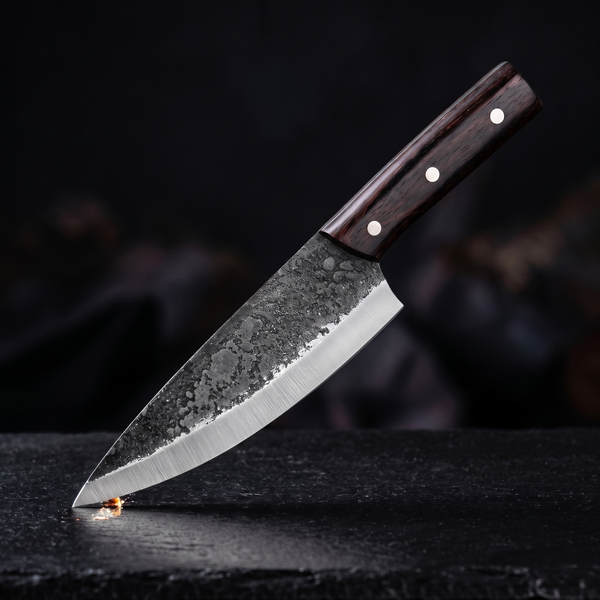
The Orca 7" chef knife is our everyday Western style chef knife. 12 inches overall, 260 g, black rosewood handle. The lightest of the four, and a 7 inch knife that feels like one.
Kermode 7" chef cleaver
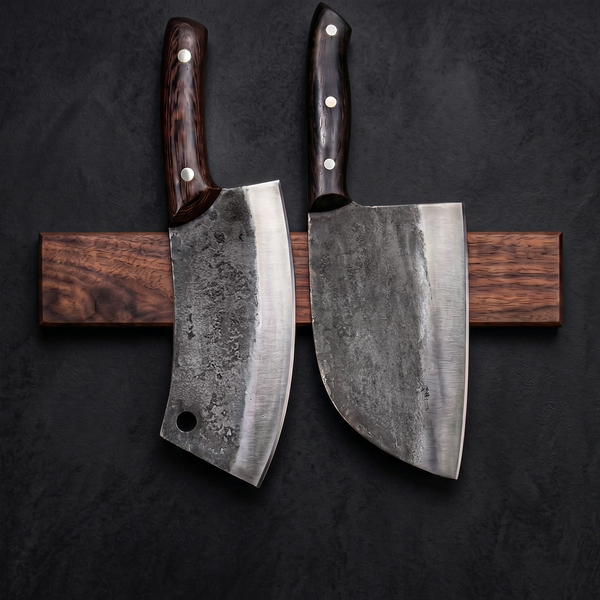
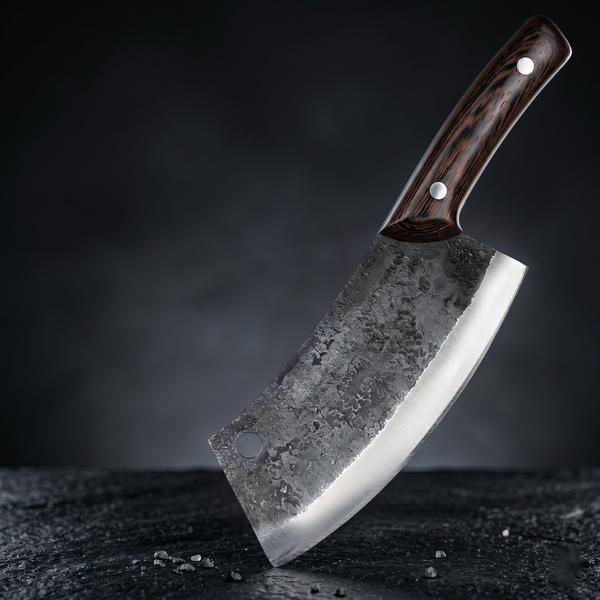
The Kermode 7" is a tall Serbian chef knife with a curved edge that rocks. 11.4 inches overall and 349 g. It is a 7 inch blade with a lot more steel above the edge than the Orca, so it scoops chopped food off the board and has more heft behind each cut.
Chef's Kiss 7" Serbian chef knife
The Chef's Kiss 7" is the heavyweight of the group at 404 g, 11.9 inches overall, with a tall blade. Same length on paper as the Orca. Not the same knife in your hand.
Ironclad 8.7" chef knife
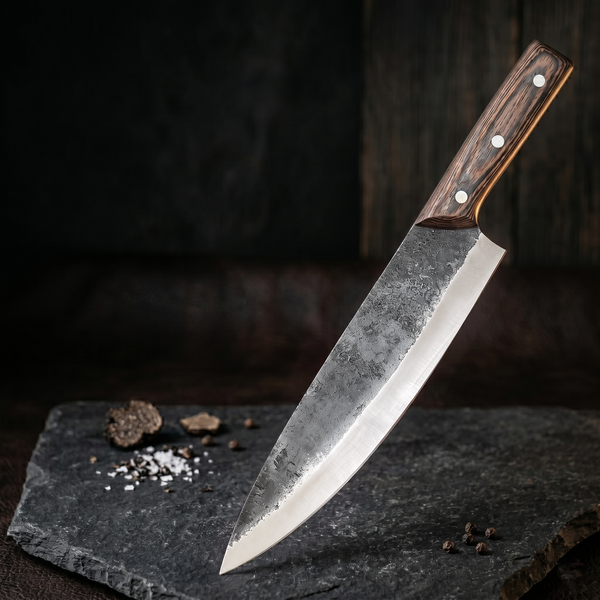
The Ironclad 8.7" is our long chef knife. 13.7 inches overall, 330 g, with a hand hammered spine. It sits in the 8 inch class with a little extra reach, and it is the one we point people to when they ask for the standard all rounder.
If you want a 9 inch chef knife, the only one we sell comes in the Mastercraft 4 piece set, alongside two cleavers and a fish and steak cutter. It is 14 inches overall. Buying a set to get one length is a lot of commitment.
Why Does a 7 Inch Serbian Knife Feel Bigger?
Because length is only one of the numbers. Blade height and weight change how a size feels just as much, and sometimes more. Look at our three 7 inch knives. The Orca weighs 260 g. The Kermode weighs 349 g. The Chef's Kiss weighs 404 g. Same blade length, and the heaviest is over half as heavy again as the lightest.
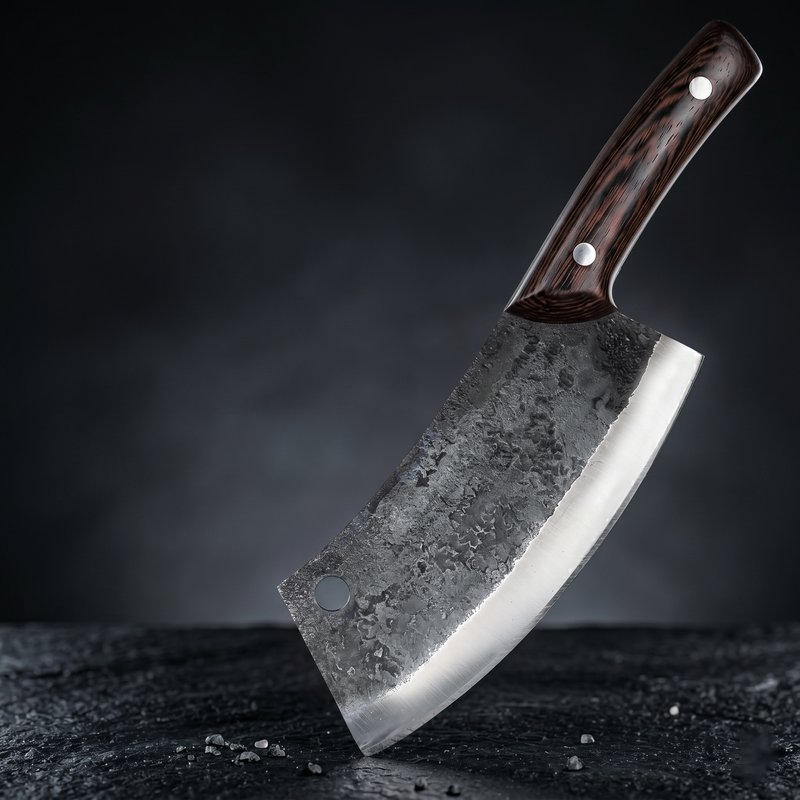
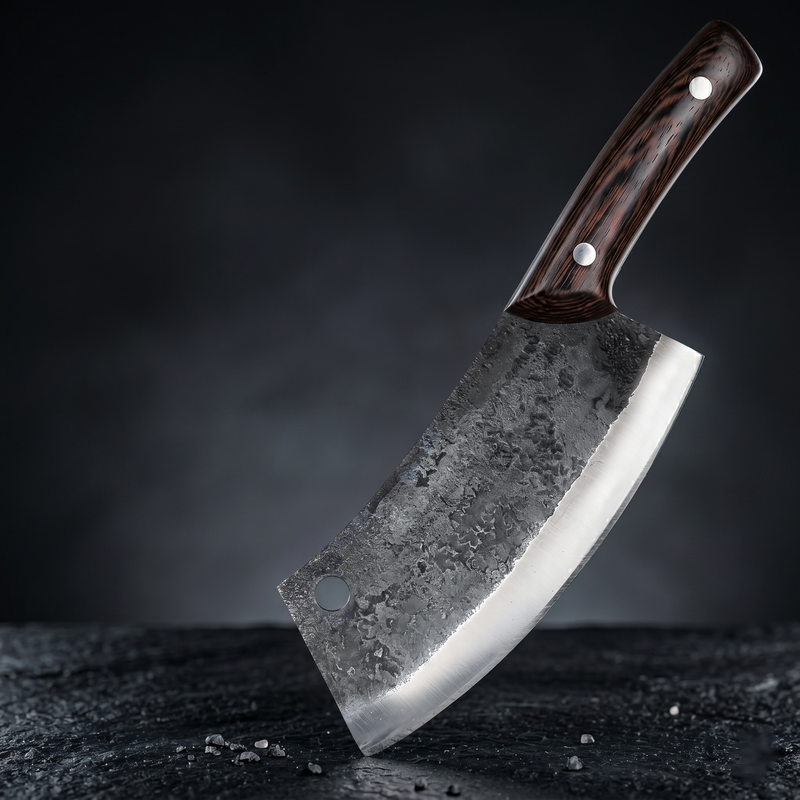
A Serbian chef knife has a tall blade, closer to a cleaver in profile than to a slim Western chef knife. That height carries steel, and steel carries weight. Pick up a 7 inch Serbian knife and it reads as a bigger knife than its length suggests. Some people who think they want a longer knife are really after that feeling of mass, and a tall 7 inch blade gives it to them on a smaller board. Our guide to the Serbian chef knife goes deeper on the shape.
It works the other way too. The Ironclad has a longer blade than any of the 7 inch knives, yet at 330 g it is lighter than both the Kermode and the Chef's Kiss. Longer is not automatically heavier. If weight matters to you, and for wrists it often does, read the grams before you read the inches.
What blade height does for you
A tall blade gives your knuckles more clearance above the board and turns the flat into a scoop. The cost is weight, and a little less agility on fiddly work. A slimmer blade is lighter and quicker, with less room for your knuckles.
What Size Cutting Board Do You Need for Each Knife?
Here is a simple rule of thumb: your board should be longer than the overall length of the knife, with a few inches spare. Measure the knife tip to butt, not just the blade. A 7 inch knife that is 12 inches overall wants a board comfortably over 12 inches long. The Ironclad at 13.7 inches overall wants more than that again.
When you slice, the knife travels. If the board is barely longer than the knife, the tip hangs off on the forward stroke or the handle bumps the counter on the pull, and you end up making short, choppy strokes. A long knife on a small board is a short knife with extra steps.
A small board is a strong vote for a 7 inch knife. If you have a big end grain block that never moves, you have room for the longer blades.
Does Hand Size Change Which Chef Knife You Should Get?
It can, but less than people expect. Most of how a knife fits your hand comes down to grip. With a pinch grip, thumb and forefinger on the blade just ahead of the handle, the knife becomes an extension of your hand, and blade length matters less than balance.
That said, a few patterns hold up. Smaller hands often feel more in control with a 7 inch knife, especially a lighter one like the Orca. Larger hands sometimes find a short, slim blade awkward because the knuckles hit the board, and a taller blade such as the Kermode fixes that without needing more length. Our chef knife handles are all around 4.8 to 4.9 inches long, so the difference between them is in the blade, not the grip.
If you cannot hold a few knives first, pick by board size, then weight, and let hand size break the tie.
When the Job Is Bone, Not Size
No chef knife size fixes the wrong job. A longer chef knife does not cut bone better. It just gives you more thin edge to chip. If your prep includes splitting chicken backs, ribs or joints, that is cleaver work, and the answer is weight and a thicker spine, not more inches.
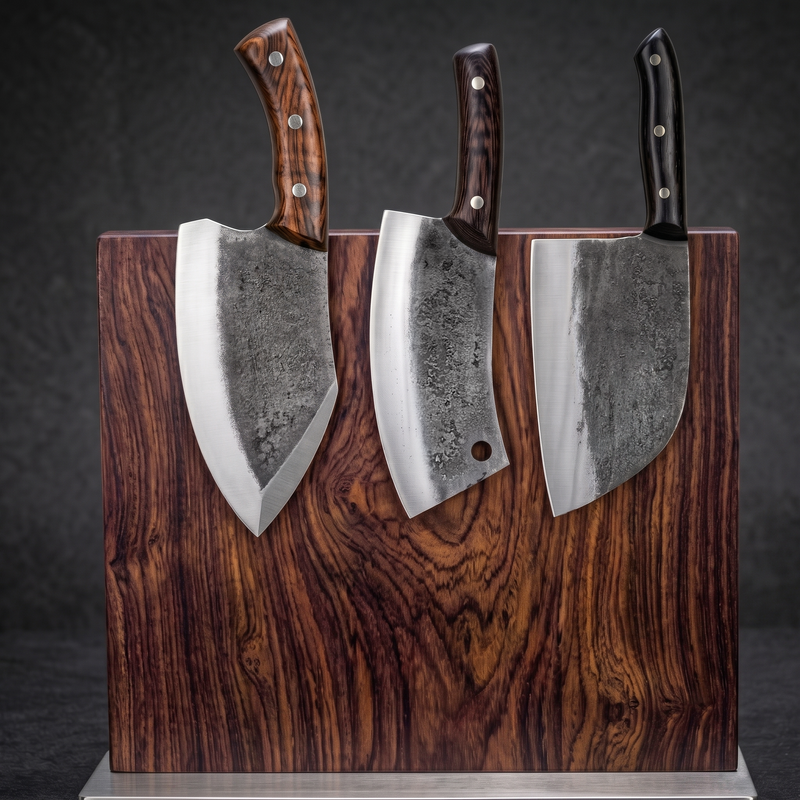
For that work, look at the Kraken 8" cleaver at 380 g for poultry and lighter bone, the Kodiak 8" butcher cleaver at 581 g for a bit more authority, or the Rhino 8" at 1250 g with a 0.3 inch spine for large bones. The Rhino is made to order, so it takes 2 to 3 weeks before it ships. Cleaver lengths follow their own logic, and we cover that in meat cleaver sizes explained, so we will not repeat it here.
One rule holds for every knife we make: no frozen meat and no frozen bone. It chips the edge, whatever the size.
Looking After Whichever Size You Pick
High carbon steel does not care how long it is. Hand wash it, dry it straight away, and wipe on a light coat of food safe oil. No dishwasher and no soaking in the sink. A patina will build over time, which is normal. Every one of our knives carries a lifetime warranty against defects in materials and craftsmanship, and in stock knives arrive in 5 to 6 business days in the USA and Australia.
If you are still not sure a chef knife is the right first knife at all, our guide to what a chef knife is used for sets out the jobs it handles and the ones it should hand off. And when one of those jobs involves bone, our hand forged cleavers are where to look next.
Questions
What is the most common chef knife size?
The 8 inch chef knife is the usual standard for home kitchens. It is long enough to slice a roast or halve a melon and short enough to stay under control on an ordinary cutting board. If you do not know what size you like yet, start at 8 inches and adjust from there once you have cooked with it for a while.
Is a 7 inch or 8 inch chef knife better?
Neither is better across the board. An 8 inch knife reaches further and handles large produce and roasts more easily. A 7 inch knife suits smaller hands and smaller boards and feels a little quicker. If your board is on the small side, the 7 inch knife will usually be the more comfortable choice in daily use.
Is a 10 inch chef knife too big for a home kitchen?
For most home kitchens, yes. A 10 inch blade needs a large board and room on the counter, otherwise the tip runs off the end and the strokes get short and choppy. It shines on big batches and long slices of a large roast. Buy one only if you have the space and already know you enjoy a long blade.
Does Xcutlery make a 6 inch or 10 inch chef knife?
Not at the moment. Our chef knives are the Orca 7 inch, the Kermode 7 inch Serbian, the Chef's Kiss 7 inch Serbian and the Ironclad 8.7 inch. The only 9 inch chef knife we sell comes in the Mastercraft 4 piece set. If you truly need a 6 or 10 inch knife, buy one from a maker who offers that size.
Why does a Serbian chef knife feel heavier than a regular chef knife?
A Serbian chef knife has a much taller blade, closer to a cleaver in profile, and that extra height carries more steel. Our three 7 inch knives show it well: the Orca weighs 260 g, the Kermode 349 g and the Chef's Kiss 404 g. Same blade length, very different feel in the hand and on the board.
Shop the knives from this guide
Keep reading
How to Hold a Chef Knife: The Pinch Grip and the Claw
The pinch grip and the claw are the two habits that make a chef knife safer and easier to control. This guide explains how...
What Is a Serbian Chef Knife? The Cleaver Shaped Blade Explained
A Serbian chef knife is a thick, hand forged, cleaver shaped chef knife that chops, rocks and scoops. Here is what the style really...
Meat Cleaver Sizes Explained: Which Blade Length to Buy
Blade length is the number everyone shops by and the one that matters least. This guide explains what length, height, spine thickness and weight...