
Why Do Cleavers Have a Hole in the Blade? What It Is Really For
October 13, 2026 · By Matt
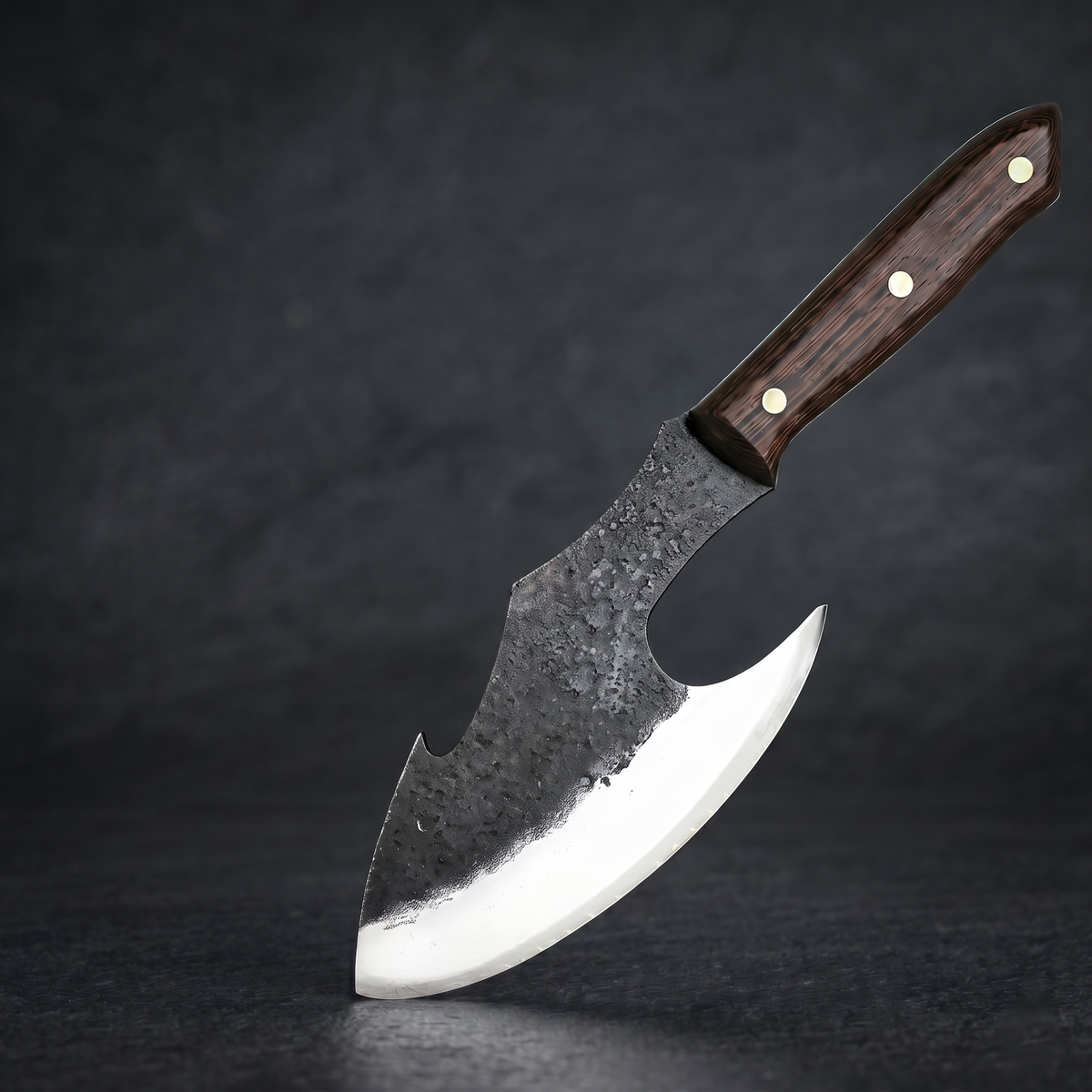
The hole in a cleaver is there so you can hang it up. A heavy cleaver goes on a hook or a nail by that hole, edge clear of everything, and on the Xcutlery cleavers that have one it also works as a finger hole: hook a forefinger through it when you choke up into a pinch grip for slicing and the blade locks to your hand. Keep the finger out of it when you chop bone.
That is the answer, and it is a slightly anticlimactic one. The internet would like the hole to be a clever piece of engineering that breaks suction, saves weight or multiplies your strength, and it has repeated those ideas often enough that they sound like facts. Some of them have a grain of sense in them and some are folklore. This guide sorts out which is which, shows which of our cleavers have a hole and which do not, and covers the safety side, which matters more than any of the theories.
What Is the Hole in a Cleaver For?
Hanging it on a hook
Start with the boring job, because it is the real one. A cleaver is tall, thick and heavy. It will not go in a knife block slot cut for a chef knife, it rattles around a drawer chipping its own edge on the can opener, and a big one asks more of a magnetic strip than a lot of strips are built to give. A hook on the wall fixes all of that. The hole goes over the hook, the blade hangs flat against the wall, the edge touches nothing and the knife is right where you reach for it. That is why cleavers in butcher shops hang in a row instead of lying in a tray. The general reference says the same thing in one line, that some cleavers have a small hole at the top front corner for hanging them on a wall: Wikipedia's entry on cleavers.
A finger hole for slicing
The second job is the one you notice in use. When you stop chopping and start slicing, you choke up: thumb and forefinger pinch the blade just ahead of the handle, the same pinch grip you would use on a chef knife. On a cleaver with a hole, you hook your forefinger through it in that position. The blade can no longer twist in your hand or slide forward when your fingers are wet, and you steer the edge with your finger instead of hoping the handle follows. It does not change the cut. The edge still does the cutting; the hole only changes how firmly you are holding the thing doing it. Our guide on how to use a meat cleaver walks through both grips and when to switch.
Does the Hole Stop Food Sticking, Save Weight or Add Leverage?
These are the three theories you will hear most. Here is our honest read on each, with no lab coat and no made up test results.
Reducing suction or drag
This is the most popular one, and it borrows from a real idea. When a wide, flat blade passes through something wet and dense, like a potato or a block of cheese, the slice can cling to the steel because there is no air getting between them. That is why a textured or forge scale flat lets food fall away a little more easily than a mirror polish.
The trouble is location. A hanging hole sits up near the spine, well above where most food ever touches the blade. A single round hole a long way from the cut has very little chance of breaking a seal down near the edge. If you are slicing something tall enough to reach the hole, it might let a bit of air in at the top, but that is a happy accident, not the design. Call this one mostly folklore. If food sticking bothers you, the finish on the flats will make more difference than any hole.
Making the cleaver lighter
Technically true, practically meaningless. A hole the size of a fingertip removes a small amount of steel from a blade that weighs hundreds of grams. Our Megalodon weighs 430 g with its hole in it, and as far as your wrist is concerned it is a 430 g cleaver. A cleaver is supposed to have weight anyway, since much of its chopping power comes from it.
Giving you more leverage
This one is folklore as stated. A hole cannot add leverage to a chop; the force comes from the weight of the blade and how hard you swing it, and the hole is not involved in either. There is a grain of truth tucked inside it, though, and that is control. With a finger through the hole in a pinch grip, you have more say over where the edge goes during a slice. That is a grip benefit, not extra power, and it only applies when you are slicing.
Should You Put Your Finger Through the Hole?
For slicing, yes. For bone chops, no, and this is the part of the guide worth remembering.
When you slice, the blade moves in a smooth, controlled line, and a finger through the hole does exactly what you want: it keeps the blade locked to your hand. When you chop through bone, the blade stops dead on impact and everything that stopped it travels straight back up the steel. If your finger is hooked through the hole at that moment, the shock goes into your knuckle, and the steel around the hole is not padded. For bone work, take the finger out, hold the handle in a full grip, keep your other hand well back and let the weight do the work.
A few more habits that keep the hole from becoming a problem:
- Never catch a falling cleaver, by the hole or anywhere else. Step back and let it land.
- Do not use the hole to pull the blade out of a board when it sticks after a chop. Rock it free by the handle.
- Keep the hole clean. Meat and fat collect around it, so wash through it with a brush when you hand wash the blade, then dry it with the rest of the knife.
Does a Hole Weaken a Cleaver Blade?
Any hole removes steel, so in the narrowest sense the blade is a little less solid around it than it would be without one. Whether that matters comes down to where the hole is and how much steel surrounds it.
On a sensibly made cleaver the hole sits high, close to the spine and well away from the edge, in the part of the blade that is thickest and does the least work. The edge is what meets bone and the board, and the hole is nowhere near it. A hole with a good margin of steel all round it, on a blade thick enough for chopping, is not a weak point in normal kitchen use. A hole placed near the edge, or so big that the steel around it looks like a thin bridge, would be a different story. We are not going to quote a strength figure, because we have not tested one and nobody selling you a knife should invent one.
What actually damages cleavers is far more ordinary: chopping frozen meat or frozen bone, which chips the edge, twisting the blade sideways while it is stuck in a joint, and hitting a stone or glass board. Avoid those and the hole will be the last thing on the knife you need to worry about.
Which Xcutlery Cleavers Have a Hole?
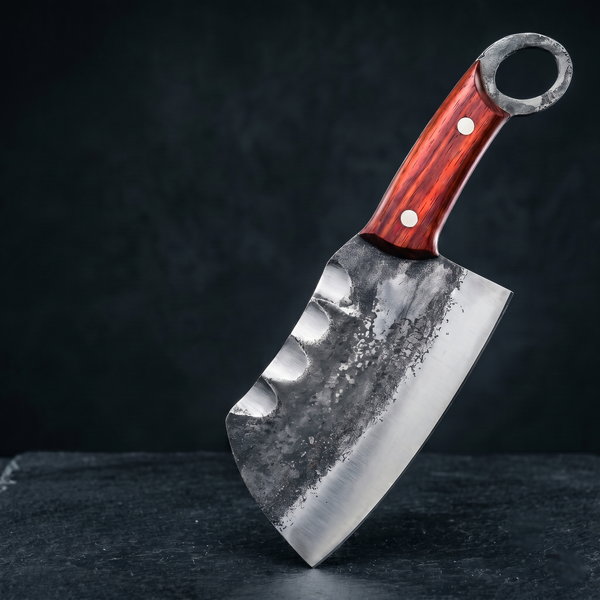
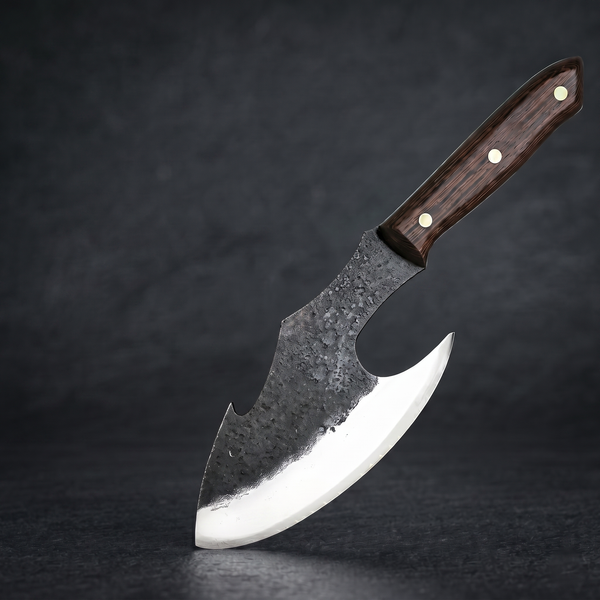
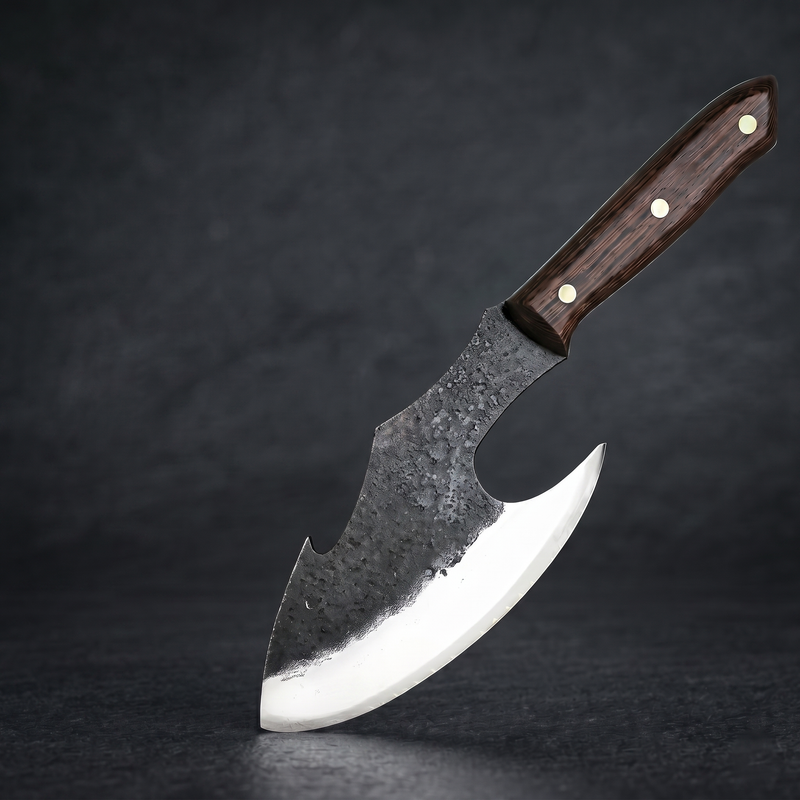
Three of ours do. The Megalodon 6.6" meat cleaver is the one most people picture, with a 0.2" (5 mm) blade, a wenge handle and the hole up front. The Razorback 6" meat cleaver has the hole plus a saw tooth spine, and at 272 g it is one of the lighter cleavers we make. The 5.5" clip point cleaver has the hole, a spine notch and hammer texture on the flats, on a red Padauk handle. If the clip point shape is new to you, our guide to knife blade shapes explains it, along with the finger hole, in a bit more detail.
| Cleaver | Hole | Blade | Weight | Best for |
|---|---|---|---|---|
| Megalodon 6.6" meat cleaver | Yes, finger hole | 6.6", 0.2" (5 mm) thick | 430 g | Meat prep and slicing with a locked pinch grip |
| Razorback 6" meat cleaver | Yes, finger hole | 6", saw tooth spine | 272 g | Light prep and smaller cuts |
| 5.5" clip point cleaver | Yes, finger hole | 5.5", clip point, spine notch | 270 g | Compact prep and trimming |
| Kraken 8" cleaver | No | 8", hammer textured | 380 g | Everyday chopping of meat and vegetables |
| Kodiak 8" butcher cleaver | No | 8", drop point | 581 g | General butchery, joints and larger cuts |
| Rhino 8" Serbian cleaver | No | 8", 0.3" (7.6 mm) thick | 1250 g | Heavy chopping and splitting bone |
All of them are hand forged high carbon steel, full tang with steel pins, with forge scale or hammer texture left on the flats and a lifetime warranty against defects in materials and craftsmanship.
Is a Cleaver Without a Hole Any Worse?
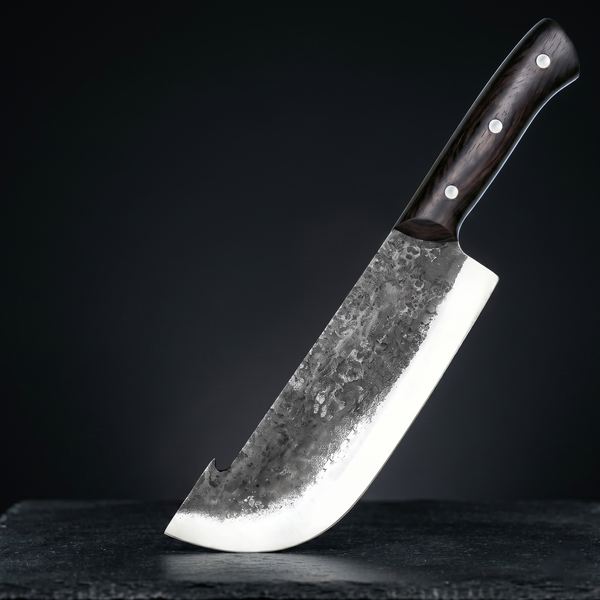
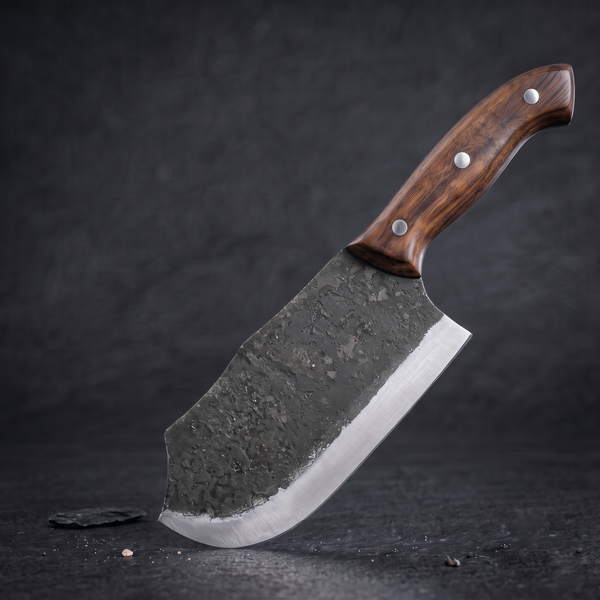
No. Most of our range goes without one, including the Kraken, the Kodiak, the Rhino, the Warthog, the Kermode, the Grizzly 8.7" and the Mammoth 9.1". None of them chops any worse for it.
On the big bone choppers there is a decent argument for leaving it out. Those knives spend their lives in a full handle grip, swung hard, and nobody should be hooking a finger anywhere near the blade on a 1250 g cleaver coming down on a beef shin. A plain blade simply removes the temptation. The Rhino is made to order and takes 2 to 3 weeks before it ships, and when it arrives it wants a sturdy stand, a blade guard or a strong magnetic strip, not a nail.
Storage for a cleaver without a hole is easy enough: a wooden stand, a sheath or blade guard in a drawer, or a magnetic strip rated for the weight. Treat the hole as a small bonus, not a reason to buy. Pick a cleaver by what you will cut, how much weight you can swing comfortably and how long an edge you need, then see whether the one you land on happens to have a hole. A hole will not make a 272 g Razorback split a beef shin, and the lack of one will not stop the Kodiak taking a chicken apart. Our guide to meat cleaver sizes covers that choice properly.
How Do You Hang a Cleaver Safely?
If you are going to use the hole for its first job, do it properly. Use a solid hook or a stout nail driven into something that can take the weight, such as a stud or a timber rail, not a stick on hook and not a nail pushed into plaster.
Hang it with the edge facing the wall so nothing brushes against it when you reach past, and put it at a height an adult reaches easily and a child does not.
Hang it dry. High carbon steel will rust if it goes up wet, and a cleaver on a kitchen wall sits in steam every time you cook. Wash it by hand, dry it at once, including inside the hole, wipe on a light coat of food safe oil and then hang it. A grey patina is normal on this steel. Orange spots mean it went up damp. No dishwasher and no soaking, same as every knife we make.
For grips, cuts and what to leave alone once it is in your hand, read how to use a meat cleaver, and the cleavers collection has every size we make, hole or no hole.
Questions
Why is there a hole in a meat cleaver?
Mainly so you can hang it. A heavy cleaver goes on a hook or a nail by the hole, with the edge clear of everything. On some cleavers, including the Xcutlery Megalodon, Razorback and 5.5 inch clip point cleaver, the hole also works as a finger hole that locks the blade to your hand when you slice.
Does the hole in a cleaver stop food sticking to the blade?
Not much. The hole sits up near the spine, well above where most food touches the blade, so a single round hole has little chance of breaking the seal near the edge. If you slice something tall it may let a little air in. A textured or forge scale finish on the flats does more to help food fall away.
Should you put your finger through the hole in a cleaver?
Yes for slicing, no for bone chops. In a pinch grip, a forefinger hooked through the hole locks the blade to your hand and stops it twisting. When you chop through bone the blade stops dead and the shock travels back up the steel, so keep the finger out and hold the handle in a full grip.
Does a hole weaken a cleaver blade?
Any hole removes some steel, but on a well made cleaver the hole sits high near the spine, far from the edge, where the blade is thickest and works least. With a good margin of steel around it, it is not a weak point in normal kitchen use. Frozen meat, twisting a stuck blade and hard boards do far more damage.
Is a cleaver without a hole worse than one with a hole?
No. The hole does not do any cutting, so a plain blade chops just as well. Most Xcutlery cleavers, including the Rhino, Kodiak and Kraken, have no hole and are best kept on a stand, in a blade guard or on a strong magnetic strip. Choose a cleaver by weight, length and the jobs you have, not by the hole.
Shop the knives from this guide
Keep reading
How to Use a Meat Cleaver: Grip, Chop and Keep Your Fingers
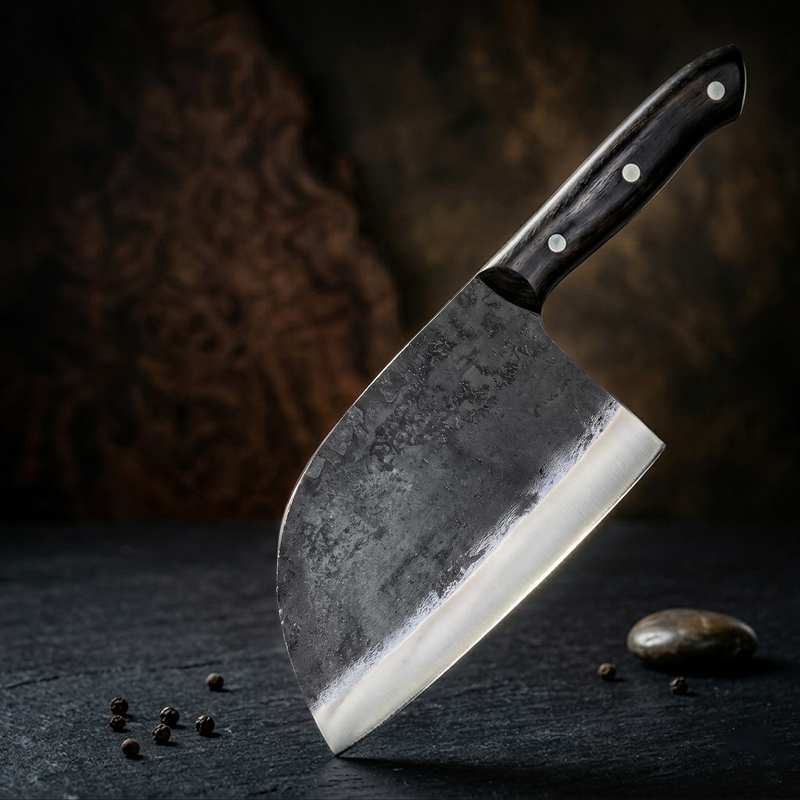
A practical guide to using a meat cleaver: the handle grip and pinch grip, what the finger hole is for, setting up a board...
Knife Blade Shapes Explained: Drop Point, Clip Point and More
Blade shape is the outline of the blade: where the tip sits, what the spine does and how the edge is drawn. This guide...
Meat Cleaver Sizes Explained: Which Blade Length to Buy
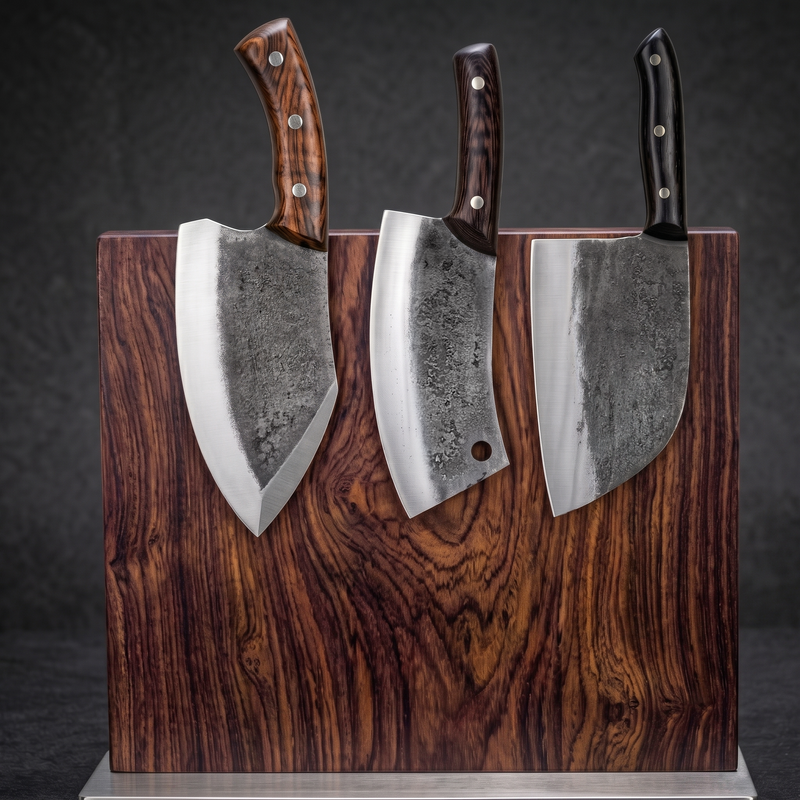
Blade length is the number everyone shops by and the one that matters least. This guide explains what length, height, spine thickness and weight...