
Roast Beef Tenderloin, Trimmed at Home
Buy the whole untrimmed tenderloin, trim off the chain and silverskin yourself, tie it and roast it hot. Cheaper than the trimmed one and better on the table.
By Chef Umais Ahmed,
- Total time 2 hr 25 min
- Serves 10 to 12
- Medium difficulty
- Stovetop sear, then oven
Knives used for this recipe
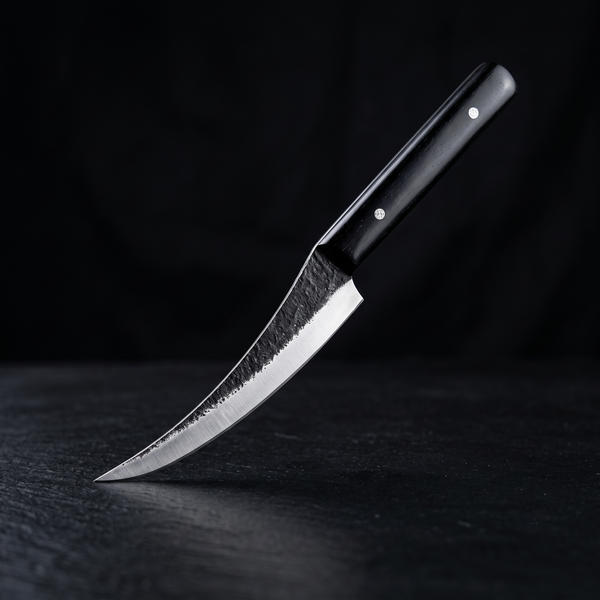
In this recipe Follows the seam to take off the chain and slides under the silverskin without taking meat with it.
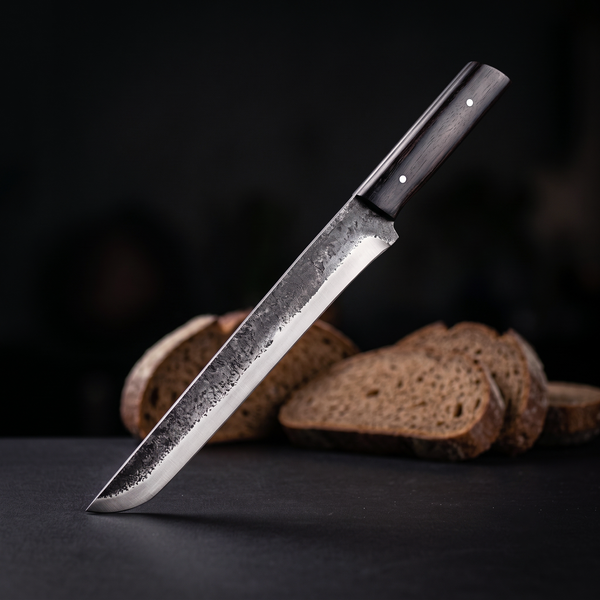
In this recipe Slices the rested roast into clean, even rounds in one long draw per slice.
Free shipping in the USA and Australia
On this page
A whole untrimmed beef tenderloin costs a good deal less per pound than the neat trimmed one sitting in the butcher case, and the trimming takes about 20 minutes. Those 20 minutes are what you pay the butcher for. Trim it yourself, tie it, roast it hot, and you get the best roast on the Christmas table with money left over for the wine.
The knife for this job
Trimming is boning knife work. I use the Mako 7.5" Hand Forged Boning Knife to take off the chain and the silverskin. The narrow trailing point slides under the silverskin without digging into the meat, and the length gives you enough edge to follow the long seam of the chain in a few clean passes. A chef knife can do it, but a tall blade fights you on every curve.
For slicing the finished roast I switch to the Mamba 11" Hand Forged Brisket Slicing Knife. The long straight edge gets through each slice in one draw, which keeps the cut faces clean and the juice in the meat instead of on the board. A dull knife does not slice tenderloin. It squeezes it until it gives up.
Buying the whole tenderloin
Ask for a whole untrimmed beef tenderloin. Some butchers and warehouse stores sell a version labelled PSMO, short for peeled, side muscle on. That one has most of the heavy outer fat already off but still carries the chain and the silverskin, so it is the easiest place to start.
A whole tenderloin usually weighs 6 to 7 lb (2.7 to 3.2 kg) and trims down to roughly 4 to 4.5 lb (1.8 to 2 kg) of roast. Plan on losing around a third of the weight to fat, chain and silverskin, a little more if it came with all its fat. A trimmed roast that size feeds 10 to 12 people as a main course.
Keep it in the fridge until the moment you trim. Cold meat is firm, and firm meat is far easier to work a blade under.
How to trim beef tenderloin
Pat the tenderloin dry with paper towels and lay it on your biggest board. Put a sheet pan beside you for the trim so the board stays clear.
1. Pull off the loose fat
Most of the outer fat comes away with your fingers. Peel it back in sheets and only use the tip of the Mako where it clings. Leave any thin fat that sits flat against the meat. It is not hurting anyone.
2. Take off the chain
The chain is the long, thin, ragged muscle that runs down one side of the tenderloin. It is held on by a seam of fat and connective tissue. Lift the end of it, find that seam, and run the tip of the Mako along it with the edge angled toward the chain rather than into the main muscle. Once it gets going, most of it pulls free by hand.
Do not throw the chain away. Clean the fat off it and it makes very good steak sandwiches, or grind it for burgers.
3. Remove the silverskin
The silverskin is the shiny, tough membrane running along the top. It does not melt in the oven. It tightens, bends the roast into a banana and chews like a rubber band.
Slide the tip of the Mako under one end to free a tab about 1 inch (2.5 cm) wide. Hold that tab with your other hand and pull it taut. Angle the blade slightly up toward the silverskin, then work along in short strokes while you keep the tab tight. Take it off in narrow ribbons. Wide strips take meat with them. Nobody at the table has ever complained that the silverskin came off too carefully.
4. Square up the head and fold the tail
The thick end, called the head, has a loose side lobe. Tuck it in against the main muscle or trim it off and cook it with the chain. The thin tail end cooks much faster than the middle, so fold the last 4 to 6 inches (10 to 15 cm) under itself to bring the whole roast to an even thickness. If you would rather not fold it, cut it off and sear it as a little cook's steak. Even thickness is the whole point. An uneven roast comes out well done at one end and raw at the other, and that is not a style.
Tie, season and rest
Tie the roast with butcher's twine every 1 1/2 inches (4 cm), starting in the middle and working out to each end. The ties hold a round shape so it cooks evenly and slices into neat rounds.
Season with about 3/4 teaspoon of kosher salt per pound (450 g) and plenty of coarse black pepper. Salt it at least an hour ahead. Overnight is better: leave it uncovered on a rack over a tray in the fridge and the surface dries out, which gives you a far better crust. Take it out of the fridge about an hour before it goes in the oven.
How to cook beef tenderloin
Heat the oven to 425°F (220°C). A whole tenderloin is long, so sear it in a roasting pan set across two burners, or cut it in half and use a large skillet. Get the pan very hot with a little neutral oil and brown the roast on every side, about 2 minutes a side and 8 to 10 minutes in all.
Move it to the oven on a rack and roast for 20 to 30 minutes. Start checking at 15 minutes with a probe thermometer in the thickest part. I pull it at 120 to 125°F (49 to 52°C), and it climbs to 130 to 135°F (54 to 57°C) while it rests, which is medium rare. The USDA safe minimum for whole beef roasts is 145°F (63°C) with a 3 minute rest, so cook it to that if anyone at the table needs it.
In the last few minutes you can add a knob of butter, a few crushed garlic cloves and some thyme to the pan and spoon the butter over the top. Then rest the roast loosely tented with foil for 15 minutes. Skipping the rest is how good beef ends up as a red puddle on the board.
Slicing the roast
Snip the twine and pull it off. Tenderloin grain runs along the length of the muscle, so cutting across the roast is already cutting across the grain. That part is easy.
Use the Mamba and cut slices 3/4 to 1 inch (2 to 2.5 cm) thick. Start at the heel of the blade and draw the whole length of the edge through the meat in one long stroke. No sawing. Slice only what you are serving straight away, because the rest stays warmer and juicier left whole. Serve with the pan juices or a horseradish cream.
More on the knives
If you want to know what else a boning knife earns its keep on, read what a boning knife is used for, or browse the full range of boning and fillet knives. For a kitchen that does more than roast beef, the Mastercraft 4 piece set covers the everyday cutting around it.
Xcutlery Cooking Hub, www.xcutlery.com
Recipe card
Roast Beef Tenderloin, Trimmed at Home
- Prep
- 1 hr 30 min (plus salting time)
- Cook
- 40 min
- Total
- 2 hr 25 min
- Serves
- 10 to 12
- Cook on
- Stovetop sear, then oven
- Difficulty
- Medium
Ingredients
Amounts make 1 trimmed tenderloin roast, about 4 to 4.5 lb (1.8 to 2 kg), 10 to 12 servings. Tap an ingredient to tick it off.
Tenderloin
To finish (optional)
Knives
Method
Tap a step when it is done.


Done temperatures
| What | Temperature |
|---|---|
| Pull from oven, medium rare | 120 to 125°F (49 to 52°C) |
| After resting, medium rare | 130 to 135°F (54 to 57°C) |
| USDA safe minimum, whole beef, with 3 minute rest | 145°F (63°C) |
Nutrition per serving
Estimate for 1 serving (of 10), worked out from USDA FoodData Central values for the ingredients above. Your numbers will move with the cut, the trim and how heavy your hand is with the salt.
- Calories
- 317
- Protein
- 43 g
- Fat
- 16 g
- Saturated fat
- 6 g
- Carbs
- 0 g
- Sugar
- 0 g
- Fiber
- 0 g
- Sodium
- 520 mg
- Cholesterol
- 140 mg
Notes. Trimming takes about 20 minutes once you have done it once. The trimmed chain and any tail you cut off freeze well for another meal.
Recipe by Chef Umais Ahmed for the Xcutlery Cooking Hub. https://www.xcutlery.com.au/blogs/recipes/roast-beef-tenderloin
Questions
How do you trim a beef tenderloin?
Peel off the loose fat by hand, then cut away the chain, the thin side muscle, along its natural seam. Finish by sliding a boning knife under the silverskin and taking it off in narrow strips while holding it taut. Fold the thin tail under so the roast is even.
What temperature should beef tenderloin be cooked to?
For medium rare, pull it from the oven at 120 to 125°F (49 to 52°C) and it will rise to 130 to 135°F (54 to 57°C) as it rests. The USDA safe minimum for whole cuts of beef is 145°F (63°C) with a 3 minute rest.
How long does it take to cook a beef tenderloin roast at 425°F?
After searing, a trimmed whole tenderloin of about 4 lb (1.8 kg) usually takes 20 to 30 minutes at 425°F (220°C). Thickness matters more than weight, so start checking with a thermometer at 15 minutes.
Is it cheaper to buy a whole untrimmed tenderloin?
Usually yes. You lose around a third of the weight to fat, chain and silverskin, but the price per pound of the untrimmed tenderloin is normally low enough that you still come out ahead, and the chain is good meat in its own right.
Should you tie a beef tenderloin before roasting?
Yes. Tying every 1 1/2 inches (4 cm) keeps the roast round and even, so it cooks at the same rate from end to end and slices into neat rounds.
Shop the kit
Every knife this recipe needs, in one box
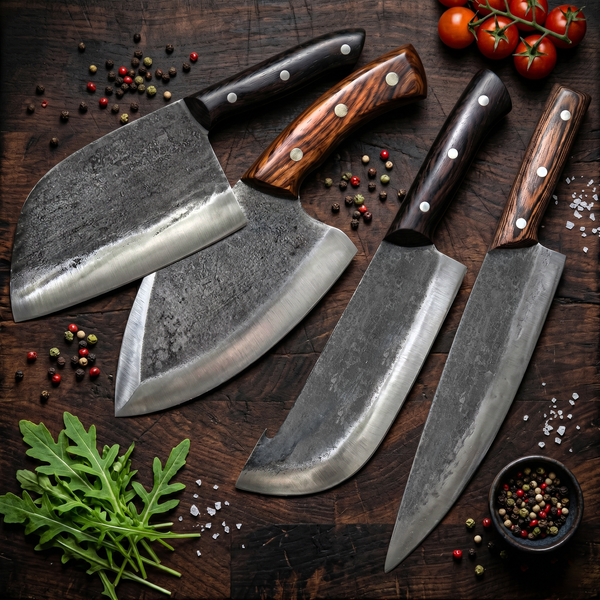
Mastercraft 4 Piece Hand Forged Chef Knife and Cleaver Set is the set we would pick for the cuts in this recipe.
Cook this next
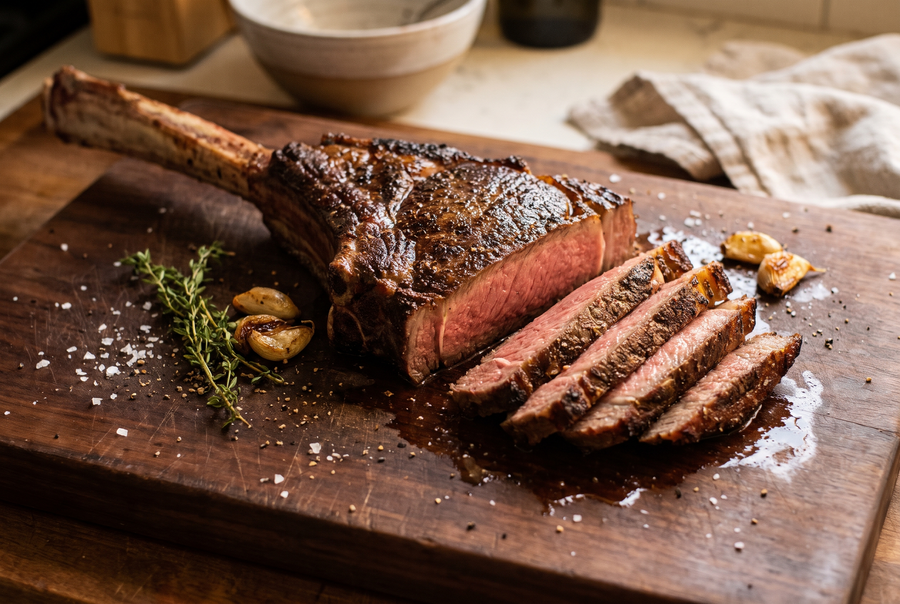
Reverse Sear Tomahawk Steak
A thick bone in tomahawk cooked low in the oven or on the grill, seared hard, then cut off the bone and sliced across the grain...
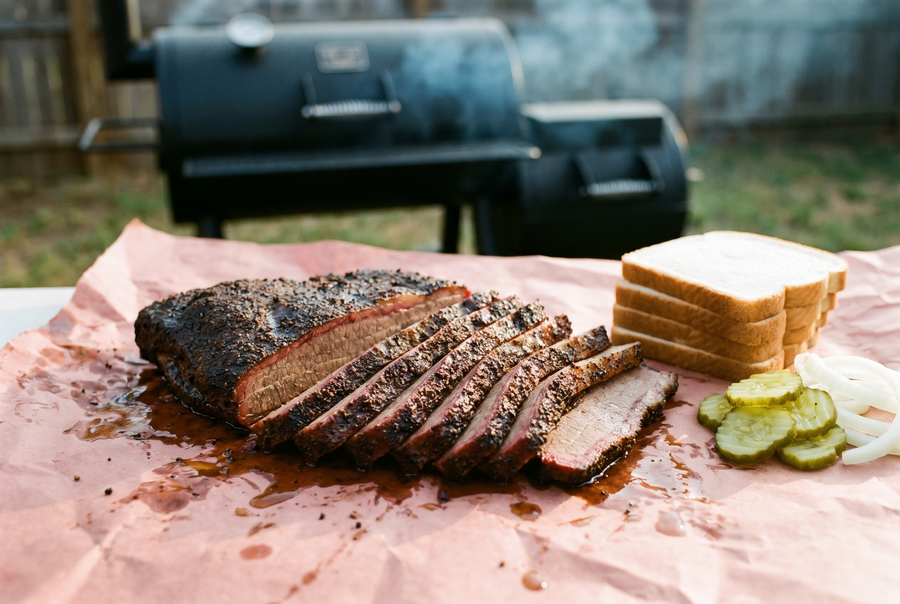
Texas Smoked Brisket, Trim to Slice
A whole packer brisket with salt and pepper, smoked low, wrapped, rested and sliced against the grain of each muscle. Covers how to trim a brisket...
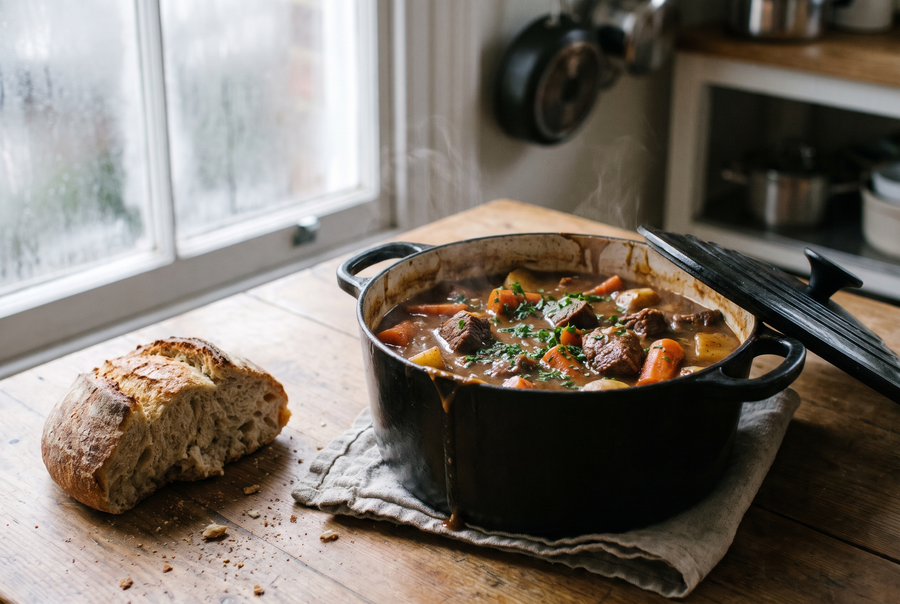
Beef Stew Worth the Chopping
A classic beef stew made with chuck roast cubed by hand, seared properly and braised low until it falls apart, with vegetables added late so they...
One recipe a week, straight to your inbox
One email a week with the new recipe and the knife that makes it easy. No spam, unsubscribe any time.