
What Is a Boning Knife Used For? Jobs, Sizes and When to Skip It
October 13, 2026 · By Matt
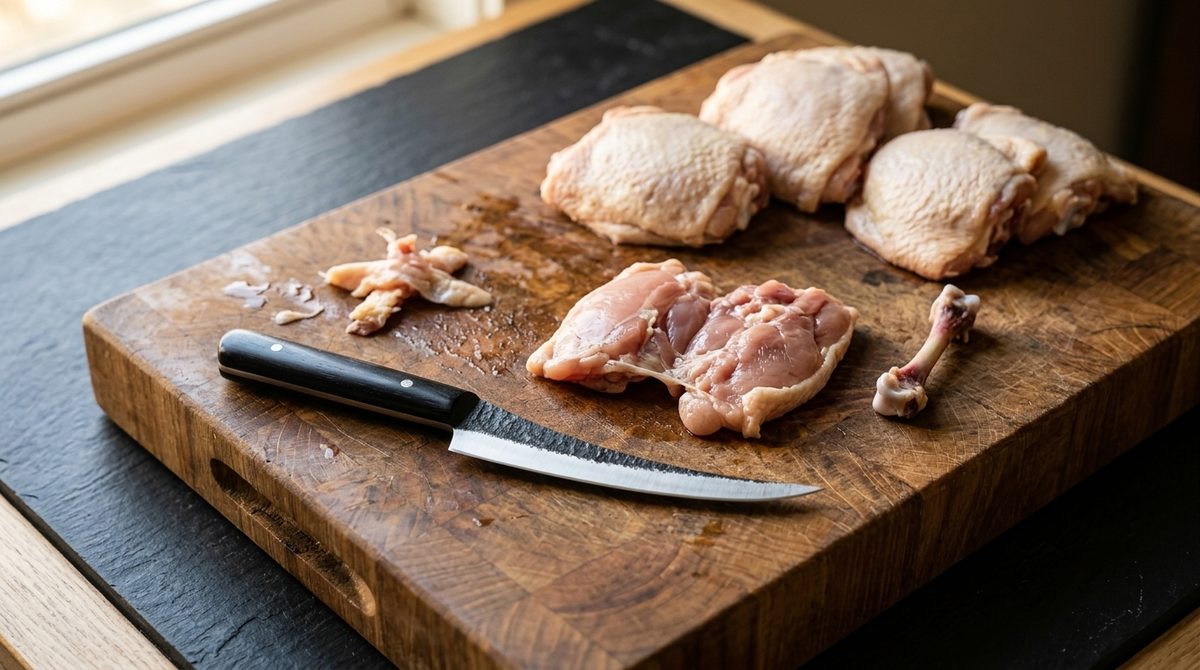
A boning knife is used to separate meat from bone. Its narrow, pointed blade follows a bone, turns around a joint and slides under a membrane without taking half the meat with it, close work that a chef knife or a cleaver is too wide to do. You use it for taking chicken off the bone, deboning thighs, trimming silverskin and fat, frenching a rack and working a shoulder blade out of a roast.
Most home cooks go years without one. They buy bone in meat, go at it with a chef knife, lose a surprising amount of good meat to the stock pot and conclude that butchery is hard. Butchery is not that hard. The knife was wrong. This guide covers the jobs, the limits, a chicken thigh step by step and the cleaver to pair with it.
What Is a Boning Knife?
A boning knife has a narrow blade, a sharp point and very little height from spine to edge. A wide blade cannot follow a curved bone because the spine hits meat before the edge gets where it needs to go. A blade barely wider than a finger turns around a knuckle and stays on the bone, and the point gets into the socket at the top of a thigh or between two ribs. The blade is firm, meant to hold a line along a femur rather than bend like a fillet knife.
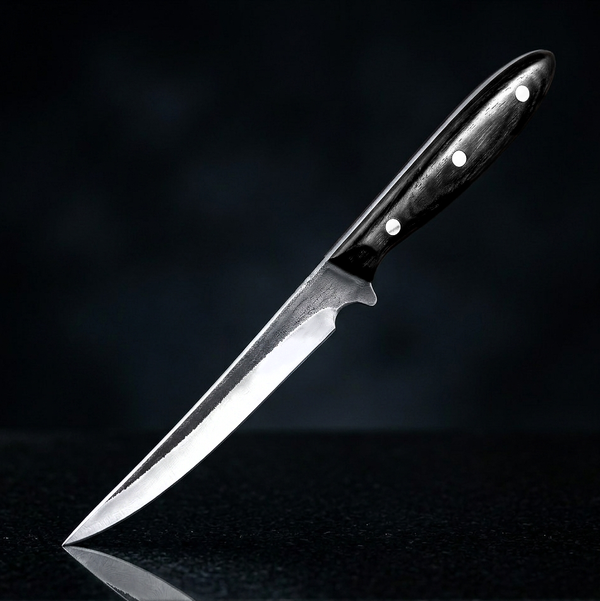
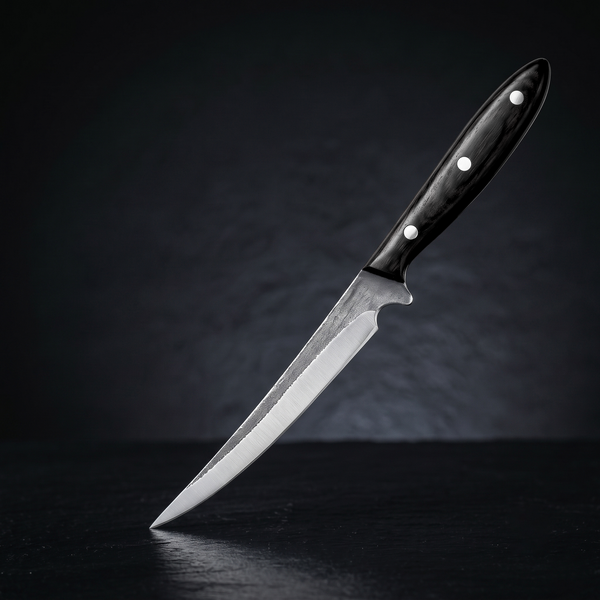
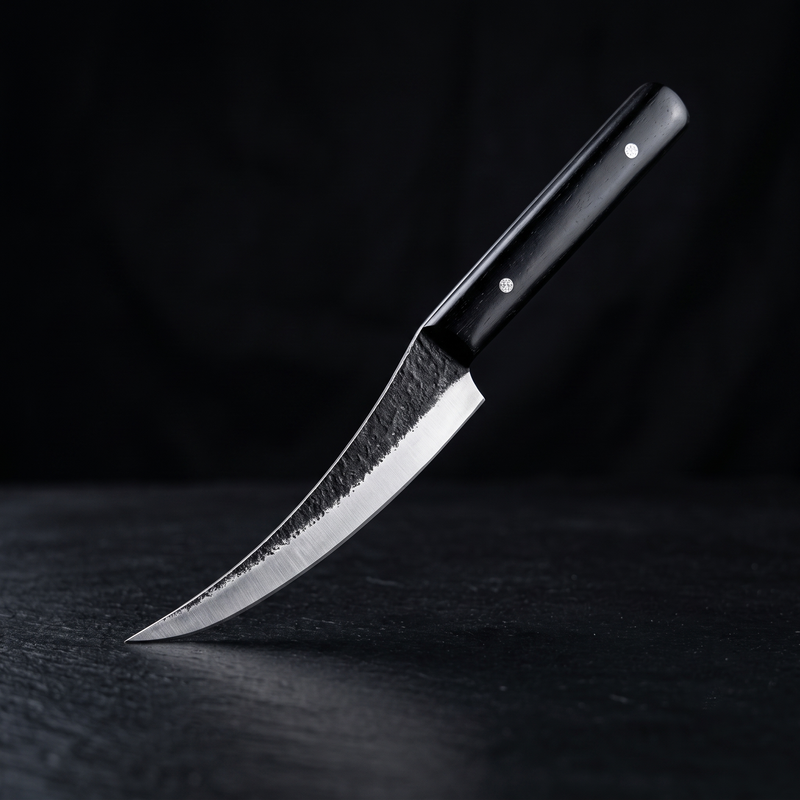
Our Mako 7.5" boning knife is the one we make for this work. It is a trailing point blade, so the tip rises a little above the line of the spine and stays out of the way while you scrape along a bone. The blade is 7.5 inches, the handle is 5.2 inches of black rosewood, the whole knife is 12.7 inches long and it weighs 200 g. That is light on purpose. You hold a boning knife like a pencil as often as like a knife, and nobody wants a heavy pencil. It is hand forged high carbon steel, full tang with steel pins, $96.
What Is a Boning Knife Used For?
These are the jobs where a boning knife earns its place. Each is possible with another knife, in the way that a screw is possible with a butter knife.
Taking chicken off the bone
Breaking a whole chicken into parts is the first thing most people buy a boning knife for. The tip finds the joint between thigh and body, the edge cuts the skin and connective tissue, and the joint pops apart. Taking the breasts off the keel bone is the same idea: run the tip along the bone and let the blade peel the meat away.
Deboning a thigh
Boneless thighs cost more per pound than bone in thighs, and the difference is about ninety seconds with the right knife. The step by step version is further down.
Trimming silverskin and fat caps
Silverskin is the shiny membrane on a tenderloin or a loin. It does not render and it curls meat into a bow as it cooks. Slide the point under one end, angle the edge slightly up toward the membrane, and pull the silverskin against the blade while the knife holds still. Fat caps come off the same way with the blade kept flat.
Frenching a rack
Frenching means cleaning the meat and fat off the ends of the rib bones on a rack of lamb or pork so they stand bare. It is a presentation job, which means nobody admits how long it took. The point scores between the bones and scrapes each one clean, where a wider blade would nick the eye of meat.
Working around a shoulder blade
A pork or lamb shoulder has a flat blade bone with meat on both sides and a ridge down the middle. Getting it out whole is the real test of a boning knife. Follow the bone with the tip, keep the edge angled toward bone rather than meat, and feel your way around the ridge.
Portioning a tenderloin
Once the silverskin and the chain are off, a tenderloin gets cut into medallions. The boning knife is already in your hand and long enough for raw meat, so use it.
Trimming brisket fat
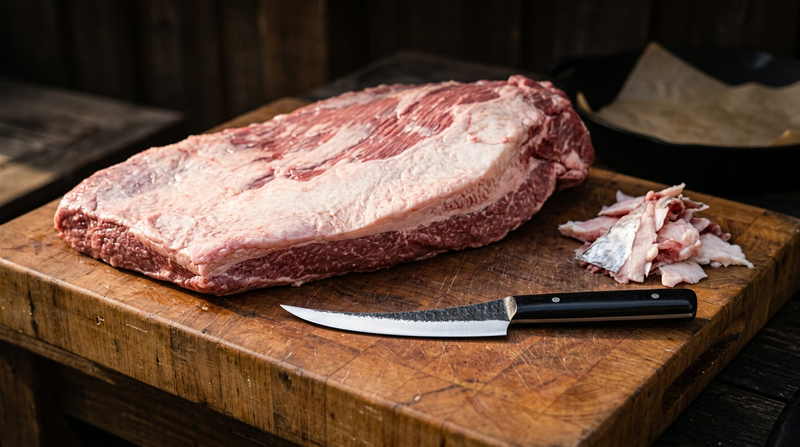
A packer brisket arrives with a thick fat cap and a hard lump of fat between the point and the flat. A boning knife held almost flat shaves the cap down in even sheets, and the tip gets into the seam between the two muscles. For cutting the cooked brisket afterwards read our best knife for slicing brisket guide, because a boning knife is the wrong tool for that end of the job.
Stiff or Flexible Boning Knife?
Boning knives come stiff and flexible. A stiff blade is for beef, pork and lamb, where the bones are big and the meat pushes back. A flexible blade bends to follow a rib cage or a fish spine and suits poultry and fish. A hand forged high carbon blade of this shape sits toward the firm end. If you mostly break down fish you want a thinner blade with flex, and we cover that in boning knife vs fillet knife rather than repeating it here. The split is well established: Wikipedia on boning knives puts it as a stiff knife for beef and pork and a very flexible one for poultry and fish.
What a Boning Knife Is Not For
A boning knife goes around bone. It never goes through it. The blade is thin by design, and thin steel that meets a femur at speed chips, rolls or snaps at the tip. The lifetime warranty covers defects in materials and craftsmanship, not a knife used as a hatchet. Chopping anything is cleaver work, because a boning knife has no weight to drop and no height to keep your knuckles off the board.
Frozen meat is off limits too, since a thin blade skating across ice is how people learn where their fingers are. Slicing a cooked roast is the other common misuse. The blade is too short for one clean stroke through a brisket, so you saw, and sawing shreds the surface. A long straight slicer like the Mamba 11" brisket slicing knife is 11 inches of edge for exactly that.
How to Debone a Chicken Thigh
This is the job to learn on. The bone is single and straight.
- Set it skin side down. Lay the thigh with the skin underneath and the bone facing up.
- Cut along the bone. Run the tip down the length of the bone, right on top of it, end to end. You are opening a seam, not cutting deep.
- Scrape one side. Angle the edge toward the bone and use short scraping strokes to push the meat off it. Any meat left on the bone is meat you paid for.
- Scrape the other side. Same again until the bone is bare and attached only at the two ends.
- Cut around the knuckles. Slide the point under the bone at one end and cut around the knob of cartilage. Lift that end, then free the other.
- Trim what is left. Take off any stray cartilage or tendon. Leave the skin on, because crisp thigh skin is the reward for all this.
- Clean up. Wash hands, board and knife in hot soapy water, and dry the knife at once.
The second thigh takes half as long as the first. By the tenth you will have stopped paying the boneless premium.
Which Cleaver Pairs With a Boning Knife?
A boning knife takes meat off bone. Something else has to split the bone and break a carcass into pieces that fit a pot, and that something is a cleaver.
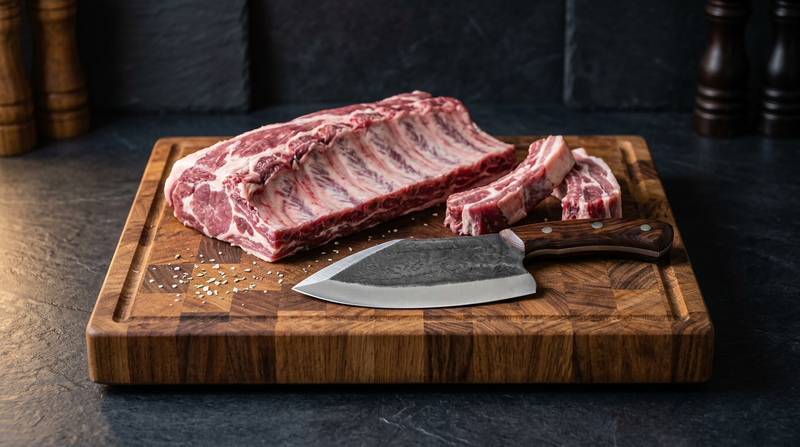
The Kodiak 8" butcher cleaver is the natural partner. It has a drop point, so the tip can start a cut before the weight follows through, and at 581 g it goes through a chicken back or a rack of ribs without you swinging hard. The Kraken 8" cleaver is the lighter all rounder at 380 g, hammer textured, with a black wenge handle. It splits poultry and small bones and still does vegetables, which the Kodiak does but grudgingly. For pork and beef on the bone, the Rhino 8" Serbian cleaver is the bone cleaver proper. The spine is 0.3 inches (7.6 mm) thick and it weighs 1250 g, which is why it goes through a pork shoulder joint and why it is made to order and takes 2 to 3 weeks before it ships.
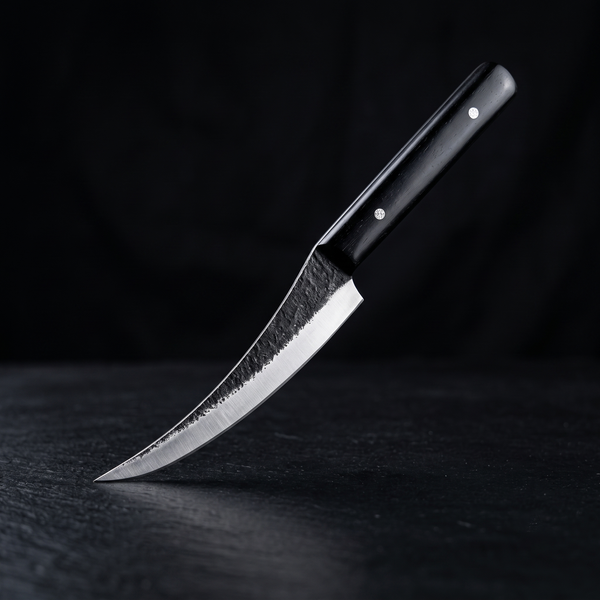
Between the two there is room for a trimming knife. A 5 inch blade with a little more height is right for cleaning fat off a chop and the hundred small cuts that happen at the board, which is what the Hellfang 5" butcher knife is for. With those three, nothing on the animal is out of reach.
Boning Knife or Something Else? Job by Job
| Job | Boning knife or other | Xcutlery knife |
|---|---|---|
| Breaking down a whole chicken | Boning knife for the joints, cleaver for the back and neck | Mako 7.5" and Kraken 8" |
| Deboning a thigh or leg | Boning knife | Mako 7.5" |
| Trimming silverskin and fat | Boning knife or trimming knife | Mako 7.5" or Hellfang 5" |
| Frenching a rack | Boning knife | Mako 7.5" |
| Splitting ribs or a chicken back | Cleaver | Kodiak 8" |
| Chopping through a pork or beef joint | Heavy bone cleaver | Rhino 8" |
| Filleting fish | Fillet knife | Barracuda 10" |
| Slicing a cooked brisket or roast | Long slicing knife | Mamba 11" |
| Frozen meat | None. Thaw it. | Patience |
Do You Need a Boning Knife at Home?
If you buy boneless, skinless everything, no. You are paying someone else to own one, which is a fair trade. If you buy whole chickens, bone in pork shoulders or packer briskets, then yes, and it pays for itself in the gap between bone in and boneless prices. You also decide how much fat stays and how thick the pieces are, and the supermarket decides none of that in your favor.
Can You Use a Boning Knife for Fish?
You can, and on a thick fish like salmon it works fine. The narrow blade runs along the backbone and the ribs come out with the tip. Where a stiff boning knife struggles is on thin, delicate fish, where you want the blade to flex and ride the bones so the fillet comes off in one piece. Our Barracuda 10" fillet knife has a 6 inch blade that is 0.07 inches thick. If fish is weekly, buy the fillet knife and stop apologizing to the fish.
Caring for a Thin High Carbon Steel Blade
High carbon steel takes a fine edge and holds it, and it rusts if you let it. A boning knife has less steel than a cleaver, so neglect shows faster. Hand wash as soon as you finish, dry it at once and wipe on a light coat of food safe oil. No dishwasher and no soaking. Expect a patina. The blade will go grey, then darker, and that is normal. Orange rust is not, and it comes off with oil and a scrub. Hone lightly between uses, and when honing stops bringing the edge back, sharpen on a whetstone by matching the bevel already on the blade. Store it where the tip cannot be knocked, because a bent trailing point is a tedious thing to straighten.
Once the boning knife is sorted, the next question is what goes through the bone it just exposed. Our guide to the best knives for cutting meat covers the rest of the set, and the hand forged meat cleavers collection has the Kodiak, Kraken and Rhino side by side.
Questions
What is a boning knife used for?
A boning knife is used to separate meat from bone. The narrow, pointed blade follows a bone, cuts around joints and slides under membranes, so you can take a chicken apart, debone a thigh, remove a shoulder blade, trim silverskin and fat caps, french a rack of ribs and portion a raw tenderloin without wasting meat.
What is the difference between a boning knife and a fillet knife?
A boning knife is firmer and slightly thicker, built to hold a straight line along beef, pork and poultry bones. A fillet knife is thinner and flexible so it can bend along a fish spine and take the fillet off in one piece. The Mako is our boning knife and the Barracuda is our fillet knife, and our comparison guide covers the choice in detail.
Can a boning knife cut through bone?
No. A boning knife goes around bone, never through it. The blade is thin by design and will chip, roll or snap at the tip if you try to chop a joint with it. Use a cleaver such as the Kodiak, Kraken or Rhino for splitting bone, and keep the boning knife for the close work that follows.
How long should a boning knife be?
Boning knives come in a range of lengths. Shorter blades suit poultry and tight joints, longer blades suit pork shoulders, beef and brisket trimming where you want reach. Our Mako has a 7.5 inch trailing point blade and a 5.2 inch black rosewood handle, which covers both whole chickens and larger cuts at a weight of 200 g.
How do I look after a high carbon steel boning knife?
Hand wash in hot soapy water as soon as you finish, dry it at once and wipe on a light coat of food safe oil. No dishwasher and no soaking. A grey patina is normal and protects the steel, orange rust is not and should be cleaned off early. Hone lightly between uses and sharpen on a whetstone by matching the bevel already on the blade.
Shop the knives from this guide
Keep reading
Boning Knife vs Fillet Knife: What Is the Difference?
Boning knife or fillet knife? The real difference is stiffness. Here is how the two shapes compare, which one to use for fish, poultry,...
Best Knife for Trimming Brisket: Boning Knife or Butcher Knife?
A narrow boning knife is the best knife for trimming brisket. It takes the fat cap down to about a quarter inch and follows...
Best Knives for Cutting Meat: Which Blade for Which Cut
The best knife for cutting meat depends on the cut in front of you. Bone wants a heavy cleaver, trimming wants a small butcher...