
Best Knife for Trimming Brisket: Boning Knife or Butcher Knife?
October 13, 2026 · By Matt
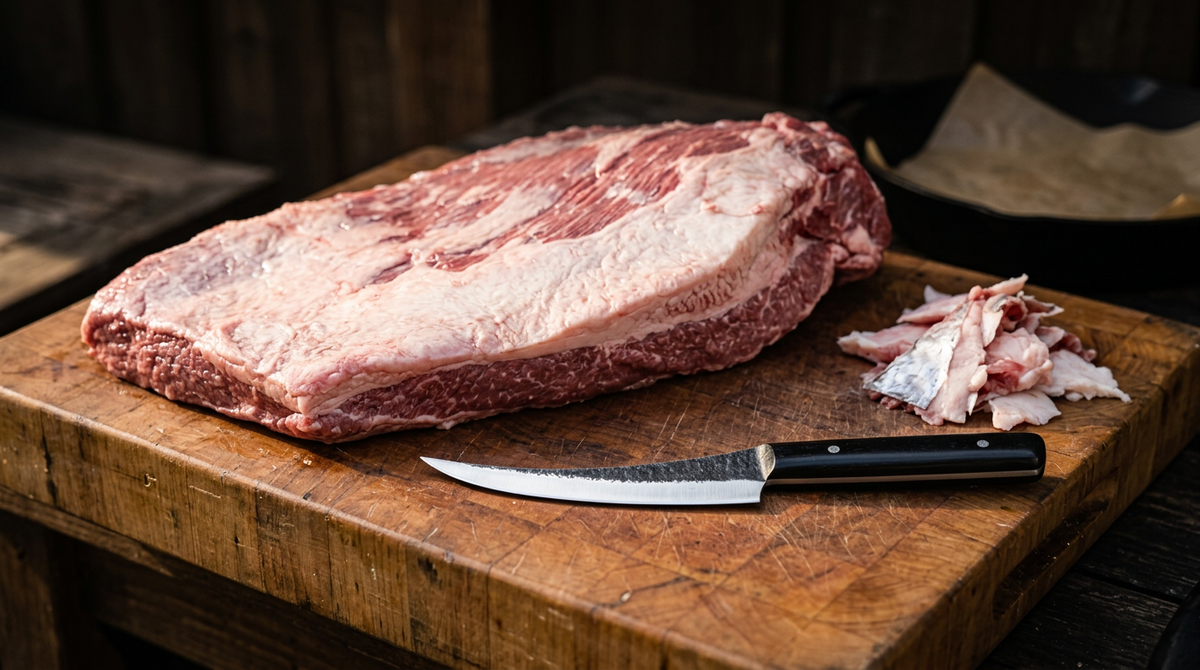
The best knife for trimming brisket is a narrow boning knife, such as our Mako 7.5" boning knife, which takes the fat cap down and follows the seam of hard fat between the point and the flat. A small butcher knife like the Hellfang 5" handles the detail work on the edges and corners. The long slicer stays in the drawer until the brisket has been cooked and rested.
A lot of briskets are spoiled before the fire is even lit. Someone grabs the 8 inch chef knife because it is the sharp one, spends forty minutes hacking at cold fat with a blade built for onions, and puts a gouged slab with a lumpy fat cap on the smoker. Twelve hours later the thin bits are jerky, the thick bits are chewy, and the smoker gets the blame.
What Does Trimming a Packer Brisket Involve?
A whole packer brisket is two muscles stacked on top of each other. The flat is the long, lean muscle that gives you the tidy slices. The point sits on top of one end, thicker and fattier, and is where burnt ends come from. Between the two runs a wedge of hard fat, and over the top sits the fat cap. Trimming is about getting all that fat into a shape that cooks evenly.
The fat cap
Common practice among people who cook a lot of brisket is to take the fat cap down to about a quarter inch and keep it even across the whole piece. A thin, even layer renders and bastes the meat over a long cook. A thick layer mostly just sits there, and you end up carving it off at the table anyway. The fat cap, which is often left attached, helps to keep the meat from drying during prolonged cooking: Wikipedia on the brisket cut.
The hard fat and the deckle
On the meat side, where the point joins the flat, there is a thick lump of hard, waxy fat. It does not render the way the soft cap does, so it comes off. Barbecue cooks use the word deckle loosely, sometimes for the point and sometimes for that hard fat. Either way, the hard lump goes.
Squaring the flat, and splitting it if you want
The thin end of the flat and any ragged flap along the edges will dry out long before the thick middle is done, so you trim them back to give the flat a roughly even thickness and square sides. Some cooks also separate the point from the flat completely, either to cook them on different schedules or to cube the point for burnt ends. That means following the seam fat all the way through with the tip of the knife. It is optional.
Boning Knife or Butcher Knife for Brisket?
Both, if you have them. The boning knife does the long work and the small butcher knife does the fiddly work.
The boning knife for the cap and the seam
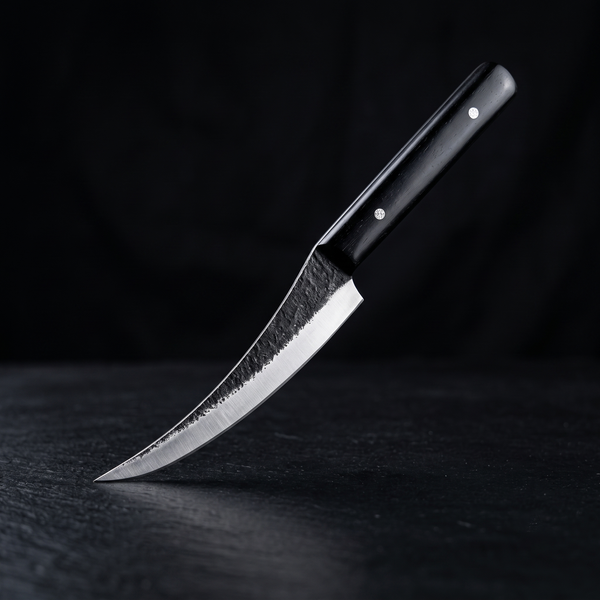
Trimming a fat cap means holding the blade nearly flat against the meat and sliding it under the fat in long strokes, lifting the sheet away with your other hand as you go. That calls for a narrow blade, so you can see the edge, and a pointed tip, so you can start the cut under the fat rather than on top of it. The Mako is a 7.5 inch trailing point boning knife with a black rosewood handle and weighs about 200 grams, which is light enough to hold at that low angle for the length of a whole brisket without your wrist filing a complaint. The trailing point sits up above the line of the edge, so it stays out of the meat while the edge does the cutting. There is more on the knife itself in our guide to what a boning knife is used for.
The small butcher knife for detail trimming
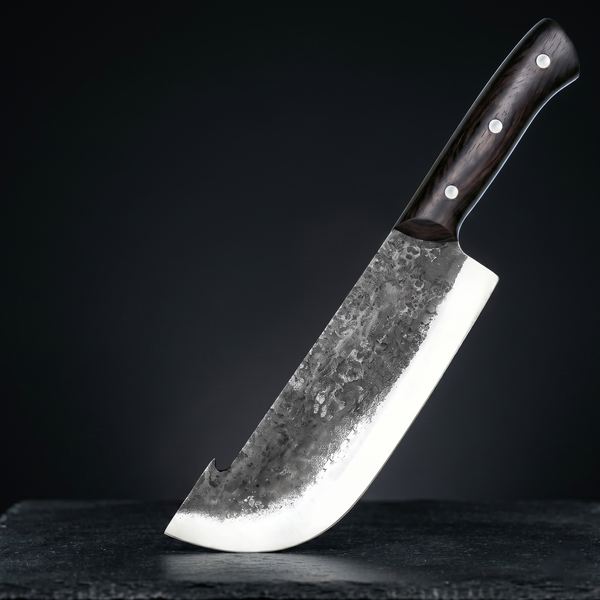
The Hellfang is a small meat trimming knife with a 5 inch blade, 0.1 inch thick, about 240 grams, on a hardwood handle. It is the knife for squaring the corners of the flat, cutting off the ragged flap, lifting silverskin where it starts, and rounding off sharp edges of fat. If you only buy one knife for trimming, buy the boning knife. If you trim a few briskets a year, the short one earns its keep fast.
Should a Brisket Trimming Knife Be Stiff or Flexible?
Somewhere in the middle, and closer to stiff than most people expect. Cold beef fat is dense. A very flexible blade bends away from it, skates over the top or dives under into the meat, and you lose the even thickness you were after. Fillet knives are generally built thin and bendy for lifting fish off the frame, which is the right shape for a trout and the wrong one for a brisket. Our Barracuda 10" fillet knife is made for fish, with a 6 inch blade only 0.07 inch thick.
A heavy, rigid blade has the opposite problem and cuts a flat plane through a curved piece of meat. What you want is a narrow blade that holds its line in cold fat and goes where your hand steers it. That is what a boning knife is shaped for.
Which Knife for Each Trimming Task?
| Trimming task | Knife | Why | Xcutlery knife |
|---|---|---|---|
| Taking the fat cap down to about a quarter inch | Boning knife | Narrow blade slides under the fat in long, even strokes | Mako 7.5" boning knife |
| Cutting out the hard fat between point and flat | Boning knife | Pointed tip follows the seam without opening up the meat | Mako 7.5" boning knife |
| Separating point and flat, if you want to | Boning knife | Long enough to follow the seam all the way through | Mako 7.5" boning knife |
| Squaring the flat and removing the thin flap | Small butcher knife | Short blade gives close control at the corners | Hellfang 5" butcher knife |
| Silverskin and small lumps of fat | Small butcher knife | Tip work in tight spots | Hellfang 5" butcher knife |
| Slicing the cooked flat | Long slicer | One long stroke per slice, no ridges | Mamba 11" slicing knife |
How Do You Trim a Brisket, Step by Step?
- Start cold. Take the brisket straight from the fridge, pat it dry and lay it fat side down on a large board.
- Clean the meat side. Cut away the lump of hard fat where the point meets the flat, and lift any silverskin by sliding the tip under its edge and pulling the membrane against the blade.
- Square the flat. Trim back the thin end and the ragged flap until the flat is close to the same thickness all the way across.
- Turn it fat side up. Find where the cap is thickest, usually over the point, and start there.
- Take the cap down to about a quarter inch. Hold the boning knife nearly flat, set the tip under the fat and glide in long strokes, lifting the sheet with your free hand. Aim for even rather than exact.
- Follow the seam. Work the tip into the hard fat between point and flat and cut out what you can reach. If you are separating the two, keep following the seam until the point lifts away.
- Round the edges. Shave off sharp corners of fat so the smoke and heat move evenly around the piece. This is where the 5 inch knife comes in.
- Check by hand and stop. Run your palm over the cap, take off any high spots, then put the knife down. Fat does not grow back.
Why Does a Cold Brisket Trim Easier?
Fat straight from the fridge is firm. The blade separates it from the meat in clean sheets, the seam opens without tearing. Leave the same brisket on the counter for an hour and the fat goes soft and greasy. The knife slides over it instead of through it, your free hand loses its grip on the sheet you are lifting, and the board starts to look like a crime scene at a candle factory. If a trim runs long, put the meat back in the fridge for a while and come back to it.
Fridge cold is the target, frozen is not. Never cut frozen meat with a boning knife, a trimming knife or a slicer. A thin blade pushed into frozen fat either skates, which is how fingers get cut, or bites and chips, which is how edges get ruined. A brisket that is still partly frozen goes back in the fridge until the thin end bends.
What About the Chef Knife and the Slicer?
A chef knife can trim a brisket in the same way a spoon can dig a trench. The blade is wide, so when you slide it under the fat cap the flat of the blade covers the very thing you are trying to watch. The curved belly, ground to rock through vegetables, dips the tip into the meat at the end of every stroke.
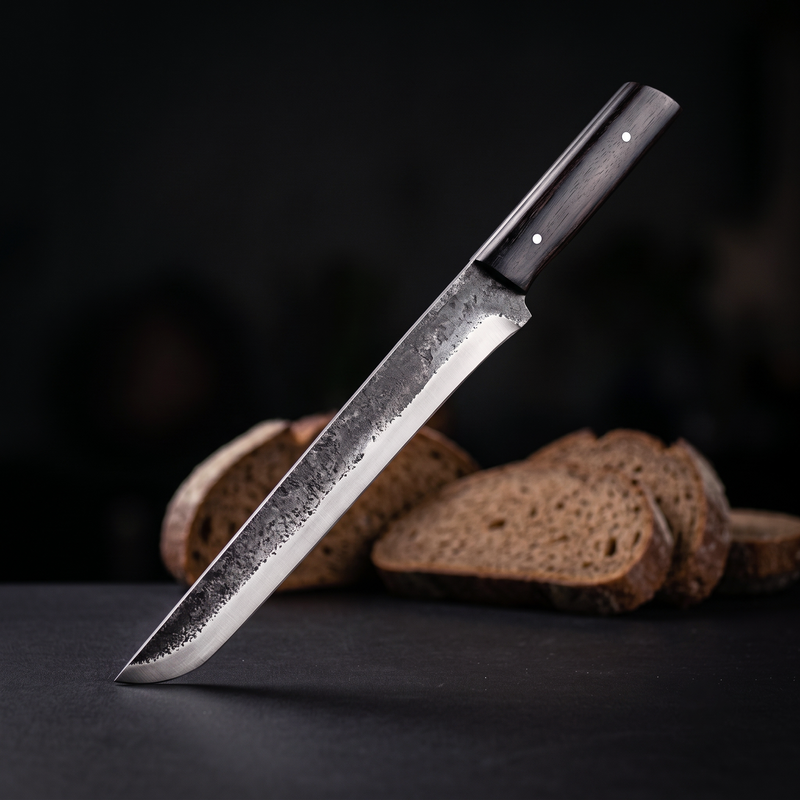
The slicer is a good knife used at the wrong time. A long, straight edge is exactly what you want across a cooked, rested flat, because each slice comes off in one long pull. The Mamba 11" brisket slicing knife belongs at the end of the day, not the start. We covered that half of the job in our guide to the best knife for slicing brisket.
The Three Stage Brisket Kit
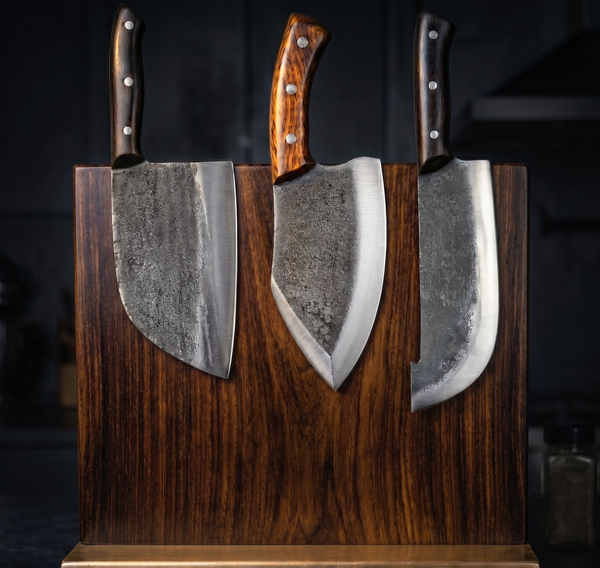
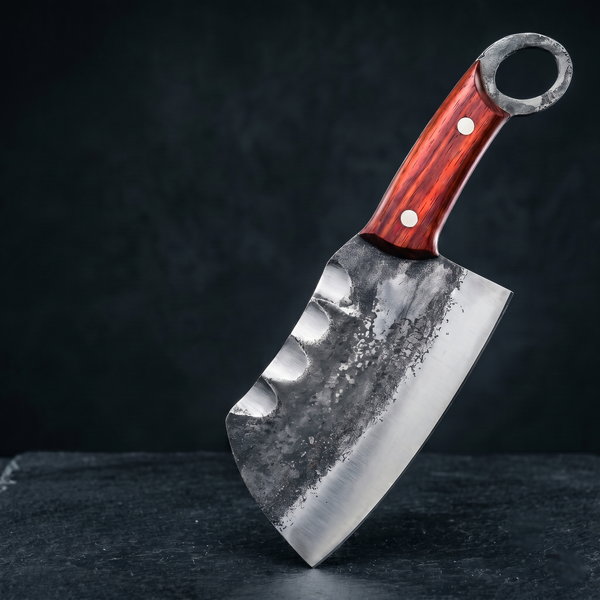
A barbecue kitchen that takes brisket seriously ends up with three kinds of blade. The Mako trims before the cook, the Mamba slices after it, and the middle stage belongs to a cleaver, because brisket day rarely stops at brisket. Pork ribs cut into short lengths, a spatchcocked chicken split down the middle, a joint cracked to fit the smoker: those jobs need a heavy blade with an edge that can take a hit, and they would wreck a boning knife in an afternoon. The Kodiak 8" butcher cleaver is a drop point Serbian style cleaver at 581 grams with a rosewood handle, heavy enough for ribs and handy enough for portioning. The Rhino 8" Serbian cleaver is the heavy end of the range at 1250 grams with a 0.3 inch spine and a walnut handle, made to order and shipped in 2 to 3 weeks. If your bone work is lighter, the Kraken 8" cleaver is 380 grams, hammer textured, with a black wenge handle.
The BBQ knives collection keeps the trimming, slicing and chopping blades in one place, and the full range of heavy blades is in our hand forged meat cleavers collection. For which blade suits which cut beyond brisket, see the best knives for cutting meat.
How Do You Clean a High Carbon Steel Knife After Trimming Fat?
A knife left greasy on the board while the brisket goes into the smoker will have a grey patch on it before the smoker is up to temperature. High carbon steel builds a patina over time and that is normal. Rust is not, and the difference is about ten minutes of neglect. Wash the knife by hand in hot water with a little soap straight after the trim, dry the whole thing at once, including the join at the handle where water hides, and wipe on a light coat of food safe oil. No dishwasher and no soaking in the sink with the tongs. The forge scale on the flats is the finish, not dirt, so leave it alone.
Trimming is the quiet part of brisket day, and it decides how the loud part goes. Keep the meat cold, the boning knife sharp, and the slicer out of it until dinner. When the brisket is done and rested, our guide to the best knife for slicing brisket picks up where this one stops, and the cleavers collection has the heavy blades for everything a boning knife should never meet.
Questions
What is the best knife for trimming brisket?
A narrow boning knife with a pointed tip. It slides under the fat cap in long, even strokes and follows the seam of hard fat between the point and the flat without opening up the meat. The Mako 7.5 inch boning knife does that job, and a small butcher knife such as the Hellfang 5 inch handles the corners and edges.
Is a boning knife or a butcher knife better for trimming brisket?
Use the boning knife for the long work, which means the fat cap, the hard fat in the seam and separating the point from the flat if you want to. Use a small butcher knife for detail trimming, such as squaring the flat, cutting off the thin flap and rounding the corners of fat. If you only buy one, start with the boning knife.
How much fat should I leave on a brisket?
Common practice among people who cook a lot of brisket is to take the fat cap down to about a quarter inch and keep it even across the whole piece. That thin layer renders and bastes the meat over a long cook. Cut out the hard, waxy fat where the point meets the flat, because it does not render the way the soft cap does.
Should a knife for trimming brisket be stiff or flexible?
Closer to stiff than most people expect. Cold beef fat is dense, so a very flexible fillet style blade bends away from it and either skates over the top or dives into the meat. A narrow boning knife that holds its line, steered by your hand, follows the curve of the fat cap and the seam while keeping the thickness even.
Why should brisket be cold when you trim it?
Cold fat is firm, so it comes away from the meat in clean sheets and the seam opens without tearing. Warm fat goes soft and greasy, and the knife slides over it. Fridge cold is the target, not frozen. Never cut frozen or partly frozen meat with a boning knife, trimming knife or slicer, because a thin blade can skate or chip.
Shop the knives from this guide
Keep reading
Best Knife for Slicing Brisket: Length, Edge and Timing
What makes the best knife for slicing brisket: a long straight edge, enough length to cross a packer flat, and a sharp blade that...
What Is a Boning Knife Used For? Jobs, Sizes and When to Skip It
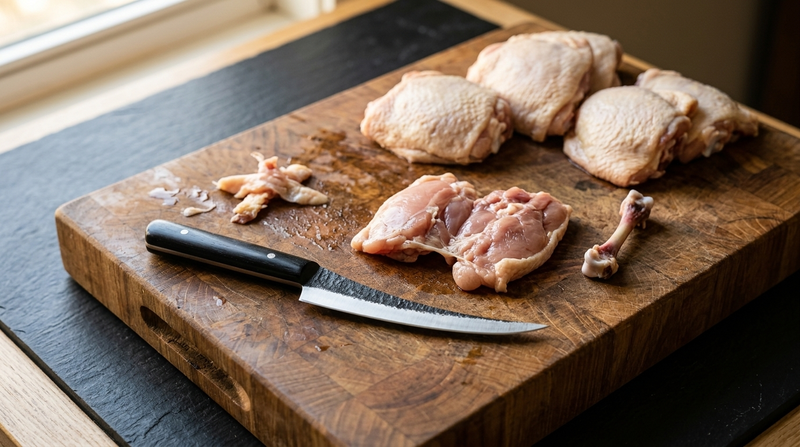
A boning knife is the narrow, pointed blade that takes meat off the bone without wasting it. This guide covers the jobs it is...
Best Knives for Cutting Meat: Which Blade for Which Cut
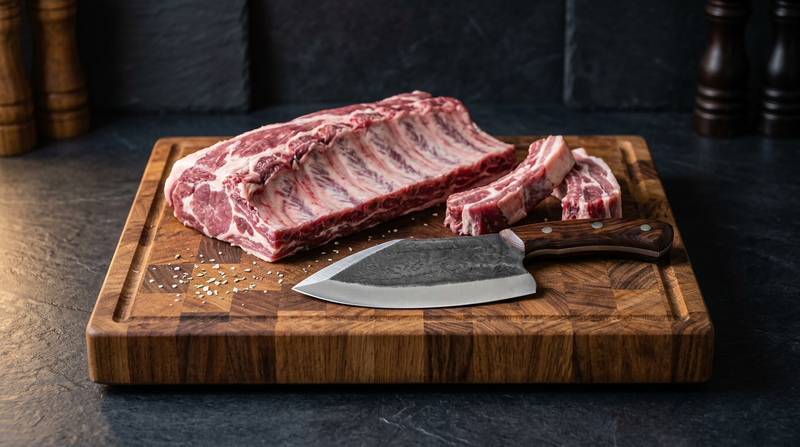
The best knife for cutting meat depends on the cut in front of you. Bone wants a heavy cleaver, trimming wants a small butcher...