
Are Hand Forged Knives Worth It? An Honest Answer
September 27, 2026 · By Matt
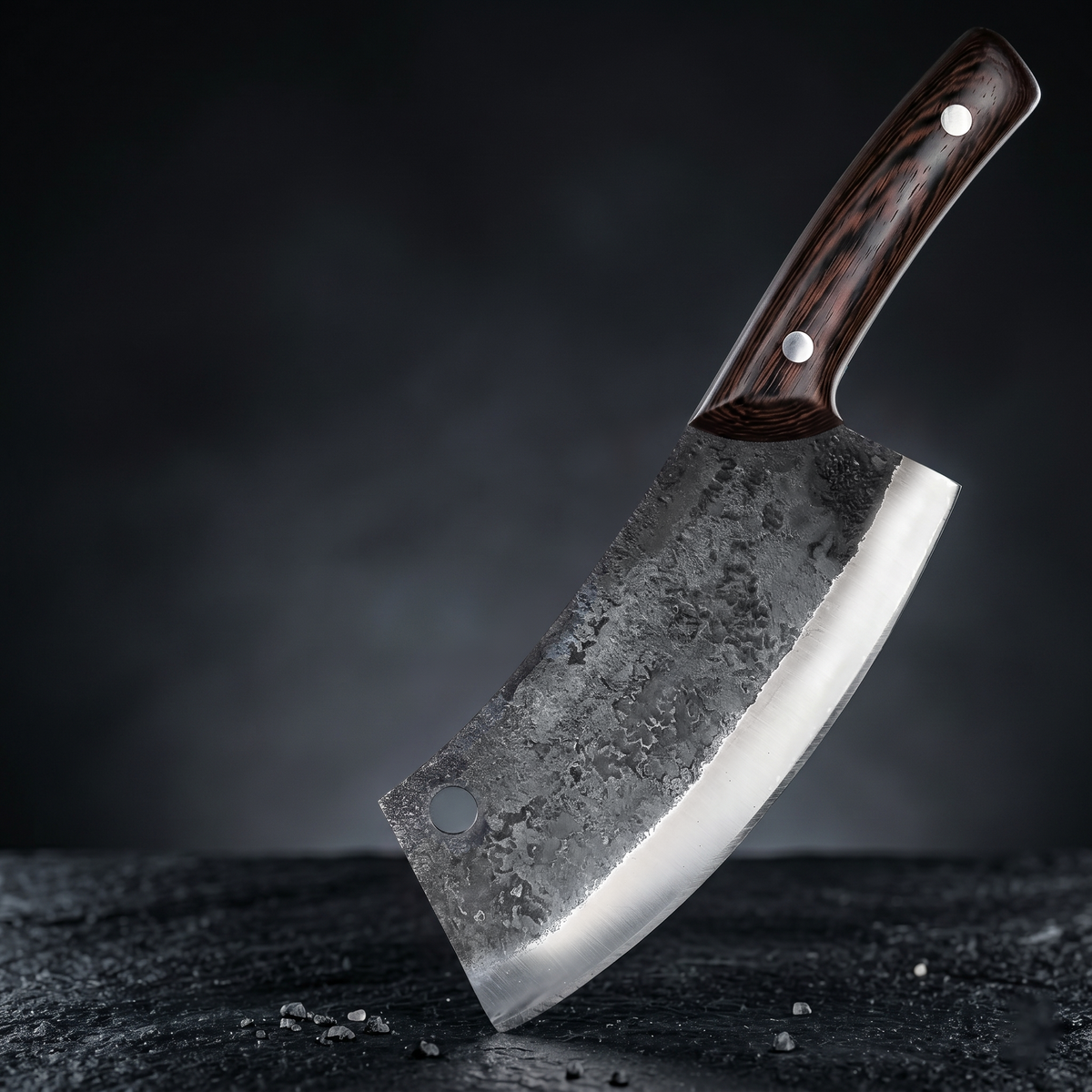
Hand forged knives are worth it if you want a thick, heavy blade in a shape a factory will not make, and you are happy to hand wash and dry it. They are not worth it if you want the cheapest sharp edge or a knife that lives in the dishwasher. For that, buy a good stamped knife.
We sell hand forged knives, so you can guess which way we lean. We will still tell you when to buy something else, because a knife that gets returned or rusts in a sink does nobody any good, us included. Here is what the extra money buys, what it does not buy, how long a hand forged knife lasts and when a factory knife is simply the smarter purchase.
What You Pay For
Time at the forge
A hand forged blade is heated, hammered, heated again and hammered again until the shape is right. Then it is heat treated, the edge is ground and polished, and the handle is shaped and fitted. A factory cuts a stamped blank far faster than any of that. The time a person spends on each knife is most of what you are paying for.
A shape nobody built a die for
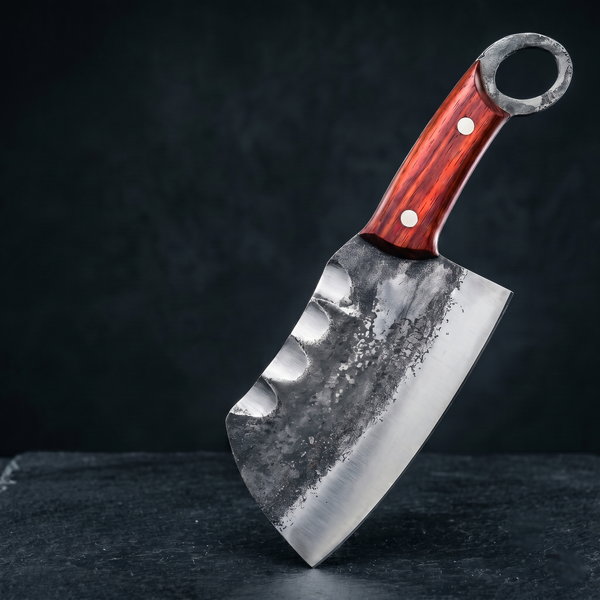
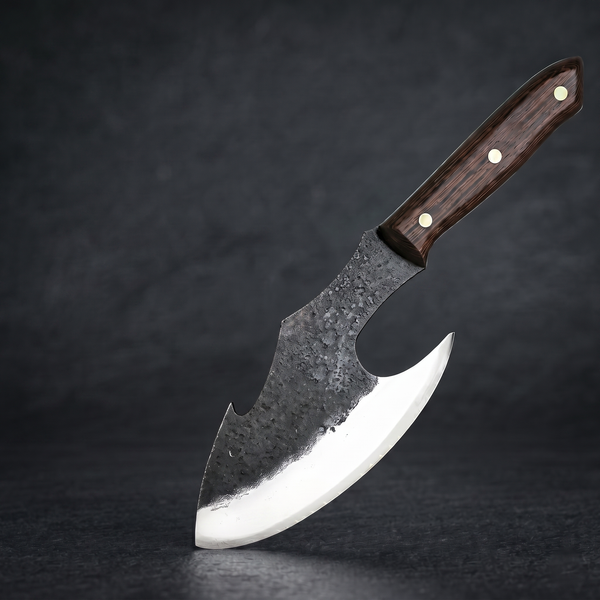
Hand forging is how you get blades like a tall Serbian chef knife, a cleaver with a clip point or a small cleaver with a finger hole. Factories make the shapes that sell by the pallet. A smith can make the shape the job needs, even when only some cooks want it.
Weight where it helps
Forging leaves thick steel at the spine. On a cleaver that weight drops through joints for you. On a chef knife it pushes through squash and cabbage without much help from your shoulder.
Construction
Every knife we make is full tang, with the steel running the whole length of the handle, and the handle is locked on with steel pins. Nothing wobbles where the blade meets the wood, even after years of chopping.
A one of a kind knife
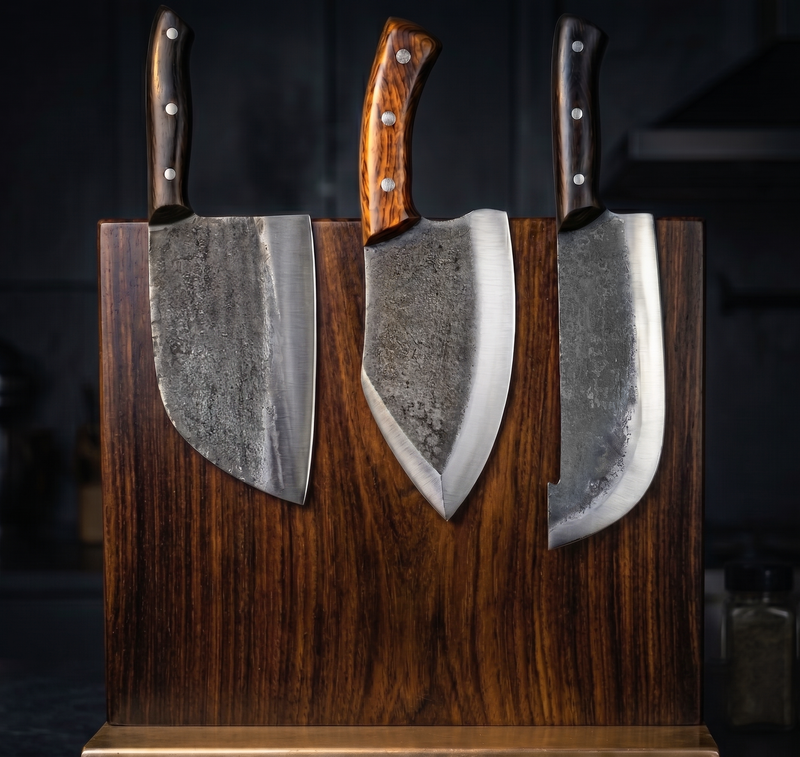
Hammer marks, forge scale and wood grain change from knife to knife. Yours will not match the product photo exactly, and it will not match your neighbor's either. For a gift, that is half the point.
What You Do Not Pay For
- A magically sharper edge. Sharpness comes from the steel, the heat treatment and the grind. A good factory knife can be just as sharp out of the box.
- Zero maintenance. High carbon steel rusts if it stays wet. Hand wash it, dry it right away and give it a light coat of food safe oil. That is the deal.
- Perfect symmetry. Small differences in texture and finish are part of a handmade knife. They are not defects, and our warranty says so in writing.
- Grain alignment miracles. If a seller promises that forging makes steel some large percentage stronger, ask where the number came from. We do not make that claim.
If you want the long version of how forging differs from stamping, our guide to hand forged vs stamped knives goes through it step by step.
How Long Does a Hand Forged Knife Last?
The things that end a kitchen knife early are neglect and abuse: rust from a night in the sink, a chipped edge from a glass board, a snapped tip from prying apart a frozen block. Avoid those and the steel keeps going for a very long time.
The real limit is sharpening. Every time you sharpen, a little steel comes off the edge. Hone often and sharpen only when honing stops working, and a blade takes a long, long time to wear down. High carbon steel is easy to sharpen at home on a whetstone, which is one of its best traits. It also darkens into a patina with use. That is normal, and it helps protect the blade. People sometimes mistake the darkening for damage. An even, dull darkening is patina. Red, flaky spots are rust, and they mean the knife stayed wet for too long.
Handles matter as much as blades. A full tang held with steel pins is about as simple and sturdy as knife construction gets, and wood handles stay happy as long as they are kept out of standing water. Our high carbon steel knife care guide has the full routine.
Warranty and Returns
Every Xcutlery knife carries a lifetime warranty against defects in materials and craftsmanship, including tang, handle and pin construction failures under normal kitchen use. Approved claims are repaired or replaced free of charge. It does not cover normal wear, rust from the dishwasher or soaking, or damage from prying and cutting on glass or stone.
Returns are a separate thing. If you change your mind, you have 30 days to send back a knife that is unused and in its original condition. Custom orders cannot be returned, so ask your questions before you order one. Between the two, the main risk of trying a hand forged knife is that you end up wanting a second one.
When a Factory Knife Is the Better Buy
We would rather you bought the right knife than one of ours. A stamped or drop forged knife makes more sense in these cases.
- Your knives go in the dishwasher and that habit is not going to change. High carbon steel will not survive it, and the warranty will not cover it.
- The knife is for a shared kitchen or a rental where nobody dries anything, ever.
- You want a thin, light blade for delicate slicing and long prep sessions. A heavy forged blade can tire a wrist.
- You want a matched block where every knife looks identical.
- Money is tight and you only need one sharp edge. A decent factory chef knife and a honing rod will cook a lot of dinners.
None of that makes a factory knife bad. It makes it the right tool for a different kitchen. If that kitchen is yours, buy the best stamped chef knife your budget allows, keep it honed and come back when you want something with more weight to it.
Three Xcutlery Knives That Make the Strongest Case
If you do want hand forged, these three show what forging gets you at a sensible price. All three are high carbon steel, full tang with steel pins.
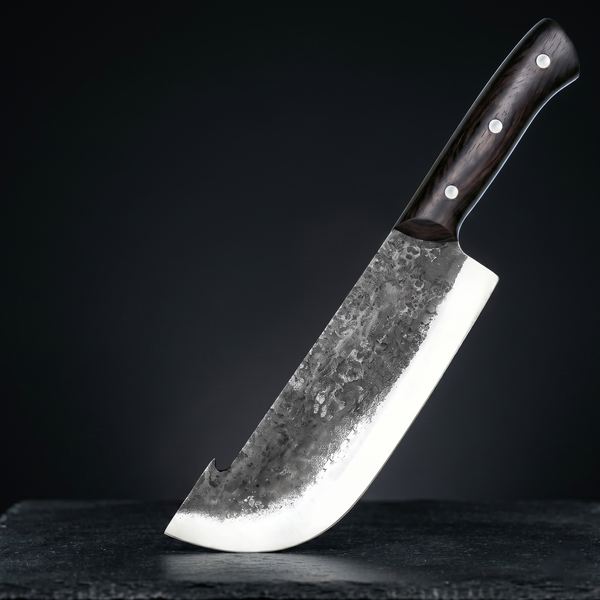
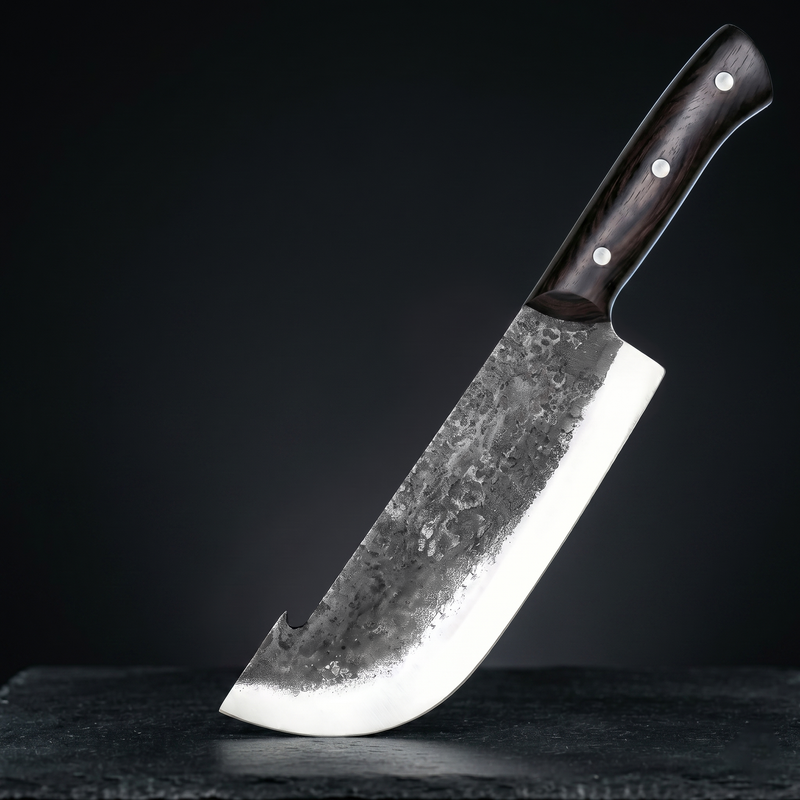
The Kermode 7" Serbian chef knife is the one knife answer. It is tall like a cleaver and curved like a chef knife, so it rocks through herbs, slices boneless meat and scoops the pile to the pan. That tall, thick shape is exactly the kind of blade the big factories rarely bother with.
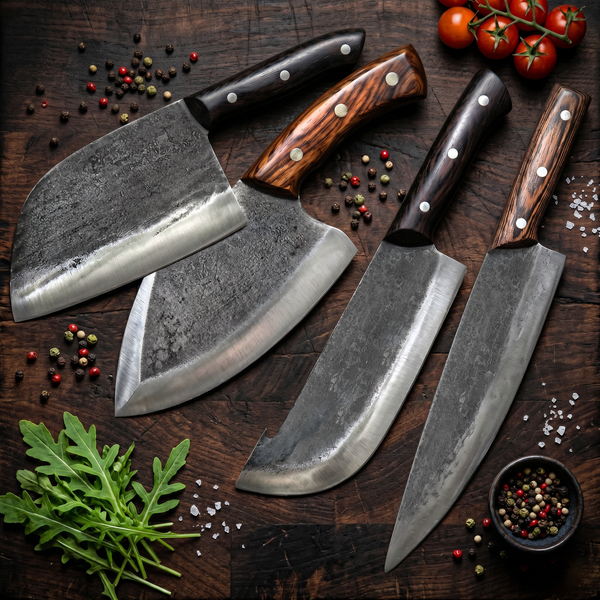
The Mamba 11" slicing knife is for anyone who smokes brisket or carves big roasts. Long blades are hard to forge well, and the Mamba keeps a long straight edge with forge scale left on the upper flats to help it slide through meat. It is also the least expensive of the three.
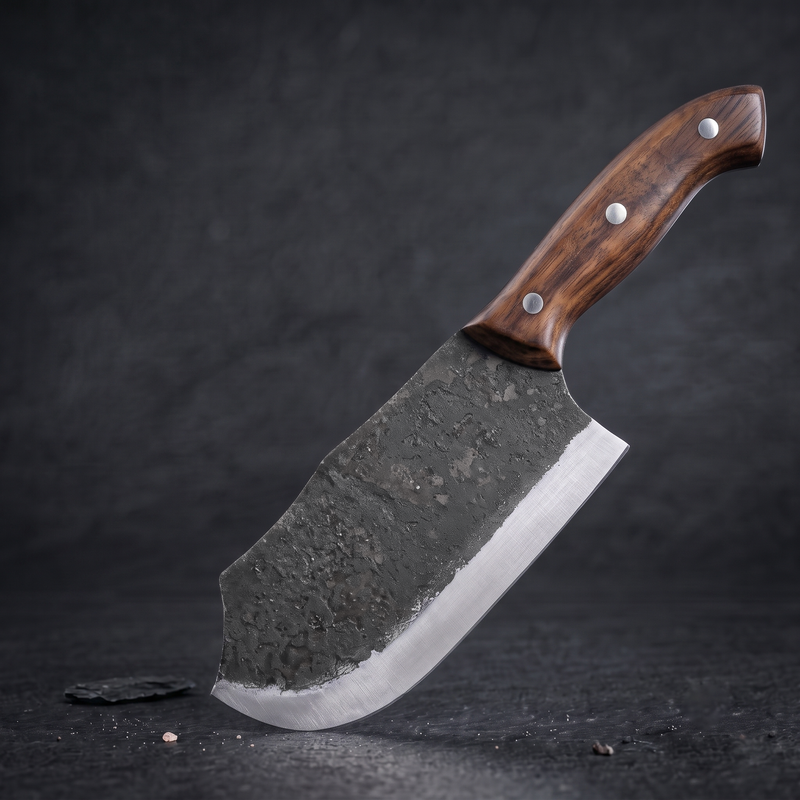
The 7.5" Hand Forged Butcher Cleaver is the heavy hitter. It goes through joints, ribs, poultry and pork bones, and its deep belly still rocks through garlic once the chopping is done. Raw forge scale on the flats keeps dense meat from sticking.
| Knife | Blade | What forging gives it | Best for | Price |
|---|---|---|---|---|
| Kermode Serbian chef knife | 7" | Tall, curved chef cleaver shape | Everyday vegetables and boneless meat | $119 |
| Mamba slicing knife | 11" | Long straight edge, forge scale flats | Brisket, roasts and carving | $112 |
| Hand Forged Butcher Cleaver | 7.5" | Deep belly, raw forge scale, rosewood handle | Joints, ribs, poultry and pork bones | $126 |
Not sure where to start? Our best sellers are a safe first pick, and the chef knives collection covers the everyday end of the range.
So, Are They Worth It?
For a cook who uses a knife every day, dries it afterwards and wants something with weight and character, yes. For a kitchen where knives live in the dishwasher, no, and we would rather you knew that before you ordered. We have 5+ years of forging behind us, 250,000+ customers and 102,318 reviews, and our about page covers how every blade is made if you want to see what you are paying for before you pay for it.
Two more reads if you are still on the fence. If the knife is for someone else, buying a knife as a gift covers who should get what. If it is for brisket, the right knife for slicing brisket explains why the Mamba made the table above. Either way, you now know more about knives than most people who own one.
Questions
Are hand forged knives better than factory knives?
For some jobs, yes. Hand forging allows thicker spines, more weight and shapes a factory will not make, and every knife is one of a kind. Cutting performance depends mostly on the steel, the heat treatment and the edge grind, so a well made factory knife can cut just as well.
How long does a hand forged knife last?
With basic care, a very long time. Rust, chipped edges and prying are what end knives early. Otherwise the limit is sharpening, since each session removes a little steel. Hand wash it, dry it, oil it lightly and hone it regularly, and it should stay in your kitchen for decades.
Why are hand forged knives so expensive?
Because a person spends real time on each one. The steel is heated and hammered over many rounds, then heat treated, ground, polished and fitted with a handle. A stamped knife is cut from sheet steel by machine in a fraction of that time, which is why it costs less.
Do hand forged knives need special care?
Ours are high carbon steel, so they need hand washing, drying right away and a light coat of food safe oil. No dishwasher and no soaking. The steel darkens into a patina with use, which is normal. It takes about a minute after each use, which is less time than finding a new knife.
What does the Xcutlery warranty cover?
Every knife has a lifetime warranty against defects in materials and craftsmanship, including tang, handle and pin failures under normal kitchen use. It does not cover normal wear, dishwasher rust or misuse. Unused knives can be returned within 30 days, but custom orders cannot be returned.
Shop the knives from this guide
Keep reading
Hand Forged vs Stamped Knives: What Actually Changes
Forged vs stamped knives, explained by people who forge them. How a stamped knife is made, how drop forged and hand forged knives differ,...
Knife Gifts for Men: Hand Forged Picks by Budget and Person
A hand forged knife gift guide sorted two ways. By budget, from under $100 up to full sets, using our current prices. By person,...
High Carbon Steel Knife Care: Rust, Patina, Oiling and Sharpening
High carbon steel rewards a simple routine. Here is how to wash, dry and oil a carbon steel knife, remove light rust, force a...