
How to Cut Frozen Meat Without Wrecking Your Knife or Your Hand
October 13, 2026 · By Matt
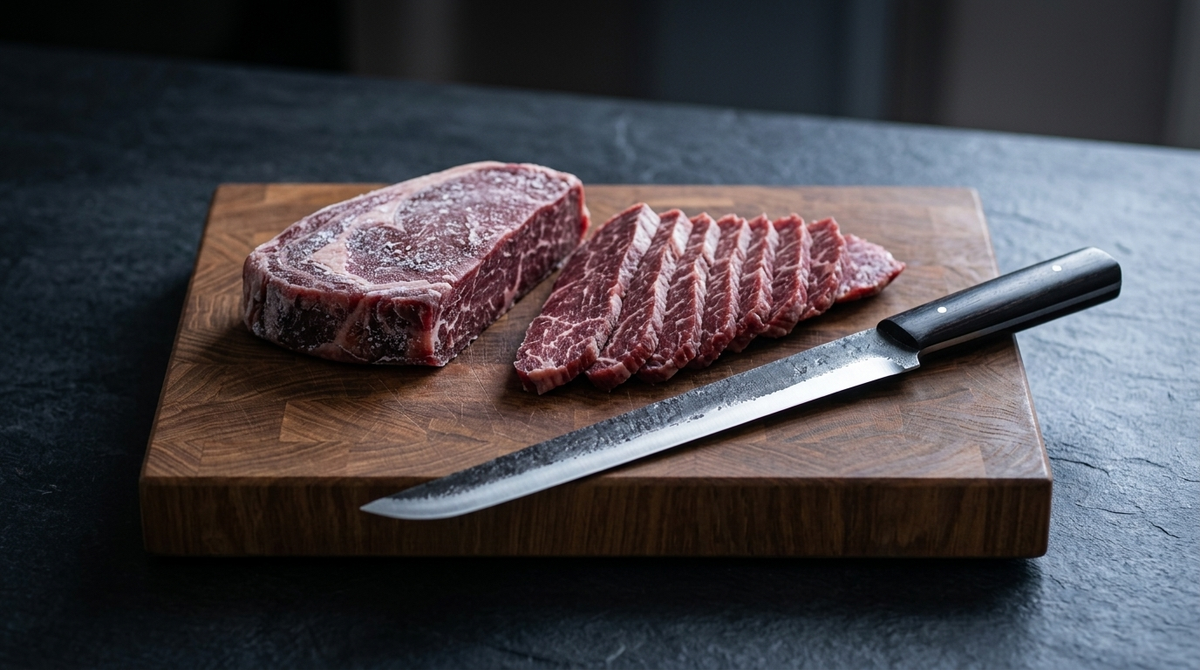
The short answer is that you mostly should not cut fully frozen meat with a kitchen knife. Thaw it safely in the fridge, in cold water or in the microwave, or let it thaw partway so it is firm but not solid, and then cut it. Partly frozen meat is actually easier to slice thin than meat that has fully thawed.
Somewhere in every freezer there is a block of chops welded together at an angle no recipe asked for, and dinner is in forty minutes. The temptation is to grab the biggest blade in the drawer and start swinging. That plan ends with a chipped edge, a knife skating off a rock hard surface toward your other hand, or both. This guide covers why frozen meat is hard on knives, how to thaw it without inviting trouble, the partly frozen slicing trick, what to do with a block that has to be split, and what never to do.
Can You Cut Frozen Meat with a Knife?
You can try. The knife will not enjoy it and neither will you. Fully frozen meat behaves more like a block of hard wood than food. The ice crystals inside the muscle lock everything in place, so instead of parting the fibres the edge has to fight its way through something hard and brittle. A thin kitchen edge is not built for that kind of resistance.
The bigger problem is control. On fresh meat the blade sinks in and the meat holds it on line. On frozen meat the edge has nothing to grip, so it skids. When you push harder to make it bite, the knife tends to jump sideways or forward the moment it does. That is how frozen meat ends up as a hand injury rather than a dinner.
Why frozen meat damages an edge
A sharp edge is a very thin line of steel. Our knives are hand forged from high carbon steel, which takes and holds a keen edge well, and a hard, keen edge is exactly the sort that chips when it meets something rigid instead of something soft. Frozen meat and frozen bone are rigid. Push or chop into them and the steel at the very edge has nowhere to flex, so small pieces break away. You will feel it the next time the knife drags through a tomato.
That is why every guide on this site gives the same rule: never chop frozen bone or frozen meat with a cleaver, because it chips the edge. And never cut frozen food with a boning or fillet knife. Those blades are thin and flexible on purpose, and frozen meat is the fastest way to bend or snap the tip. Your Mako boning knife will wait until the meat is soft. It is patient like that.
How Do You Thaw Meat Safely?
There are three safe ways to thaw meat at home: in the refrigerator, in cold water, and in the microwave. Thawing on the counter is not one of them. The outside warms up long before the middle does.
In the refrigerator
This is the slowest method and the easiest one. Put the meat on a plate or in a tray on the bottom shelf so any drips cannot land on anything else, and leave it. Small cuts may be ready overnight. A big roast can take a good deal longer, so plan a day or more ahead. The upside is that the meat stays cold the whole time.
In cold water
Faster, and a bit more work. Keep the meat in a sealed, leakproof bag and submerge it in cold tap water, not warm. Change the water regularly so it stays cold, and cook the meat once it has thawed. Montana State University's fact sheet on thawing says plainly that cold water must be changed every 30 minutes during thawing, and that food thawed in the microwave must be cooked immediately: Montana State University Extension fact sheet.
In the microwave
Use the defrost setting, and expect uneven results. Thin edges can start to cook while the middle is still frozen. That is fine as long as the meat goes straight into the pan afterwards. Microwave thawing is for tonight, not for tomorrow.
The Partly Frozen Slicing Trick
Here is the part that surprises people. If you want very thin slices, meat that is partly frozen is easier to cut than meat that is fully thawed. Soft raw beef squishes and slides under the blade. Firm, cold meat holds its shape, so a sharp knife can take even, thin slices without the meat squirming away. This is how people get paper thin beef for stir fry, shaved steak for a cheesesteak, or even strips for jerky.
The goal is firm but not solid. You should be able to press a fingertip into the surface and leave a slight dent. If the knife squeaks or stops dead, it is still too frozen. Give it more time in the fridge and check again rather than leaning on the blade.
Two ways to get there
From frozen, let the meat thaw in the fridge until the outside has softened and the center is still firm. How long that takes depends on the thickness of the cut and your fridge, so check it rather than trusting a clock. From fresh, it works the other way: put the meat in the freezer for a short spell until the outer layer firms up, then slice. Either way, keep the meat cold the whole time, and cook what you slice.
Which knife to use
Use a long, thin, sharp blade and let it do the work with long strokes. Do not saw in short jabs or press straight down.
- The Mamba 11" slicing knife has a long straight edge, which makes it the easiest choice for wide, thin slices across a firm roast or flank.
- The Orca 7" chef knife handles stir fry strips and smaller cuts, and it is the knife most people already reach for.
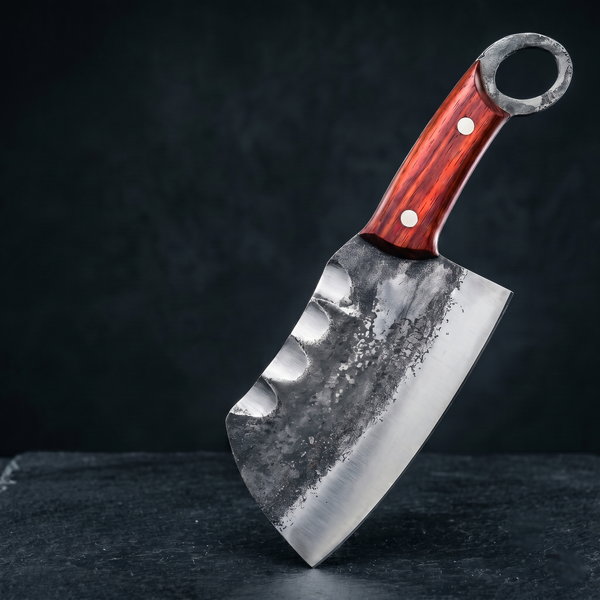
- The Kermode 7" chef cleaver is a tall Serbian style chef knife with a curved edge. The tall blade gives your knuckles room above the board, and it scoops the slices up afterwards.
Notice that none of those are heavy cleavers. Partly frozen slicing is a slicing job. If the meat is firm enough that you want to chop rather than slice, it is too frozen.
What If a Frozen Block Has to Be Split?
Sometimes the problem is not slicing. It is four steaks frozen into one slab and you only want two.
Thaw it just enough to separate. A short spell in cold water, still sealed in its bag, often loosens the outside enough that the pieces can be pried apart by hand. Take what you need, cook it, and put the rest back in the fridge to finish thawing. If you thawed the remainder in the fridge, you can refreeze it. If you thawed it in cold water or the microwave, cook it first.
Better still, stop it happening. Portion meat before it goes in the freezer. Wrap chops and steaks separately, or lay them flat in a bag with a sheet of baking paper between each one. Buying meat already portioned does the same job for you.
If you really need to cut through solid frozen meat or bone, a saw is the butcher's tool for that. A kitchen knife, even a very heavy one, is not a saw, and asking it to be one is how blades get ruined.
What Should You Never Do with Frozen Meat?
- Hammer the spine. Setting a knife on frozen meat and whacking the spine with a mallet or a rolling pin is a common bad idea. It can chip or crack the edge, and if the blade jumps out of the cut, the hammer has just thrown it at you.
- Pry with the blade. Using a knife as a lever to split frozen pieces puts sideways force on a thin edge, and the tip will snap well before the meat lets go.
- Chop frozen bone with a cleaver. This is the classic one. A cleaver is meant to be swung, but frozen bone does not give, so the edge does. Even a heavy chopper like the Mammoth 9.1" belongs on thawed bone, not on a frozen leg.
- Thaw on the counter or in hot water. Quicker, yes, and also the method most likely to leave you wishing you had ordered pizza.
If you have already chipped an edge on something frozen, it can be fixed on a coarse stone. Our guide on how to sharpen a meat cleaver walks through the repair. It takes a while on a heavy blade, which is a good reason to thaw first next time.
Once It Is Thawed, Bring Out the Cleaver
The good news is that thawed meat and thawed bone are exactly what cleavers are for. Once the roast has softened all the way through, the heavy blades can get on with their real job.
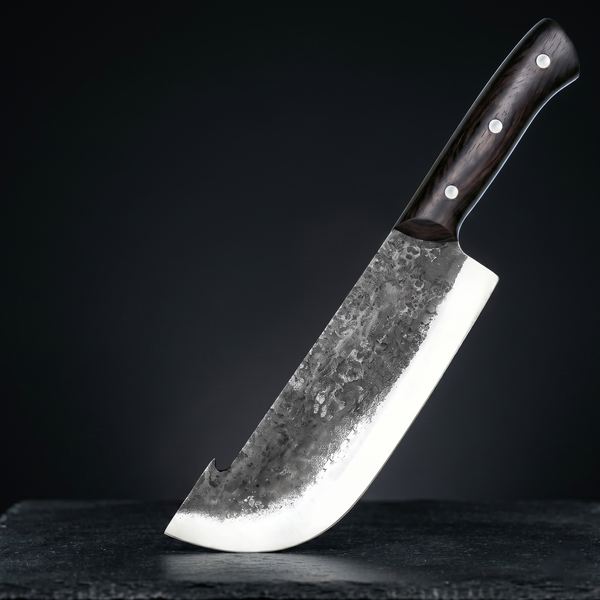
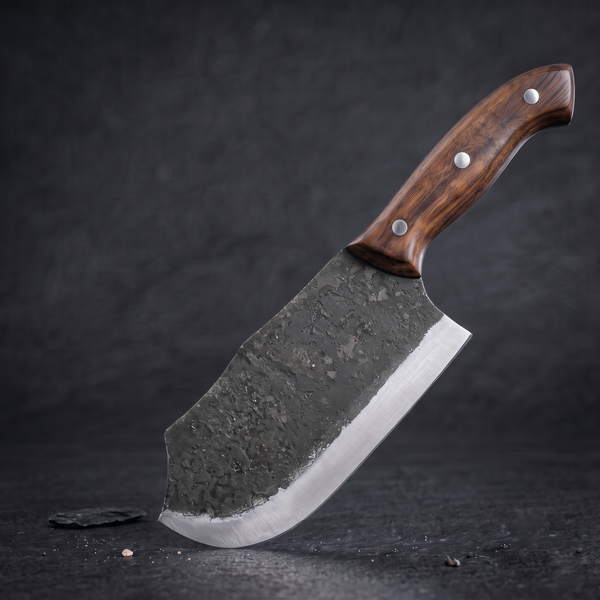
For splitting ribs, breaking down a thawed chicken or chopping through joints, the Rhino 8" Serbian cleaver is the heavy option. It weighs 1250 g with a 0.3" thick blade and a walnut handle, and it is made to order, so allow 2 to 3 weeks before it ships. The Kodiak 8" butcher cleaver has a drop point profile and a 5.9" rosewood handle at 581 g, which suits trimming and portioning as much as chopping. The Kraken 8" cleaver is lighter at 380 g, with a hammer textured blade and a black wenge handle, for people who want a cleaver they can use for a whole evening of prep.
Technique still matters on thawed bone. Let the weight of the blade do the work, aim for joints, and keep your guiding hand flat and well clear. Our guide on how to use a meat cleaver covers grip, stance and where to strike. The full range sits in our hand forged cleavers collection.
Frozen Meat at a Glance
| Situation | What to do | Knife |
|---|---|---|
| Fully frozen roast or steak | Thaw in the fridge, cold water or microwave before cutting | None yet |
| Thin slices for stir fry, cheesesteak or jerky | Slice while partly frozen, firm but not solid | Long slicer, chef knife or chef cleaver |
| Steaks or chops frozen together | Thaw the outside in cold water until they separate by hand | None, use your hands |
| Frozen bone in | Thaw fully, or have a butcher saw it | Never a cleaver while frozen |
| Thawed bone in cuts | Chop at the joints with controlled strokes | Heavy meat cleaver |
| Frozen fish | Thaw completely first | Never a fillet or boning knife while frozen |
Food Safety Basics While You Wait
Keep raw meat and its juices away from anything that will not be cooked. Thaw on a plate or tray, not straight on the shelf. Use a separate board for raw meat if you can, and wash the board, the knife and your hands in hot soapy water once you are done.
Then look after the knife. High carbon steel does not like sitting wet, and thawed meat is wet. Hand wash the blade, dry it at once and wipe on a light coat of food safe oil. No dishwasher, no soaking. Patina is normal and nothing to worry about.
Thaw first, slice when it is firm, and save the cleaver for bone that has given up being frozen. If you want to know which blade suits each part of the job, our guide to the best knives for cutting meat has the full rundown, and every heavy chopper we make is in the cleavers collection.
Questions
Can you cut frozen meat with a knife?
You can, but you should not. Fully frozen meat is hard enough to chip a sharp edge, and the blade skids instead of biting, which is how people cut their hands. Thaw it in the fridge, in cold water or in the microwave first, or let it thaw partway so it is firm but no longer solid.
Is it easier to slice meat when it is partly frozen?
Yes. Partly frozen meat holds its shape under the blade, so a sharp slicer or chef knife can take thin, even slices for stir fry, cheesesteak or jerky. Aim for firm but not solid, where a fingertip leaves a slight dent. If the knife stops dead or squeaks, give the meat more time in the fridge.
Can I use a cleaver to chop frozen meat or bone?
No. Never chop frozen bone or frozen meat with a cleaver, because it chips the edge. Frozen bone does not give, so the steel does. Thaw the meat fully and then use the cleaver on the joints, or ask a butcher to saw frozen bone in cuts for you.
What is the safest way to thaw meat quickly?
Cold water is the quicker of the safe methods. Seal the meat in a leakproof bag, submerge it in cold tap water, change the water every 30 minutes and cook it once it has thawed. The microwave is faster again, but the meat must be cooked straight away because some edges may start to cook.
How do I separate steaks that froze together?
Leave the knife out of it. Put the sealed bag in cold water for a short while until the outside softens, then pull the pieces apart by hand. Cook what you need and keep the rest cold. Next time, wrap steaks separately or put baking paper between them before freezing.
Shop the knives from this guide
Keep reading
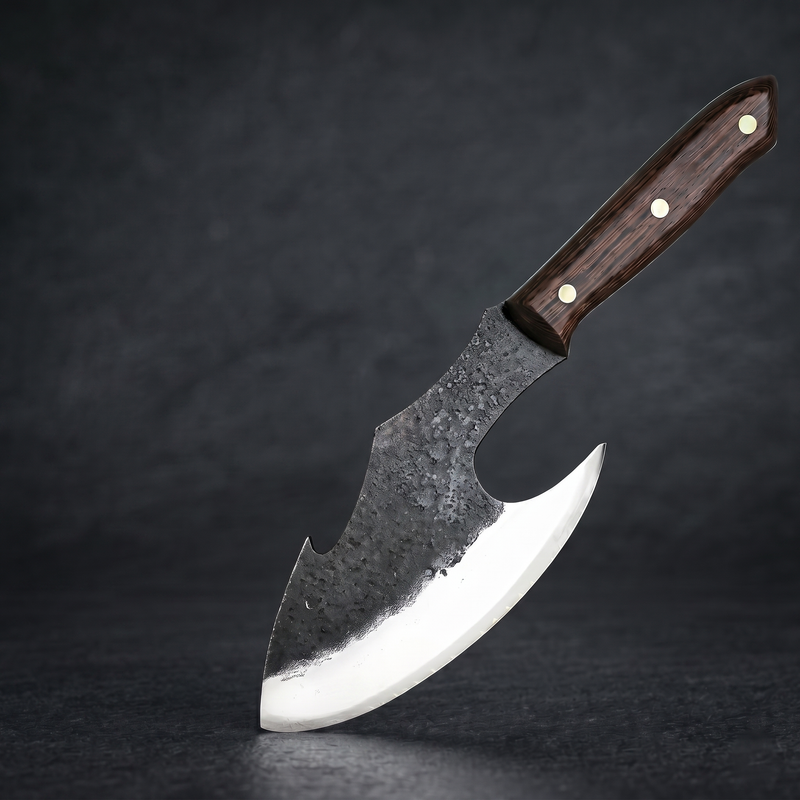
How to Use a Meat Cleaver: Grip, Chop and Keep Your Fingers
A practical guide to using a meat cleaver: the handle grip and pinch grip, what the finger hole is for, setting up a board...
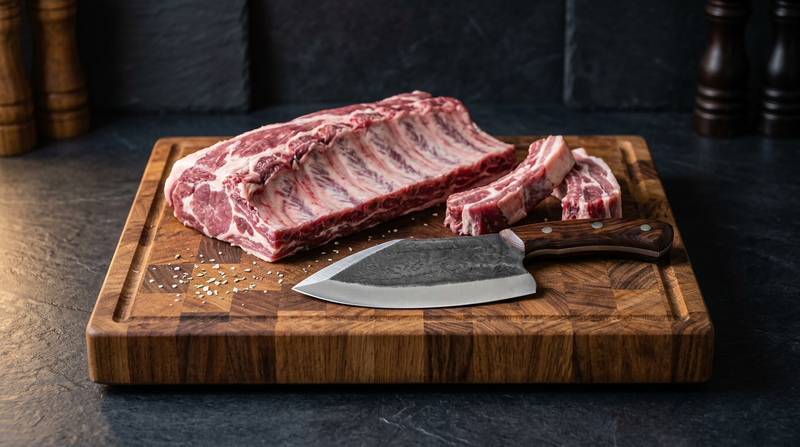
Best Knives for Cutting Meat: Which Blade for Which Cut
The best knife for cutting meat depends on the cut in front of you. Bone wants a heavy cleaver, trimming wants a small butcher...
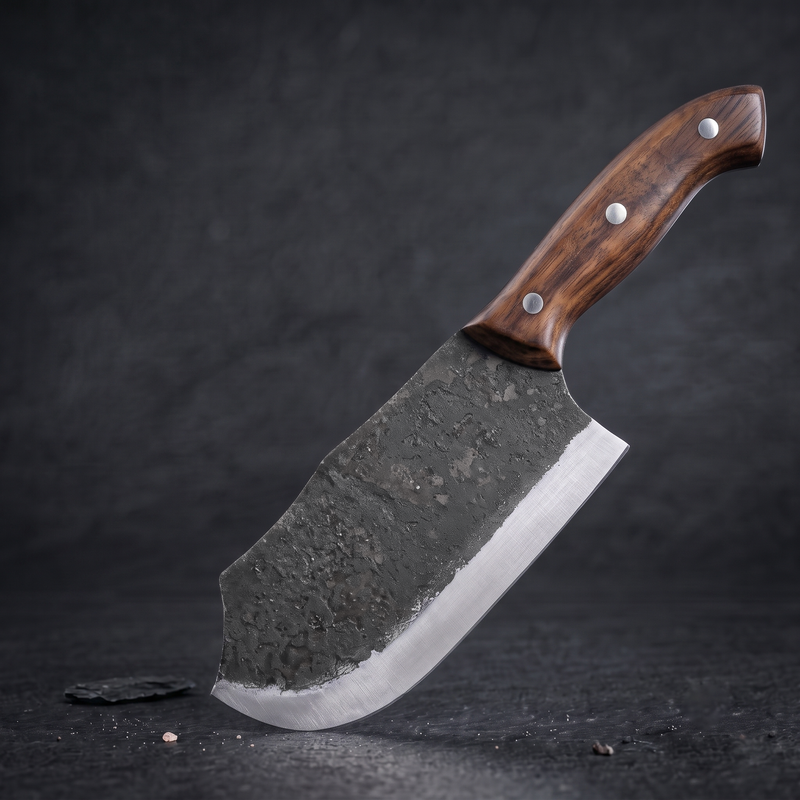
High Carbon Steel Knife Care: Rust, Patina, Oiling and Sharpening
High carbon steel rewards a simple routine. Here is how to wash, dry and oil a carbon steel knife, remove light rust, force a...