
What Angle to Sharpen a Kitchen Knife: Chef Knives to Cleavers
October 13, 2026 · By Matt
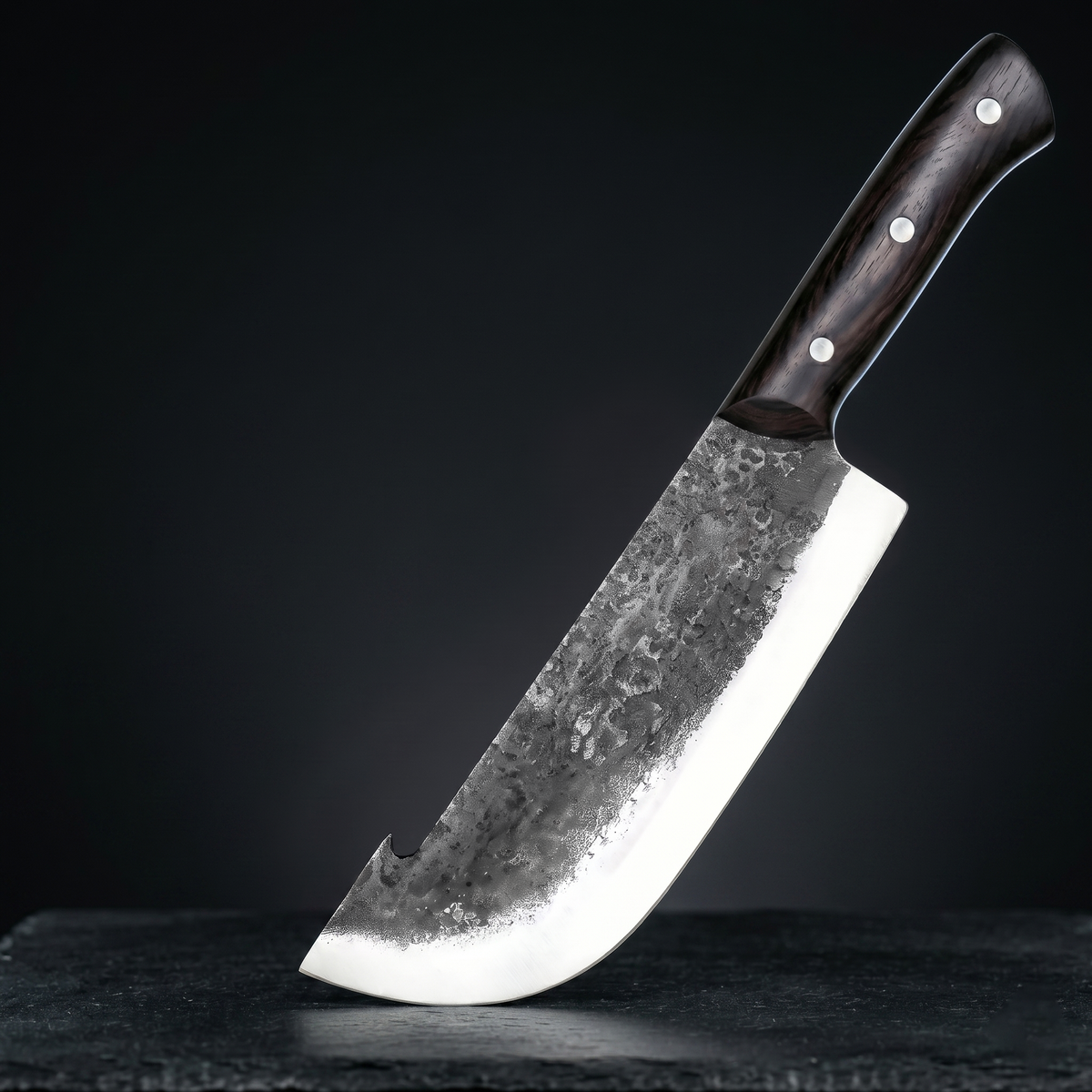
Most thin kitchen knives, chef knives and slicers among them, are commonly sharpened somewhere around 15 to 20 degrees per side. Heavy cleavers and anything that goes through bone are usually sharpened wider, often around 20 to 25 degrees per side or more. If you own a hand forged Xcutlery knife, the right angle is the one already ground on it, so match that bevel rather than picking a number off a forum.
Sharpening angles attract a lot of confident numbers. Fifteen is sharp and twenty is tough, and someone on the internet has a seventeen they swear by. The truth is less exciting. The angle is a trade between how cleanly a knife cuts and how long the edge survives what you cut, and the right one depends on the blade in your hand and what you plan to hit with it.
What Is the Best Angle to Sharpen a Chef Knife?
For a thin chef knife, common practice sits around 15 to 20 degrees per side. A chef knife spends its life on a board doing onions, herbs and boneless meat, so it can afford a fine edge. Nothing it meets is supposed to fight back.
Our hand forged chef knives, such as the Orca 7" chef knife, run about 0.1 inches thick at the spine and taper to the edge. We do not publish a factory grind angle for them, and because each one is forged and ground by hand the bevel varies a little from knife to knife. Find the angle that is already there and keep it.
The tall Serbian style chef knife, like our Kermode 7" chef cleaver, sits between a chef knife and a cleaver. It is thin for its height, 0.1 inches at the spine, and it rocks through vegetables far more than it chops anything hard. Treat it as a chef knife and let the marker trick settle any argument.
Per Side or Inclusive? What the Numbers Mean
A sharpening angle can be quoted per side, meaning the angle between one face of the bevel and the centerline of the blade, or inclusive, meaning both sides added together. Twenty degrees per side is 40 degrees inclusive. A gadget that promises a "20 degree edge" might mean either.
On a whetstone, the per side number is the one you can see. It is the angle between the blade and the stone when the bevel lies flat on it. Twenty degrees is lower than most people's instinct puts it. Beginners nearly always hold a knife too steep, then wonder why the edge gets blunter with every stroke. Every number in this guide is per side.
Why a Wider Angle Lasts Longer and a Narrower One Cuts Cleaner
Picture the edge in cross section. A narrow angle gives a long, thin wedge with very little steel behind the cutting line, so it parts food with almost no resistance. The cost is that the thin wedge has nothing supporting it. Drive it into bone and the edge rolls, chips or folds over.
A wider angle gives a short, fat wedge. More steel sits right behind the edge, so it takes impacts that would wreck a fine one. The cost is drag on a clean slice. One is for slicing and one is for landing. University extension material on knife care makes the same point, noting that a long, thin bevel gives less resistance in the cut while a shorter bevel puts more strength behind the edge for work around bone: University of Nebraska knife sharpening guide.
The thickness behind the bevel matters as much as the angle. A blade 0.3 inches at the spine, like our Rhino 8" Serbian cleaver, carries a lot of steel toward the edge whatever angle the last sliver is ground at. A fillet knife at 0.07 inches, like the Barracuda 13" fillet knife, has almost nothing behind the edge, which is why it flexes along a rib cage and should never be asked to split one.
Does a Cleaver Need a Different Sharpening Angle?
Usually, yes. Cleavers built for bone are commonly sharpened around 20 to 25 degrees per side or more. A cleaver edge ground as fine as a slicer looks wonderful on day one and looks like a bread knife after the first rack of ribs.
Not every cleaver is a bone chopper, though. Our Kraken 8" cleaver weighs 380 grams and does most of its work on meat, cartilage and vegetables. The Kodiak 8" butcher cleaver is heavier at 581 grams, carries a drop point and leans toward butchery. The Mammoth 9.1" meat cleaver is about 1,500 grams with a thick spine and exists to go through things that argue. Match the bevel each one came with and you inherit the right decision.
If a cleaver you already own came with a fine edge and keeps chipping on bone, widening the angle a little is one of the few regrinds that makes sense. The full method, including chip repair, is in our how to sharpen a meat cleaver guide.
Sharpening Angles by Knife Type
The ranges below are common practice for each type of knife, not a factory specification for our blades. The bevel on the knife in front of you is the one to follow.
| Knife type | Typical angle per side | Why | Xcutlery example |
|---|---|---|---|
| Chef knife | Commonly 15 to 20 degrees | Thin blade, board work, clean slicing matters most | Orca 7" chef knife |
| Serbian style chef knife | Commonly 15 to 20 degrees | Tall but thin, rocks and chops vegetables and boneless meat | Kermode 7" chef cleaver |
| Boning knife | Commonly 15 to 20 degrees, toward the upper end | Works around bone, so the edge wants a little more support | Mako 7.5" boning knife |
| Fillet knife | Commonly 15 to 20 degrees | Thinnest blade of all, flexes along bones, never through them | Barracuda 13" fillet knife |
| Light to medium cleaver | Commonly 20 to 25 degrees | Meat, cartilage, joints and the occasional bone | Kraken 8" cleaver, Kodiak 8" butcher cleaver |
| Heavy cleaver and bone chopper | Commonly 20 to 25 degrees or more | Splits bone, the edge takes hits that would fold a fine grind | Rhino 8" Serbian cleaver, Mammoth 9.1" meat cleaver |
How Do You Find the Angle Already on a Blade?
The marker trick
It takes about a minute. Color the whole bevel on one side with a permanent marker. Set the knife on the stone at the angle you think is right and make two light strokes. If the ink came off evenly across the bevel, you have the angle. If it only came off right at the edge, you are too steep, so lower the spine a little. If it only came off at the top of the bevel, raise the spine. Repeat until the ink disappears evenly, then remember how that feels in your wrist.
The coin stack
Stack a few coins on the stone beside the blade and rest the spine on them so the bevel lies flat. That stack height is your reference. Lift the spine off the coins and sharpen at that height. People like to quote exact coin counts for exact angles, but the result depends on how tall the blade is, so it is a visual aid for your own knife and nothing more.
An angle guide
A small plastic or ceramic guide sits on the stone, or clips onto the spine, and holds the blade at a fixed angle. It is useful for learning what 15 or 20 degrees looks like so your hand can copy it, and much less useful as a crutch for a whole session, because the guide decides the angle rather than the bevel. Calibrate your hand with it, then put it away.
How to Hold a Steady Angle on a Whetstone
Consistency beats precision. A knife sharpened at a steady 19 degrees will outperform one sharpened at a wobbling 15, because the wobble rounds the edge off as fast as the stone creates it. Set the stone on a damp towel so it cannot move. Hold the handle with your thumb on the spine and rest two or three fingertips of the other hand on the flat near the edge. Lock your wrist and move from the shoulder and elbow so the whole arm travels and the angle stays where you set it.
A blade longer than the stone has to be done in sections. Split the edge into heel, middle and front, and give each the same number of strokes so you do not end up with a wavy edge. On a heavy cleaver you can ease off the pressure, because the weight of the blade does most of the pressing. Recheck with the marker partway through. If the ink pattern has drifted, so has your wrist.
What Changes the Angle You Should Pick
If you are choosing an angle from scratch on an old knife with no bevel left to read, a few things should sway you. Bone is the first. A knife that never touches bone can run at the fine end of its range and stay there. A knife that strikes bone every week needs more steel behind the edge, and a wider angle is the honest way to give it that.
The board is the second. End grain wood and soft plastic are kind to an edge. Glass, stone, ceramic plates and some bamboo boards are not, and they blunt a fine edge quickly. How often you sharpen matters too. A fine edge touched up every couple of weeks stays fine. If you know you sharpen twice a year, a slightly wider angle will serve you better than a slightly sharper one.
When Not to Change the Factory Bevel
Almost always, if we are being frank. The bevel on a hand forged knife was chosen for that blade, its thickness and its job, and the first few sharpenings should simply follow it. Changing it means removing a lot of steel, and on a thick cleaver that is a long afternoon with a coarse stone and sore shoulders.
The sensible reasons to regrind are narrow. The edge keeps chipping on work it is meant to do, or a previous owner ground it badly and there is no clean bevel left to follow. Our lifetime warranty covers defects in materials and craftsmanship. Regrinding an edge to a new angle is a decision rather than a defect, so make it a considered one.
Honing vs Sharpening, and Where the Angle Comes In
Honing and sharpening get used as the same word and are not. Sharpening removes steel on a stone to form a fresh edge. Honing removes almost nothing. It pushes a rolled edge back into line with a steel or ceramic rod. Hold the knife at roughly the angle you sharpen at and keep the pressure light. Hone first. When honing stops bringing the edge back, when the knife crushes skin, bounces off a tomato or drags through meat it used to fall through, it is time for the stone.
Whatever angle you settle on, the steel still needs the usual care afterwards. Rinse, dry at once, wipe on a light coat of food safe oil, and keep it out of the dishwasher. The full routine lives in our high carbon steel knife care guide. If you are still working out which blade shape suits your work, knife blade shapes explained covers points, bellies and spines, and our hand forged meat cleavers run from light prep choppers to the sort of blade that settles arguments with a beef femur.
Questions
What angle should I sharpen a chef knife at?
Thin chef knives are commonly sharpened somewhere around 15 to 20 degrees per side. Thinner, harder blades sit toward the low end and thicker or softer ones toward the top. On a hand forged Xcutlery chef knife, the best angle is the one already ground on it, so use the marker trick to find that bevel and follow it rather than picking a number.
Is 15 or 20 degrees better for a kitchen knife?
Neither is better on its own. A 15 degree edge cuts more cleanly and drags less, but it has little steel behind it and rolls or chips when it meets bone or a hard board. A 20 degree edge gives up a little slicing ease for a lot more durability. Choose by what the knife hits and how often you are willing to sharpen it.
What angle should a meat cleaver be sharpened at?
Heavy cleavers and bone choppers are usually sharpened wider than kitchen knives, often around 20 to 25 degrees per side or more, because the edge takes impacts that would fold a fine grind. Lighter cleavers used mostly on meat and vegetables can sit toward the lower end. On any Xcutlery cleaver, match the bevel that is already there.
How do I find the sharpening angle already on my knife?
Color the bevel on one side with a permanent marker, set the knife on the stone at your best guess and make two light strokes. If the ink came off evenly across the bevel, that is your angle. Ink gone only at the edge means you are too steep, ink gone only at the top of the bevel means you are too shallow. Adjust and repeat.
Does per side mean the same thing as inclusive angle?
No, and the difference matters. Per side is the angle between one face of the bevel and the centerline of the blade, which is also the angle between blade and stone when the bevel lies flat. Inclusive adds both sides together, so 20 degrees per side is 40 degrees inclusive. Every range in this guide, and on the Xcutlery blog, is quoted per side.
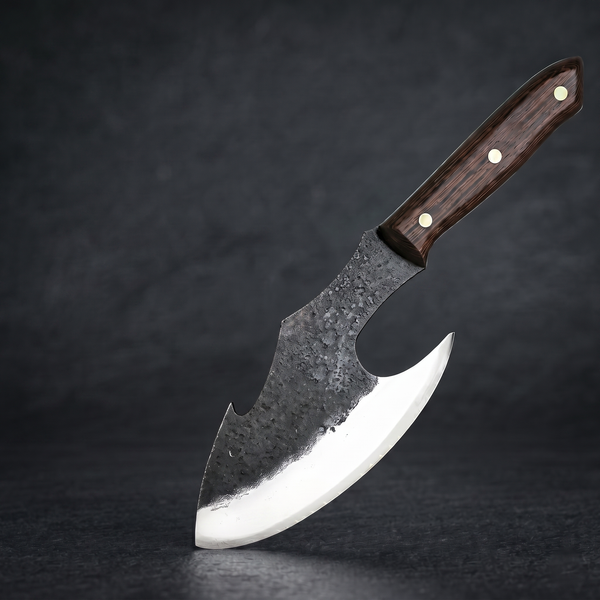
Shop the knives from this guide
Keep reading
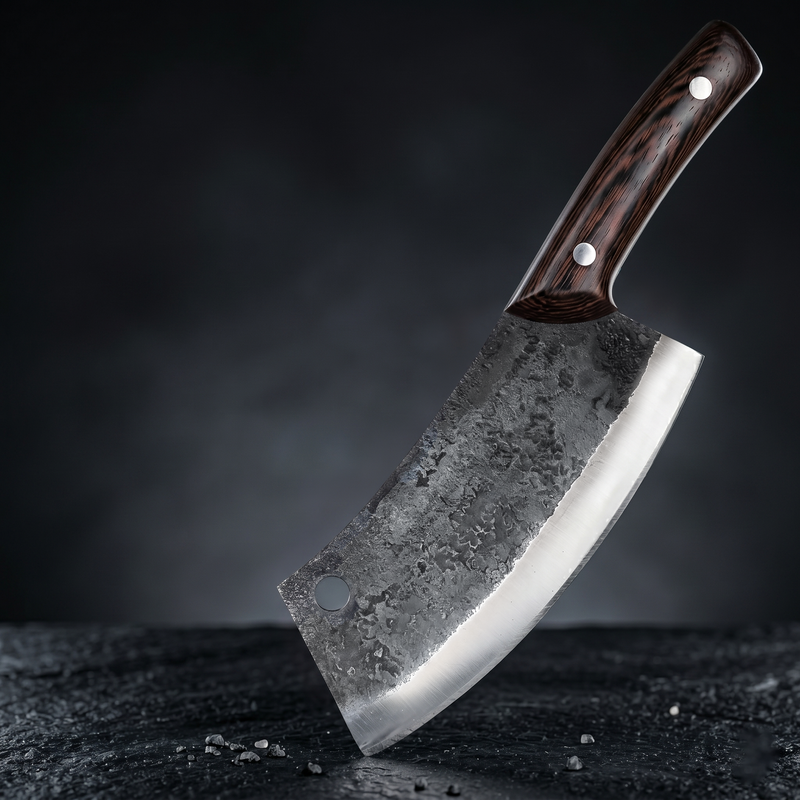
How to Sharpen Kitchen Knives With a Whetstone, Step by Step
A plain guide to sharpening kitchen knives on a whetstone. Which combination stone to buy, how to prepare it, how to find the angle...
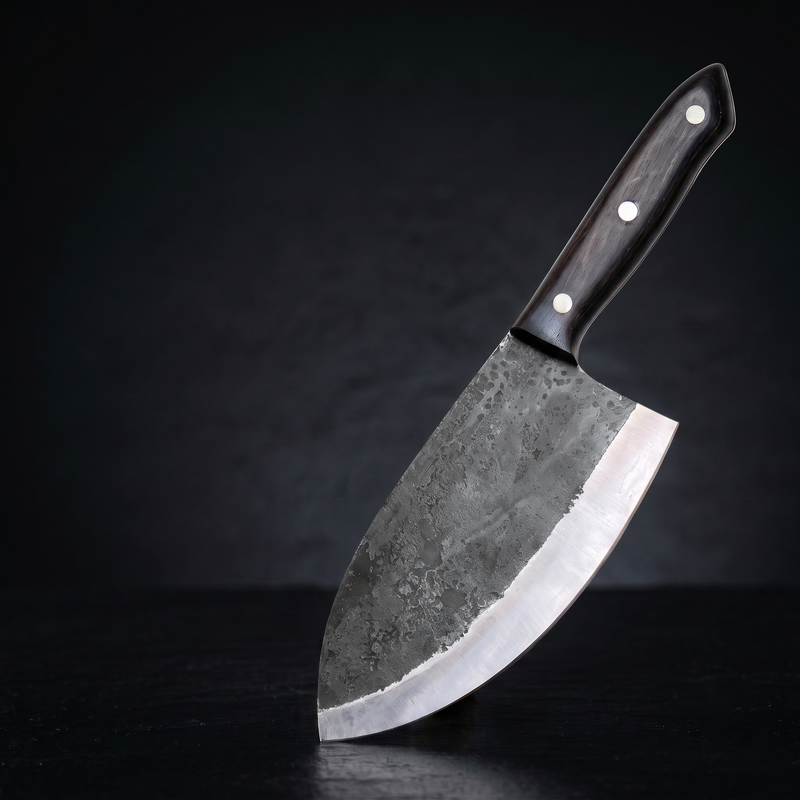
How to Sharpen a Meat Cleaver: Angle, Stones and Step by Step
A plain guide to sharpening a meat cleaver at home. Why a cleaver edge is ground differently from a chef knife, how to find...
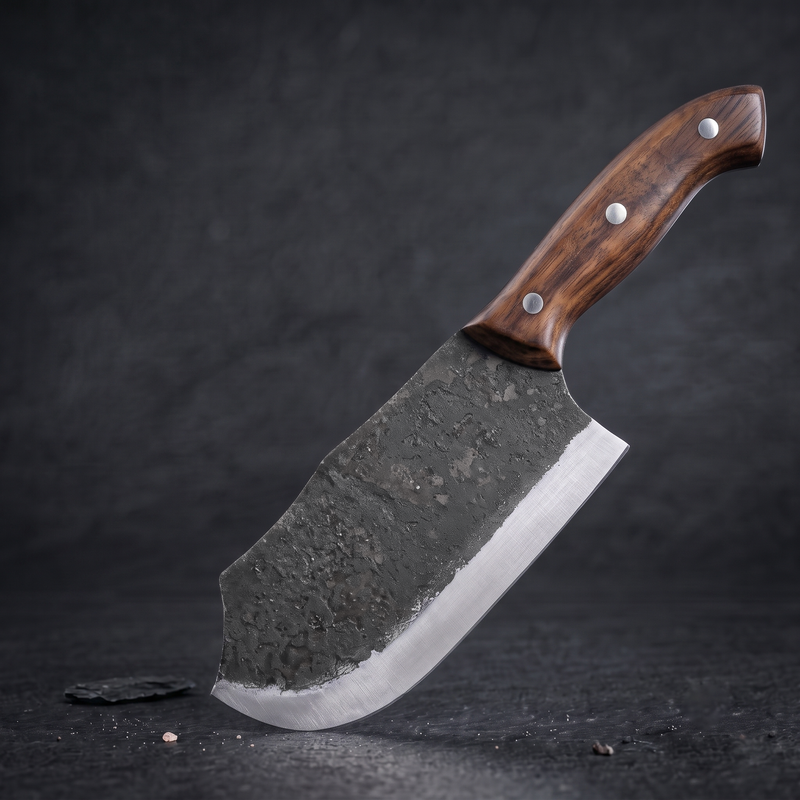
High Carbon Steel Knife Care: Rust, Patina, Oiling and Sharpening
High carbon steel rewards a simple routine. Here is how to wash, dry and oil a carbon steel knife, remove light rust, force a...